Loading market data...
India issues urgent advisory for citizens to depart Iran amid escalating US-Iran tensions, triggering market volatility and concerns over oil prices in February 2026.

Urgent India Advisory: Markets Brace for Volatility Amid Escalating US-Iran Tensions in February 2026
New Delhi, India – February 23, 2026 (IST) – The Indian government has issued an urgent advisory on Monday, February 23, 2026, urging all its citizens, including students, pilgrims, business persons, and tourists, to depart Iran by all available means of transport, including commercial flights, as escalating US-Iran tensions heighten fears of a broader conflict in the Middle East. This critical directive comes amidst a significant US military buildup in the region and an ultimatum from US President Donald Trump for Iran to reach a nuclear deal within days, immediately impacting global markets and fueling volatility for Indian investors.
The Catalyst
The immediate trigger for India's heightened alert is the rapidly deteriorating security situation in Iran, coupled with intensifying diplomatic and military pressure from the United States. This advisory reiterates previous warnings issued by the Ministry of External Affairs (MEA) on January 5, 2026, and January 14, 2026, underscoring the gravity of the evolving geopolitical landscape. Ongoing student-led protests within Iran further complicate the domestic stability, even as crucial nuclear talks between Tehran and Washington are scheduled for Thursday, February 26, 2026, in Geneva. The US has deployed aircraft carriers, jets, and air defense systems to the Middle East, with President Trump reportedly giving Iran a 10-15 day deadline to agree to a "meaningful deal," sparking widespread concern over potential military action.
Financial Forensics
The escalation of US-Iran tensions is sending shockwaves through global financial markets, with a pronounced impact on India's economy due to its significant reliance on imported crude oil. The primary concern revolves around the Strait of Hormuz, a vital maritime chokepoint through which approximately 20-25% of global maritime oil traffic transits. Any disruption or even the threat of disruption to this strait could trigger a severe global supply shock, leading to rapid and substantial increases in crude oil prices.
Brent crude oil prices have already risen, crossing the $71-$72 per barrel mark, while West Texas Intermediate (WTI) crude has rebounded towards $66 per barrel in February 2026, reflecting the geopolitical risk premium. For India, a major crude importer, every $1 rise in crude prices adds approximately $2 billion to its annual import bill. This surge directly fuels domestic inflation, impacting household budgets and corporate margins across various sectors.
The Indian Rupee is also susceptible to depreciation against major currencies during such global crises, driven by risk aversion and potential foreign institutional investor (FII) capital outflows. Conversely, traditional safe-haven assets like gold have seen a significant uptick, with prices holding near record levels, as investors seek refuge from market uncertainty.
Market Impact
The Nifty 50 and BSE Sensex have already reacted to the heightened geopolitical risks, demonstrating increased volatility and experiencing declines. The Sensex, for instance, saw a sharp decline in mid-February 2026 due to US-Iran tensions and rising crude prices. While domestic retail participation has shown resilience in cushioning FII sell-offs in past geopolitical events, prolonged uncertainty could test this strength.
Sectors particularly sensitive to these developments include:
Key Takeaways for Investors
FinScann Verdict
The escalating US-Iran tensions present a significant near-term headwind for the Indian economy and financial markets in February 2026. While the direct military conflict remains a speculative scenario, the mere threat and the resulting spike in crude oil prices are sufficient to trigger inflationary pressures, currency volatility, and equity market corrections. FinScann advises investors to remain cautious, prioritize risk management, and maintain liquidity while closely monitoring geopolitical developments and their impact on global commodity markets.
Q: How do US-Iran tensions primarily affect India? A: US-Iran tensions primarily impact India through a sharp rise in crude oil prices, as India is a major oil importer. This increases India's import bill, fuels domestic inflation, and can lead to rupee depreciation and stock market volatility.
Q: What is the Strait of Hormuz, and why is it important for oil? A: The Strait of Hormuz is a narrow waterway connecting the Persian Gulf to the Arabian Sea. It is a critical chokepoint for global oil and gas transit, with approximately 20-25% of the world's seaborne oil passing through it daily. Any disruption here could severely impact global energy supplies and spike oil prices.
Q: Has the Indian government issued any specific advisories for its citizens in Iran? A: Yes, the Indian Ministry of External Affairs and the Indian Embassy in Tehran issued an urgent advisory on February 23, 2026, urging all Indian nationals, including students, pilgrims, business persons, and tourists, to depart Iran by all available means of transport.
Q: How have the Indian stock markets (Sensex and Nifty) reacted to these tensions? A: The Indian stock markets, including the Sensex and Nifty, have shown increased volatility and witnessed declines in February 2026 due to the escalating US-Iran tensions and rising crude oil prices.
Q: What are the key risks for the Indian economy from this geopolitical situation? A: The key risks for the Indian economy include surging crude oil prices leading to higher inflation and increased import bills, potential capital outflows by foreign investors, and a depreciating Indian Rupee. These factors can collectively hinder economic growth and corporate profitability.
Disclaimer: For information only; not investment advice. Stock market investments carry risks. Please consult a SEBI-registered advisor before investing. FinScann assumes no liability for decisions made based on this report.

Financial journalist specializing in market analysis, stock research, and investment trends. Dedicated to providing accurate, timely insights for informed decision-making.
Credentials: Experienced financial journalist with expertise in equity markets and economic analysis
The information provided in this article is for educational and informational purposes only and should not be construed as financial, investment, or legal advice. Finscann does not provide personalized investment recommendations.
For detailed terms and conditions, please read our Disclaimer and Terms of Service.

Indian solar stocks face sharp decline after new US import duties of 126%, impacting major players like Waaree Energies and Adani Green.

Potpie AI secures $2.2 million in pre-seed funding led by Emergent Ventures with backing from All In Capital, DeVC, and PointOne Capital.
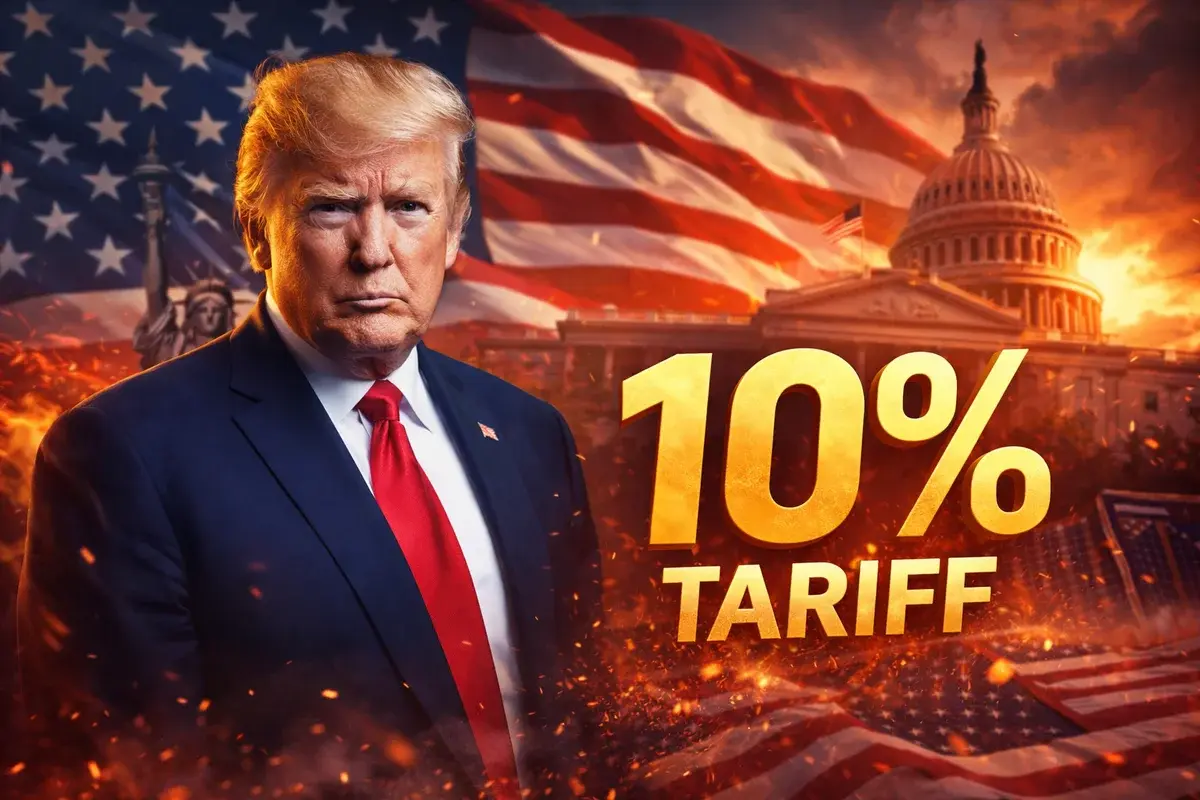
The US officially implements a 10% tariff following a Supreme Court ruling, reshaping trade policy expectations.

China’s export controls targeting major Japanese industrial companies escalate geopolitical tensions, raising supply chain risks, margin pressure,...
Meta AI director faces email crisis as OpenClaw unexpectedly deletes crucial data. FinScann analyzes the financial and ethical implications for Meta...