Loading market data...
The Iran–US–Israel conflict has created major volatility in global oil markets. Rising geopolitical tensions and shipping risks have pushed crude oil prices higher amid fears of supply disruptions.

Geopolitical conflicts in the Middle East have historically played a crucial role in shaping global energy markets, and the ongoing tensions involving Iran, the United States, and Israel are no exception. Since the beginning of the recent wave of attacks and retaliatory actions, crude oil prices have experienced notable fluctuations. Investors, traders, and energy markets closely monitor developments in the region because the Middle East remains one of the world's most critical oil-producing areas.
The conflict has raised serious concerns about potential supply disruptions, shipping risks, and broader instability across global energy markets, all of which have contributed to volatility in crude oil prices.
When the first round of military strikes and retaliatory threats emerged between Israel and Iran, global oil markets reacted quickly. Traders rushed to price in geopolitical risk, causing crude oil benchmarks such as Brent crude to surge.
Within days of the initial attacks, oil prices rose significantly as markets feared that the conflict could spread across the region. The rally was driven by concerns that Iran, a major oil producer, could face production disruptions or retaliate by targeting energy infrastructure in the Middle East.
Even the possibility of a wider regional conflict was enough to trigger strong buying activity in oil futures markets, pushing crude prices higher during early trading sessions.
As tensions escalated and the possibility of deeper involvement by the United States became more evident, the global oil market entered a period of heightened volatility. Analysts warned that a broader regional war could have severe consequences for energy supply.
The biggest concern for traders was not just oil production but transportation routes, particularly the Strait of Hormuz, which is one of the most important maritime oil chokepoints in the world. A significant portion of the world's seaborne oil shipments passes through this narrow waterway.
If the conflict were to disrupt this route, it could significantly affect global supply chains and push oil prices even higher.
As the conflict intensified with drone strikes, missile exchanges, and growing military activity, crude oil prices continued to rise. Markets reacted strongly to any indication that energy infrastructure or shipping routes might become targets.
Oil prices experienced sharp jumps during several trading sessions as investors moved into commodities as a hedge against geopolitical uncertainty. Concerns about tanker safety, shipping insurance costs, and potential blockades increased the perceived risk in global energy supply.
This uncertainty pushed crude oil prices toward higher levels as traders anticipated tighter supply conditions.
One of the most significant factors influencing oil prices during the conflict has been the risk to shipping routes in the Persian Gulf. The Strait of Hormuz is considered one of the most strategic energy chokepoints globally.
A large percentage of global oil exports move through this route daily. Any threat to tanker traffic or naval confrontations in this region can quickly disrupt global oil supply.
As tensions escalated, some shipping companies began rerouting vessels, while insurance costs for tankers traveling through the region increased dramatically. These developments added further upward pressure on oil prices as markets factored in potential supply disruptions.
Beyond shipping disruptions, the conflict has also raised concerns about oil production levels in the region. Several Middle Eastern producers operate close to the conflict zone, and any damage to infrastructure or logistical challenges could reduce output.
Markets tend to react strongly to even minor supply risks in the energy sector. With global demand remaining strong, even small disruptions can tighten supply conditions and lead to significant price movements.
These fears have contributed to the continued upward pressure on crude oil prices throughout the conflict.
The rise in crude oil prices has had ripple effects across the global economy. Higher oil prices often translate into increased fuel costs, which can impact transportation, manufacturing, and overall inflation levels.
For energy-importing countries, rising oil prices can increase trade deficits and put pressure on domestic economies. Meanwhile, investors often shift capital toward energy stocks and commodities during periods of geopolitical tension.
Financial markets have also experienced volatility as investors attempt to gauge the long-term economic consequences of the conflict.
The Middle East holds a central role in global oil supply due to its vast reserves and production capacity. Many of the world's largest oil-producing nations are located in the region, and a significant portion of global energy exports originates there.
Because of this concentration of supply, any geopolitical instability in the region tends to have an immediate and substantial impact on global oil markets. Traders closely monitor political developments, military activity, and diplomatic negotiations for signals about future supply conditions.
The ongoing tensions involving Iran, the United States, and Israel have highlighted once again how sensitive global oil markets are to geopolitical events. Military escalations, shipping risks in key maritime routes, and concerns over regional energy infrastructure have all contributed to increased volatility in crude oil prices.
As the situation continues to evolve, global markets remain highly sensitive to developments in the Middle East. Any escalation or de-escalation in the conflict could significantly influence oil prices and broader financial markets in the months ahead.
--

Financial journalist specializing in market analysis, stock research, and investment trends. Dedicated to providing accurate, timely insights for informed decision-making.
Credentials: Experienced financial journalist with expertise in equity markets and economic analysis
The information provided in this article is for educational and informational purposes only and should not be construed as financial, investment, or legal advice. Finscann does not provide personalized investment recommendations.
For detailed terms and conditions, please read our Disclaimer and Terms of Service.
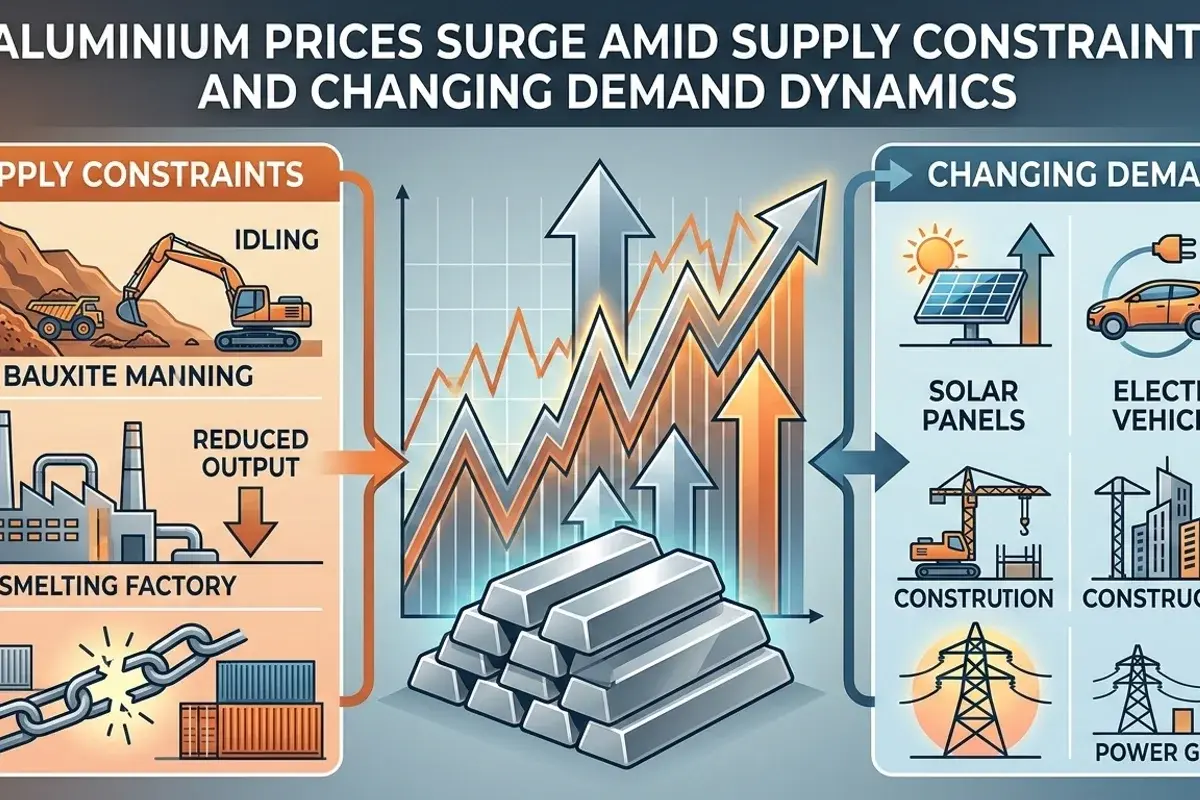
Aluminium prices have seen a significant rise of over 30% in the past two years, driven by increasing demand from clean energy initiatives and...

The ongoing West Asia conflict is causing unprecedented oil disruption, warning Daniel Yergin.

The recent volatility in gold and silver prices highlights how evolving global market conditions are reshaping traditional safe haven assets.

Gold and silver rates jump on MCX today amid dollar weakness and escalating US-Iran conflict.

Global crude oil prices have soared by 18% this week, with Brent nearing $85/barrel. FinScann analyzes the Middle East crisis, Strait of Hormuz...