Loading market data...
Gold prices in India vary slightly across states and cities due to taxes, logistics, and demand patterns. Here’s a detailed state-wise and city-wise analysis of gold rates across India.
Gold has always held a special place in India’s economy, culture, and investment landscape. From weddings and festivals to long-term wealth preservation, the precious metal remains one of the most preferred assets among Indian households. India is also one of the world’s largest consumers of gold, with demand driven by both jewellery purchases and investment products such as gold coins, bars, ETFs, and sovereign gold bonds.
In 2026, gold prices in India have remained near historic highs due to global economic uncertainty, geopolitical tensions, and steady demand from both investors and central banks. While the national benchmark price for gold is largely influenced by international bullion markets and currency exchange rates, retail prices differ slightly across states and cities.
These variations are generally small but can occur due to transportation costs, regional demand, and jeweller pricing strategies. Understanding these regional differences can help consumers and investors make more informed purchasing decisions.
Gold prices in India are typically quoted based on purity levels such as 24-carat, 22-carat, and 18-carat gold. The following table shows the approximate national benchmark price levels.
| Gold Purity | Average Price per Gram | Price per 10 Gram |
|---|---|---|
| 24 Carat (99.9%) | ₹16,300 | ₹1,63,000 |
| 22 Carat (91.6%) | ₹15,000 | ₹1,50,000 |
| 18 Carat | ₹12,300 | ₹1,23,000 |
Prices fluctuate daily depending on international bullion prices, the rupee-dollar exchange rate, and domestic demand conditions.
While the national gold price benchmark remains similar across the country, slight variations appear between states due to logistics costs, demand, and jeweller margins.
| State | 24K Gold Price (10g) | 22K Gold Price (10g) |
|---|---|---|
| Andhra Pradesh | ₹1,63,700 | ₹1,50,100 |
| Arunachal Pradesh | ₹1,64,100 | ₹1,50,400 |
| Assam | ₹1,64,000 | ₹1,50,300 |
| Bihar | ₹1,63,900 | ₹1,50,200 |
| Chhattisgarh | ₹1,63,800 | ₹1,50,100 |
| Goa | ₹1,63,600 | ₹1,49,900 |
| Gujarat | ₹1,63,900 | ₹1,50,200 |
| Haryana | ₹1,64,000 | ₹1,50,300 |
| Himachal Pradesh | ₹1,64,200 | ₹1,50,400 |
| Jharkhand | ₹1,63,900 | ₹1,50,200 |
| Karnataka | ₹1,63,600 | ₹1,49,900 |
| Kerala | ₹1,63,400 | ₹1,49,700 |
| Madhya Pradesh | ₹1,63,900 | ₹1,50,200 |
| Maharashtra | ₹1,63,800 | ₹1,50,100 |
| Manipur | ₹1,64,300 | ₹1,50,500 |
| Meghalaya | ₹1,64,200 | ₹1,50,400 |
| Mizoram | ₹1,64,300 | ₹1,50,500 |
| Nagaland | ₹1,64,200 | ₹1,50,400 |
| Odisha | ₹1,63,900 | ₹1,50,200 |
| Punjab | ₹1,64,000 | ₹1,50,300 |
| Rajasthan | ₹1,63,900 | ₹1,50,200 |
| Sikkim | ₹1,64,200 | ₹1,50,400 |
| Tamil Nadu | ₹1,63,700 | ₹1,50,000 |
| Telangana | ₹1,63,700 | ₹1,50,000 |
| Tripura | ₹1,64,200 | ₹1,50,400 |
| Uttar Pradesh | ₹1,63,900 | ₹1,50,200 |
| Uttarakhand | ₹1,64,100 | ₹1,50,300 |
| West Bengal | ₹1,63,800 | ₹1,50,100 |
Southern states such as Kerala, Karnataka, and Tamil Nadu often show slightly lower retail prices due to strong jewellery market competition and higher consumer demand.
City-wise prices are closely tracked by consumers because major bullion trading and jewellery markets are concentrated in large urban centers.
| City | 24K Gold (10g) | 22K Gold (10g) |
|---|---|---|
| Delhi | ₹1,63,900 | ₹1,50,200 |
| Mumbai | ₹1,63,200 | ₹1,49,900 |
| Chennai | ₹1,63,600 | ₹1,50,000 |
| Kolkata | ₹1,63,300 | ₹1,49,900 |
| Bangalore | ₹1,63,500 | ₹1,50,000 |
| Hyderabad | ₹1,63,500 | ₹1,49,900 |
| Ahmedabad | ₹1,63,400 | ₹1,49,800 |
| Jaipur | ₹1,63,500 | ₹1,49,900 |
| Lucknow | ₹1,63,700 | ₹1,50,100 |
| Patna | ₹1,63,200 | ₹1,49,700 |
| Pune | ₹1,63,100 | ₹1,49,900 |
| Kochi | ₹1,63,200 | ₹1,49,700 |
These price differences are usually within a narrow range of ₹200 to ₹1,000 per 10 grams depending on location and retailer.
Even though gold is globally traded, several domestic factors create regional price variations across India.
While GST on gold remains uniform across India, local logistics and jeweller charges can vary.
Gold imported through major ports such as Mumbai or Chennai must be transported across the country, which can slightly increase costs in distant regions.
Certain regions in India have extremely strong cultural demand for gold jewellery, particularly southern states.
Cities with large jewellery markets and many competing retailers often have lower margins, resulting in slightly lower gold prices.
Since India imports most of its gold, fluctuations in the rupee against the US dollar can influence domestic gold prices across all states.
Gold continues to be a preferred investment option in India due to its role as a hedge against inflation and economic uncertainty. During periods of geopolitical instability or financial market volatility, investors often increase their allocation to gold.
Common investment options include:
Demand typically rises during the Indian wedding season and major festivals such as Diwali, Dhanteras, and Akshaya Tritiya.
Gold prices in India are expected to remain influenced by several global and domestic factors including interest rate policies, inflation trends, geopolitical developments, and currency fluctuations.
With rising global uncertainty and strong demand from both investors and central banks, gold is likely to remain a key asset class for long-term wealth preservation in India.
Gold prices in India are primarily influenced by global bullion markets but show slight variations across states and cities due to logistics costs, jeweller margins, and regional demand patterns. Southern states with strong jewellery markets often offer slightly lower prices, while northern markets may show marginally higher rates.
For consumers and investors, monitoring regional price trends can help identify the most competitive markets when purchasing gold, especially during periods of strong demand.

Financial journalist specializing in market analysis, stock research, and investment trends. Dedicated to providing accurate, timely insights for informed decision-making.
Credentials: Experienced financial journalist with expertise in equity markets and economic analysis
The information provided in this article is for educational and informational purposes only and should not be construed as financial, investment, or legal advice. Finscann does not provide personalized investment recommendations.
For detailed terms and conditions, please read our Disclaimer and Terms of Service.

Crude oil prices surge 20% to $111 amid US-Iran conflict, triggering a Nifty 50 gap-down and global market sell-off.
Silver prices in India have seen strong volatility and long-term growth driven by industrial demand, investment demand, and global economic...

The Iran–US–Israel conflict has created major volatility in global oil markets. Rising geopolitical tensions and shipping risks have pushed crude oil...
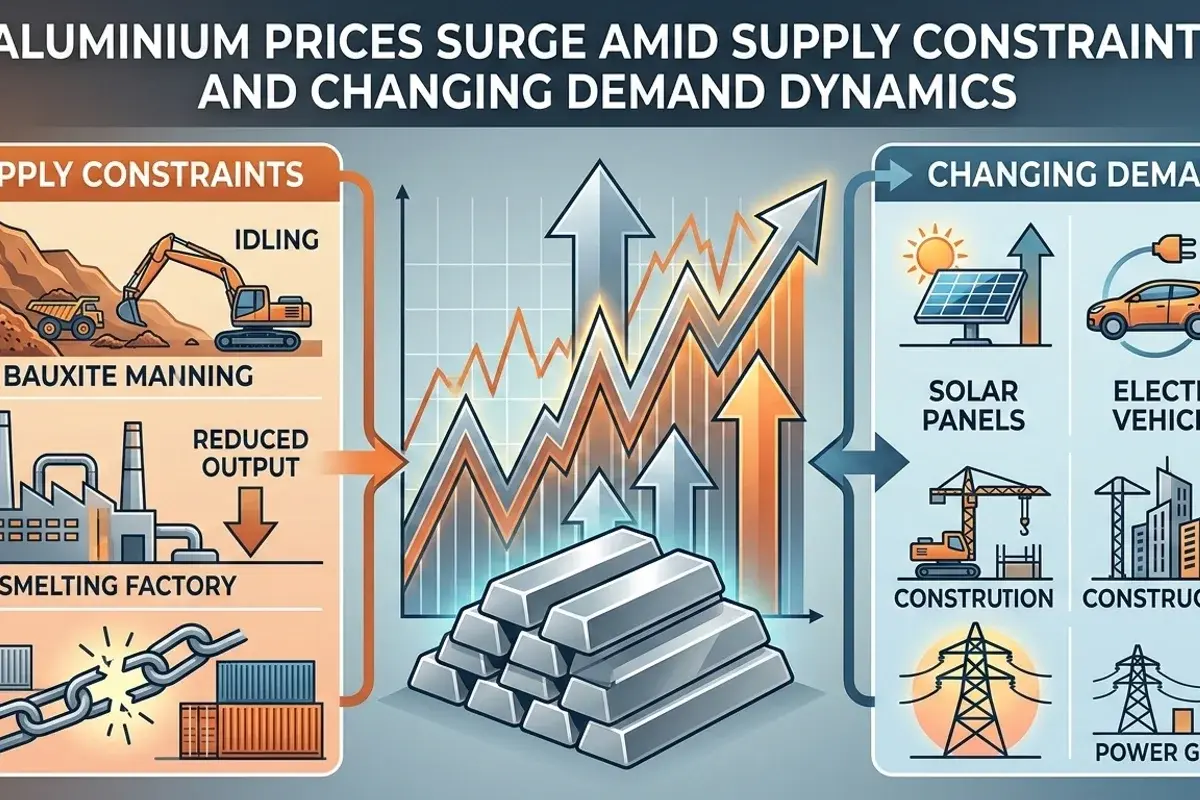
Aluminium prices have seen a significant rise of over 30% in the past two years, driven by increasing demand from clean energy initiatives and...

The ongoing West Asia conflict is causing unprecedented oil disruption, warning Daniel Yergin.