Loading market data...
Global stock markets are plummeting in March 2026 as Middle East tensions drive oil prices to multi-month highs, fueling inflation fears and impacting investor sentiment. FinScann provides a data-driven analysis.

Global stock markets are experiencing significant turbulence this March 2026, with major indices on Wall Street dropping sharply amidst escalating tensions in the Middle East and a dramatic surge in crude oil prices. Investors are bracing for a potential broader economic fallout, as the geopolitical landscape darkens with events primarily involving Iran and its impact on vital energy supply routes.
The Catalyst
The current downturn is directly attributable to heightened geopolitical risks stemming from the Middle East. Concerns escalated following reports of Iran's attack on the U.S. Embassy in Saudi Arabia, which has severely rattled global confidence. This, coupled with fears surrounding the Strait of Hormuz, a critical chokepoint through which approximately 20% of the world's oil supply and a significant portion of natural gas flows, has ignited panic in energy markets. Any disruption to this strategic waterway could have catastrophic implications for global energy supplies and prices, leading to widespread inflationary pressures. The market is now pricing in a substantial geopolitical risk premium, as the conflict spreads and confidence in energy supply continuity declines.
Financial Forensics
The immediate aftermath has seen significant shifts across major financial benchmarks globally and within India:
Market Performance at a Glance (March 3, 2026)
| Index / Commodity | Daily Change | Current Value (Approx.) |
|---|---|---|
| Dow Jones Industrial Average | Down ~907 points (1.9%) | N/A |
| S&P 500 | Down 1.8% | N/A |
| Nasdaq Composite | Down 2.1% | N/A |
| Brent Crude | Up 8.2% | $84.14/barrel |
| U.S. Crude | Up 8% | $76.92/barrel |
| Sensex | Down 1.3% | 80,239 points |
| Nifty 50 | Down 1.24% | 24,865 points |
| India VIX | Up 25% | ~17 |
| Source: FinScann Analysis, March 2026 |
Market Impact
The current market downturn reflects a profound investor anxiety over the global economic implications of these geopolitical developments. The significant rise in oil prices directly translates to increased costs for businesses across manufacturing, transportation, and logistics, ultimately impacting consumer spending and potentially delaying central bank interest rate cuts. Sectors like airlines, oil marketing companies (OMCs), and automobile manufacturers are particularly vulnerable to soaring fuel costs, while upstream oil producers like ONGC and Oil India Ltd. might see short-term gains due to higher crude realisations. Conversely, safe-haven assets such as Gold have surged, with prices hitting record highs amidst the uncertainty. Defence sector stocks are also seeing increased demand.
Key Takeaways for Investors
FinScann Verdict
FinScann analysis suggests that while short-term volatility is unavoidable, investors should avoid panic selling. The immediate focus should be on understanding the nuanced impact of rising oil prices and geopolitical risks on individual portfolio holdings. A prolonged conflict carries significant economic risks, necessitating a vigilant, data-driven investment approach.
Q: Why are global stock markets reacting so strongly to Middle East tensions? A: Global stock markets are highly sensitive to geopolitical tensions in the Middle East primarily due to the region's critical role in global energy supply. Any threat of disruption to oil and natural gas production or transport routes, especially the Strait of Hormuz, immediately triggers fears of supply shortages and rising energy costs, which can then fuel inflation and slow economic growth worldwide. This uncertainty causes investors to reduce exposure to riskier assets like stocks.
Q: How do rising oil prices specifically impact the Indian economy and stock market? A: India imports over 85% of its crude oil, making it highly susceptible to global oil price fluctuations. When oil prices rise, India's import bill increases, widening the current account deficit and putting pressure on the Indian Rupee (₹). Higher crude oil costs also translate to increased domestic fuel prices, which feed into inflation, impacting manufacturing, transportation, and consumer spending. This can squeeze corporate profit margins and pressure the Sensex and Nifty 50.
Q: What assets typically perform well during periods of high geopolitical risk and market uncertainty? A: During periods of heightened geopolitical risk and market uncertainty, investors often seek "safe-haven" assets. Historically, Gold has been a primary beneficiary, surging as investors move into perceived safer stores of value. The U.S. Dollar and government bonds (like Treasury yields) can also see increased demand. Within equities, sectors like defence and certain energy stocks (especially upstream exploration and production companies benefiting from higher crude prices) tend to show resilience or even outperform.
Disclaimer: For information only; not investment advice. Stock market investments carry risks. Please consult a SEBI-registered advisor before investing. FinScann assumes no liability for decisions made based on this report.

Financial journalist specializing in market analysis, stock research, and investment trends. Dedicated to providing accurate, timely insights for informed decision-making.
Credentials: Experienced financial journalist with expertise in equity markets and economic analysis
The information provided in this article is for educational and informational purposes only and should not be construed as financial, investment, or legal advice. Finscann does not provide personalized investment recommendations.
For detailed terms and conditions, please read our Disclaimer and Terms of Service.
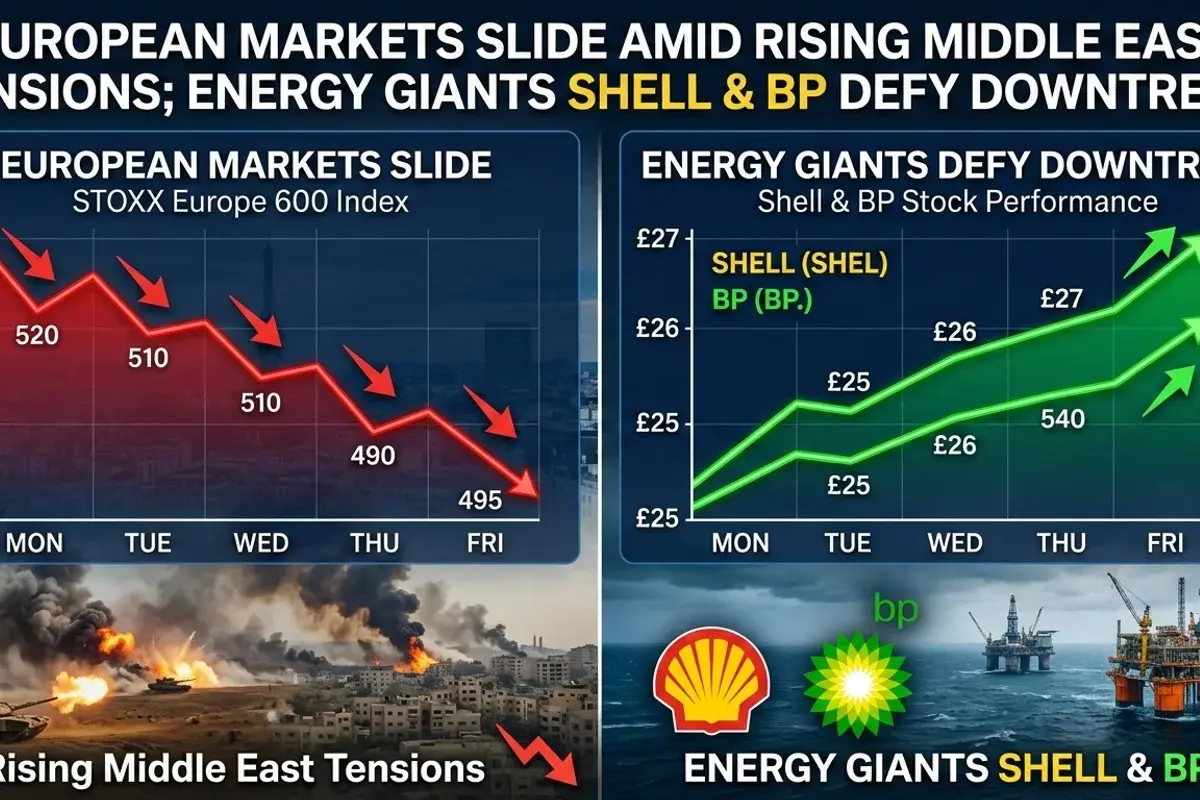
European markets stumble in March 2026 as Middle East tensions escalate, while energy behemoths Shell and BP surge. FinScann analyzes market shifts.

Global markets are bracing for heightened volatility in March 2026 as surging energy and metal prices signal investor shift from growth to...

Chinese artificial intelligence lab DeepSeek is reshaping the competitive dynamics of the AI hardware ecosystem by withholding early access to its...