Loading market data...
European markets stumble in March 2026 as Middle East tensions escalate, while energy behemoths Shell and BP surge. FinScann analyzes market shifts.
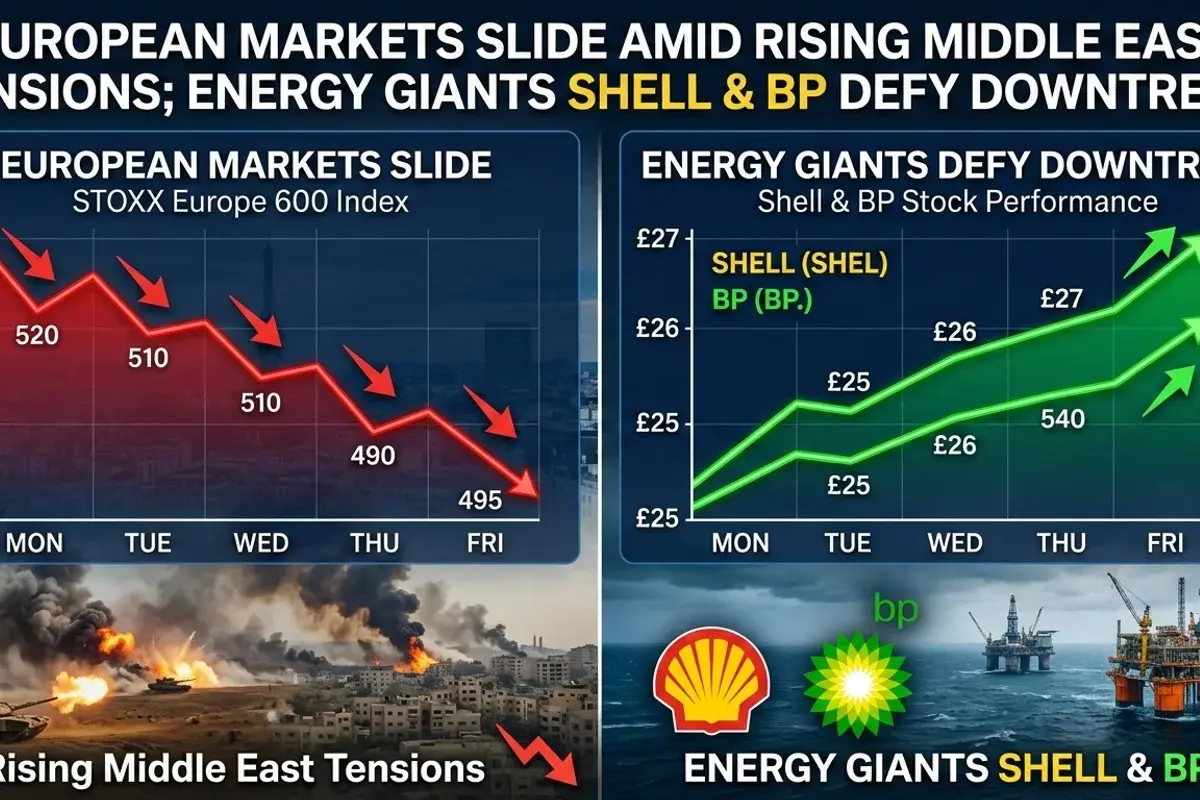
European equity markets, including the FTSE 100, DAX 40, and CAC 40, are experiencing significant downward pressure in early March 2026, driven primarily by escalating geopolitical instability in the Middle East. This renewed volatility has prompted a flight to safety, with broader indices retreating. However, in a contrasting move, major energy stocks like Shell PLC (LSE: SHEL) and BP PLC (LSE: BP) are robustly defying the downtrend, buoyed by surging crude oil prices and heightened supply concerns. This divergence highlights a classic market reaction to geopolitical risk, where sector-specific beneficiaries emerge amidst broader market turmoil, demanding a granular FinScann analysis for investors navigating these turbulent waters.
The Catalyst
The primary catalyst for the current market downturn is the intensifying geopolitical situation in the Middle East, specifically heightened tensions impacting key shipping lanes and oil-producing regions. Recent events, including renewed attacks on commercial vessels in the Red Sea and broader regional instability, have triggered a sharp spike in global crude oil benchmarks like Brent crude and WTI crude. This has fueled fears of supply disruptions and inflationary pressures across Europe, prompting investors to reassess risk exposure. The European Central Bank (ECB) is closely monitoring the situation, as energy price shocks could complicate its monetary policy decisions.
Financial Forensics
Across Europe, major indices registered significant declines in the first week of March 2026. The DAX 40 in Germany dropped by 1.8%, while France's CAC 40 fell by 1.5%. The FTSE 100, despite its higher weighting towards energy and materials, also saw a decline of 1.2%, as banking and consumer discretionary sectors bore the brunt of the sell-off. In contrast, Brent crude oil prices surged over 4%, crossing the $90 per barrel mark for the first time in months. This direct correlation between geopolitical events and energy commodity prices is the core driver behind the resilience of energy majors.
Shell PLC witnessed its shares climb by 2.7% over the past week, reaching a new multi-month high, while BP PLC stock gained 3.1% in the same period. These companies, with their significant exploration, production, and refining capacities, are direct beneficiaries of higher oil and gas prices. Their robust balance sheets and strong free cash flow generation potential in this environment make them attractive to investors seeking hedges against broader market declines. For instance, Shell recently announced a $3.5 billion share buyback program, underpinning investor confidence. Similarly, BP has demonstrated commitment to shareholder returns even amidst its energy transition strategy.
Table: European Major Index and Energy Stock Performance (First Week of March 2026)
| Index/Stock | % Change (W-o-W) | Current Level (Approx.) | Key Driver |
|---|---|---|---|
| DAX 40 | -1.8% | 17,500 points | Geopolitical risk, inflation fears |
| CAC 40 | -1.5% | 7,900 points | Geopolitical risk, economic slowdown concern |
| FTSE 100 | -1.2% | 7,600 points | Broad market selling, despite energy strength |
| Shell PLC | +2.7% | £26.50 | Rising oil prices, strong earnings outlook |
| BP PLC | +3.1% | £5.05 | Rising oil prices, shareholder returns |
| Brent Crude | +4.2% | $90.50/barrel | Middle East tensions, supply concerns |
| Source: FinScann Analysis of Market Data, March 2026 |
Market Impact
The immediate market impact is a clear rotation out of growth and cyclical stocks into defensive sectors and commodities. Investors are seeking perceived safe havens, and energy companies, particularly those with strong dividend yields and robust cash flows, fit this profile during periods of elevated oil prices. This scenario also puts pressure on consumer-facing businesses due to the threat of higher energy costs impacting discretionary spending and corporate margins. While the Indian stock market, including the Nifty 50 and Sensex, has shown relative resilience, global risk-off sentiment could trigger FII outflows if the situation in the Middle East deteriorates further. The Reserve Bank of India (RBI) will also be closely watching global oil price movements, as they are a significant factor in India's import bill and inflation trajectory.
Key Takeaways
FinScann Verdict
FinScann's analysis indicates that while broader market volatility is likely to persist as long as geopolitical risks remain elevated, the energy sector offers a defensive play. Investors with a higher risk appetite may find opportunities in well-capitalized oil and gas majors like Shell and BP, which are poised to benefit from current commodity price dynamics. However, careful monitoring of global developments and their potential impact on corporate earnings is crucial.
Q: How do Middle East tensions specifically affect European stock markets? A: Middle East tensions primarily affect European stock markets by driving up crude oil prices, which increases energy costs for businesses and consumers, leading to higher inflation. This can prompt central banks to maintain higher interest rates, impacting economic growth and corporate earnings across various sectors. Additionally, the uncertainty itself leads to a "risk-off" sentiment, causing investors to sell equities and seek safer assets.
Q: Are energy stocks like Shell and BP good long-term investments given the focus on renewable energy? A: While the global focus is shifting towards renewable energy, major energy companies like Shell and BP are actively investing in and transitioning towards cleaner energy portfolios. In the short to medium term, they still benefit significantly from traditional oil and gas operations, especially during periods of high commodity prices. For the long term, their investment viability depends on their successful execution of energy transition strategies and ability to generate returns from both traditional and new energy ventures.
Q: What is the impact of rising oil prices on inflation in Europe? A: Rising oil prices directly feed into headline inflation in Europe. Higher fuel costs impact transportation, manufacturing, and consumer goods, leading to increased production costs for businesses, which are often passed on to consumers. This reduces purchasing power and can slow economic growth. The ECB closely monitors these inflationary pressures when determining monetary policy.
Q: Should Indian investors be concerned about the European market slide? A: While Indian markets (Nifty 50, Sensex) have shown relative strength, Indian investors should be mindful of the European market slide. Global interconnectedness means that significant downturns in major economies can impact foreign institutional investor (FII) sentiment, potentially leading to outflows from emerging markets like India. Additionally, higher global oil prices directly impact India's current account deficit and inflation, which are key macroeconomic concerns for the RBI.
Q: What are safe haven assets during geopolitical crises? A: During geopolitical crises, investors typically flock to safe haven assets. These commonly include government bonds from stable economies (e.g., US Treasuries, German Bunds), gold, the US Dollar, and sometimes the Japanese Yen or Swiss Franc. Certain defensive sectors, like utilities or consumer staples, can also be considered relatively safer within the equity markets.
Disclaimer: For information only; not investment advice. Stock market investments carry risks. Please consult a SEBI-registered advisor before investing. FinScann assumes no liability for decisions made based on this report.

Financial journalist specializing in market analysis, stock research, and investment trends. Dedicated to providing accurate, timely insights for informed decision-making.
Credentials: Experienced financial journalist with expertise in equity markets and economic analysis
The information provided in this article is for educational and informational purposes only and should not be construed as financial, investment, or legal advice. Finscann does not provide personalized investment recommendations.
For detailed terms and conditions, please read our Disclaimer and Terms of Service.
Global markets are bracing for heightened volatility in March 2026 as surging energy and metal prices signal investor shift from growth to...

Chinese artificial intelligence lab DeepSeek is reshaping the competitive dynamics of the AI hardware ecosystem by withholding early access to its...