Loading market data...
Chennai-based The ePlane Company is developing India’s first electric air taxi, the e200x, using Nvidia Omniverse digital twin technology and advanced AI computing. By simulating millions of virtual flight kilometres through high-performance computing, the startup aims to accelerate safety validation and predictive maintenance. The project marks a major milestone in India’s urban air mobility sector, positioning the country within the global eVTOL aviation race.
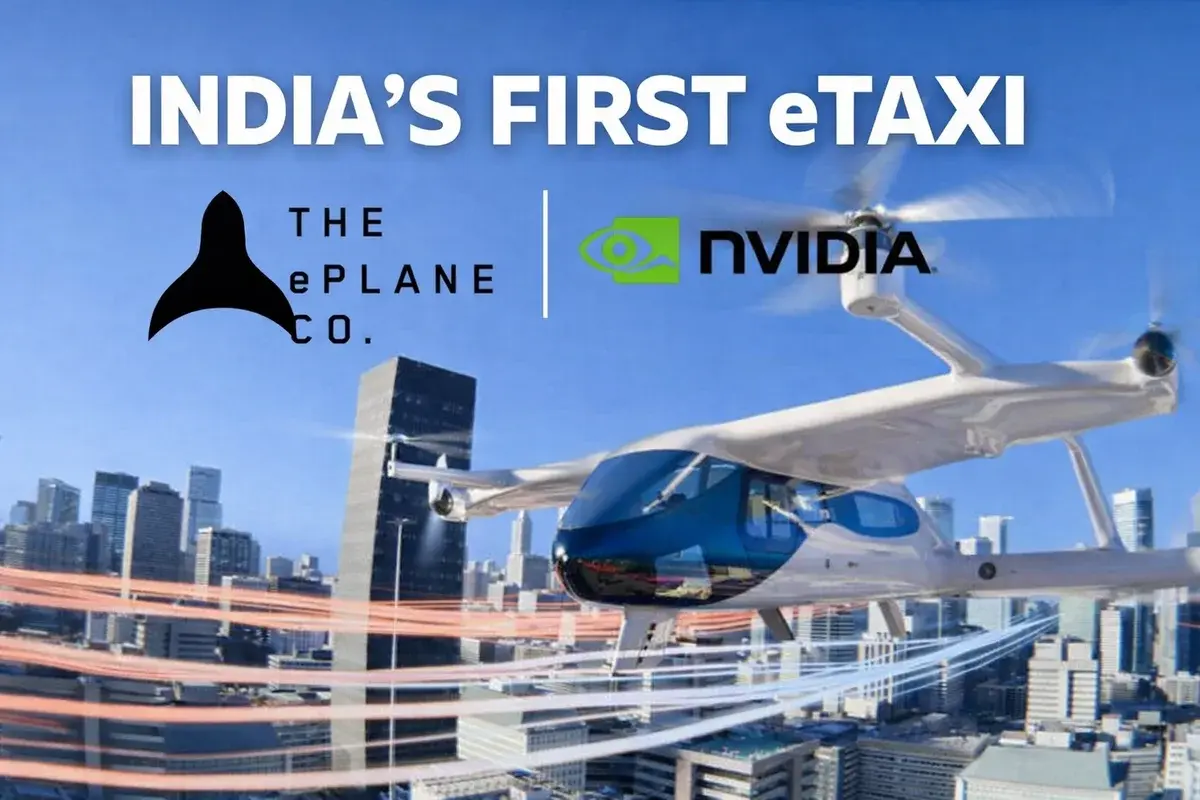
Chennai-based startup The ePlane Company is building India’s first electric air taxi, the e200x, using Nvidia’s Omniverse-powered digital twin technology to simulate millions of virtual flight kilometres before commercial launch. With high-performance computing (HPC), onboard AI processing, and predictive maintenance architecture, the startup aims to redefine urban air mobility (UAM) in India’s rapidly digitizing aviation ecosystem. For investors, this signals a new frontier in deep-tech aviation, AI-driven aerospace design, and future IPO potential in India’s emerging air mobility market.
India’s startup ecosystem has matured beyond food delivery, fintech, and SaaS. The next frontier is deep-tech aviation innovation. In a move that could redefine urban mobility, Chennai-based The ePlane Company is developing India’s first electric air taxi — the e200x — powered by advanced digital twin technology from Nvidia.
At a time when global players like Joby Aviation and Archer Aviation are racing toward commercial eVTOL deployment in the US, India’s entry into electric vertical take-off and landing aircraft signals serious intent in the urban air mobility (UAM) space.
The convergence of AI, HPC, aerospace-grade autonomy systems, digital twin simulation, and sustainable electric propulsion is creating a high-barrier-to-entry industry with enormous long-term alpha generation potential.
=
At the core of the e200x development lies Nvidia’s Omniverse simulation platform.
Using Nvidia Omniverse, engineers have built a high-fidelity digital twin of the aircraft. This allows:
• Real-time physics simulation • Emergency scenario modeling • Sensor fusion testing • Autonomous decision-making refinement • Predictive analytics for component failure
The computational intensity of these simulations requires advanced GPUs and HPC infrastructure, positioning Nvidia as a strategic enabler in aerospace AI.
Instead of traditional iterative prototyping:
• The aircraft flies millions of virtual kilometres • Edge-case scenarios are tested before real-world exposure • Safety algorithms evolve exponentially • Maintenance risks are predicted in advance
“This isn't just a simulation; it's a time machine for safety. Our aircraft live a thousand lives in the digital testbed… Every decision is validated and perfected in the digital world so that safety is uncompromising in the physical one.” — Bakthakolahalan Shyamsundar, Principal Engineer – Avionics Systems & Autonomy, The ePlane Company
=
India’s mega cities are facing severe congestion:
| City | Avg Commute Time | Population (Mn) | Infrastructure Stress |
|---|---|---|---|
| Bengaluru | 90+ mins | 14+ | Severe |
| Mumbai | 80+ mins | 20+ | Extreme |
| Delhi NCR | 75+ mins | 32+ | High |
| Chennai | 60+ mins | 11+ | Growing |
With rising urban density, electric air taxis offer:
• Faster intra-city travel • Reduced carbon footprint • Infrastructure-light scalability • Premium commuter targeting
Global projections estimate the Urban Air Mobility market could exceed $1 trillion by 2040, making this a structural innovation theme.
=
While full commercial specifications are evolving, the strategic blueprint includes:
| Component | Technology Used | Strategic Advantage |
|---|---|---|
| Simulation | Nvidia Omniverse | Risk-free digital validation |
| Onboard Compute | Nvidia AI GPUs | Real-time autonomous decisions |
| Sensor Suite | Cameras + Radar | Redundant safety layering |
| Predictive Maintenance | Digital Twin Analytics | Reduced downtime |
| Flight Physics Engine | HPC Infrastructure | High-fidelity simulation |
This architecture integrates AI, machine learning, aerospace design, and electric propulsion.
=
Although The ePlane Company is currently private, evaluating global eVTOL peers provides insight.
| Company | Market Cap (Approx) | Revenue | EBITDA Margin | Stage |
|---|---|---|---|---|
| Joby Aviation | ~$6–7B | Pre-commercial | Negative | Certification |
| Archer Aviation | ~$4–5B | Pre-commercial | Negative | Testing |
| Lilium | ~$1B+ | Early stage | Negative | Development |
Aerospace startups operate with:
• High R&D burn • Certification timelines • Capital intensity • Long gestation cycles
However, scalable unit economics could improve via:
• Premium pricing • Fleet deployment • Recurring route revenues • Predictive maintenance cost savings
=
The competitive advantages include:
• AI-first simulation architecture • Early-mover advantage in India • HPC-enabled predictive maintenance • Lower cost engineering base
Digital twin optimization compresses development cycles and reduces capital inefficiency.
=
| Risk Category | Risk Level | Commentary |
|---|---|---|
| Regulatory Approval | High | DGCA certification complexity |
| Capital Intensity | High | Aerospace funding heavy |
| Battery Density | Medium | Energy constraints |
| Public Trust | Medium | Safety perception key |
| Infrastructure | Medium | Vertiport ecosystem required |
“Urban air mobility is a high-beta deep-tech bet. While the TAM is enormous, certification risk and capital burn remain structural headwinds.” — Market Strategy Perspective
=
For Nvidia, this collaboration expands AI dominance beyond gaming and data centers.
| Segment | Strategic Impact |
|---|---|
| Data Center | HPC revenue expansion |
| Automotive | Autonomy crossover |
| Aerospace | Digital twin scaling |
| Industrial AI | Predictive analytics growth |
=
Electric air taxis align with:
• Net-zero mobility goals • Lower emissions • Sustainable urban transport
This could unlock:
• ESG funding • Green mobility incentives • Institutional capital
=
The ePlane Company remains private.
Investors can track exposure via:
• Nvidia • Global eVTOL players • Aerospace component manufacturers • Advanced battery companies
Indian investors can access global stocks via:
• Zerodha • Groww • Interactive Brokers • Vested
=
The e200x represents more than a prototype. It symbolizes India’s deep-tech aviation ambition powered by AI, HPC, and digital twin architecture.
If executed successfully, it could position India in the global urban air mobility ecosystem.
The runway is long. Execution risk is real. But the innovation trajectory is undeniable.
=
⚠️ DISCLAIMER: We Are Not Financial Advisors

Financial journalist specializing in market analysis, stock research, and investment trends. Dedicated to providing accurate, timely insights for informed decision-making.
Credentials: Experienced financial journalist with expertise in equity markets and economic analysis
The information provided in this article is for educational and informational purposes only and should not be construed as financial, investment, or legal advice. Finscann does not provide personalized investment recommendations.
For detailed terms and conditions, please read our Disclaimer and Terms of Service.
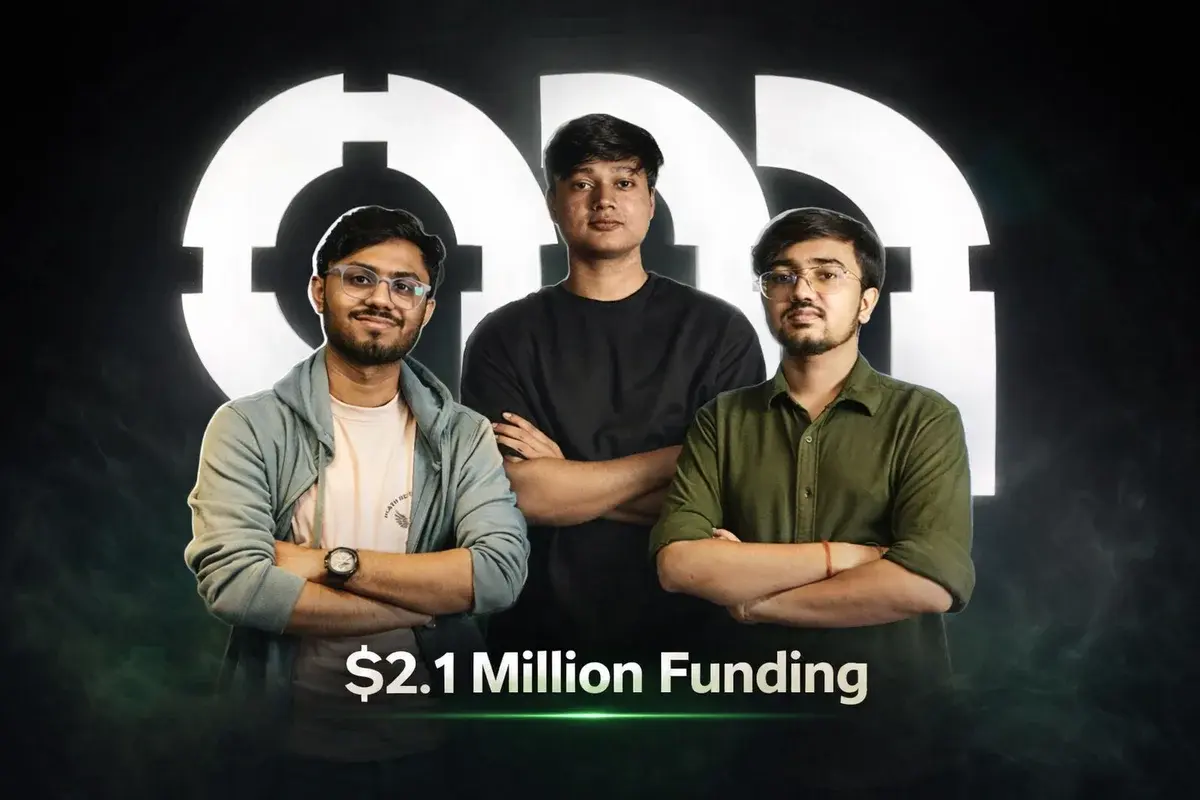
Bengaluru-based robotics startup Armatrix raises $2.1 million in pre-seed funding led by pi Ventures to deploy 22-DoF snake-like robotic arms for oil...

Cancer care startup OnCare secures ₹27 crore in Series A funding to expand its oncology support platform.
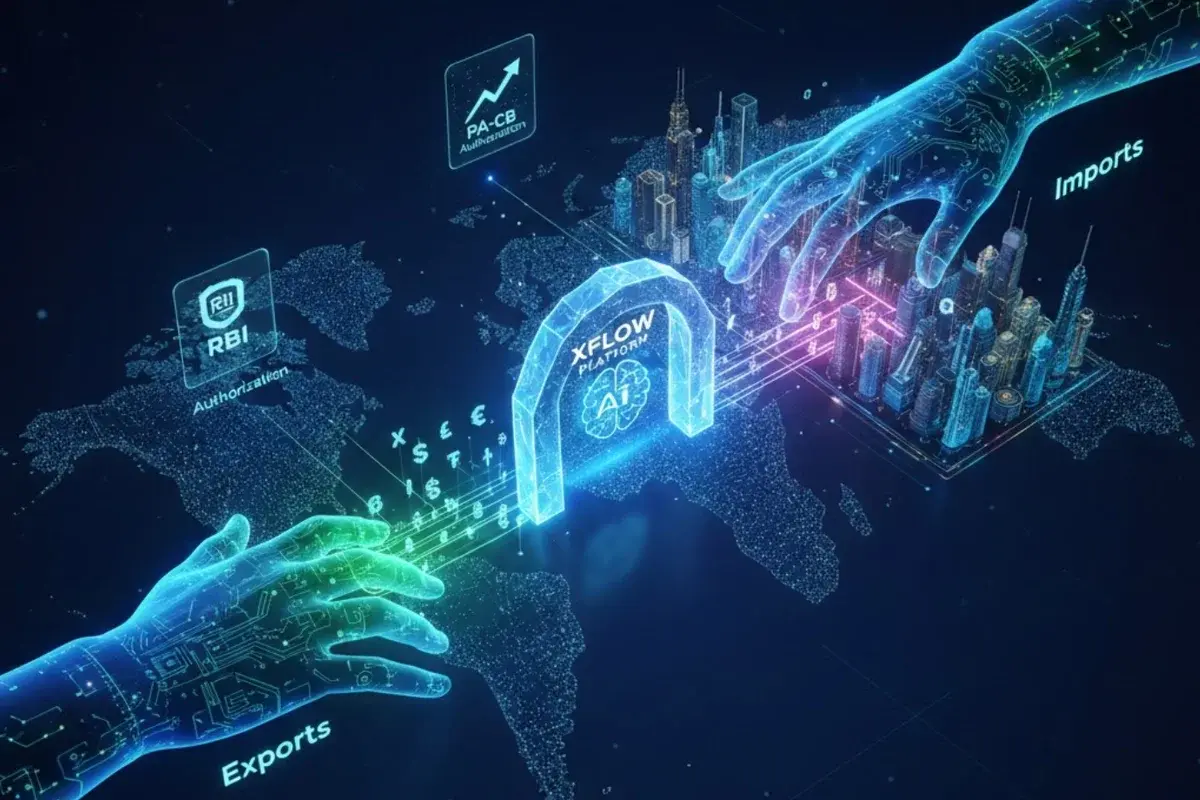
The landscape of Indian fintech just shifted. Xflow has announced a $16.6 million Series A funding round led by General Catalyst, marking a pivotal...

Wishlink raises $17.5M led by Vertex Ventures, boosting its creator commerce platform and expanding its network in India's rapidly growing digital...

Indian startups raised $285 million this week, led by Spinny and Statiq, even as overall funding slowed.