Loading market data...
Global oil markets face renewed volatility as Oman evacuates its key Mina Al Fahal export terminal following tanker attacks in Iraqi waters. Rising Middle East tensions and threats to major shipping routes have pushed Brent crude prices sharply higher, raising concerns over potential disruptions to global energy supply chains and inflation risks worldwide.
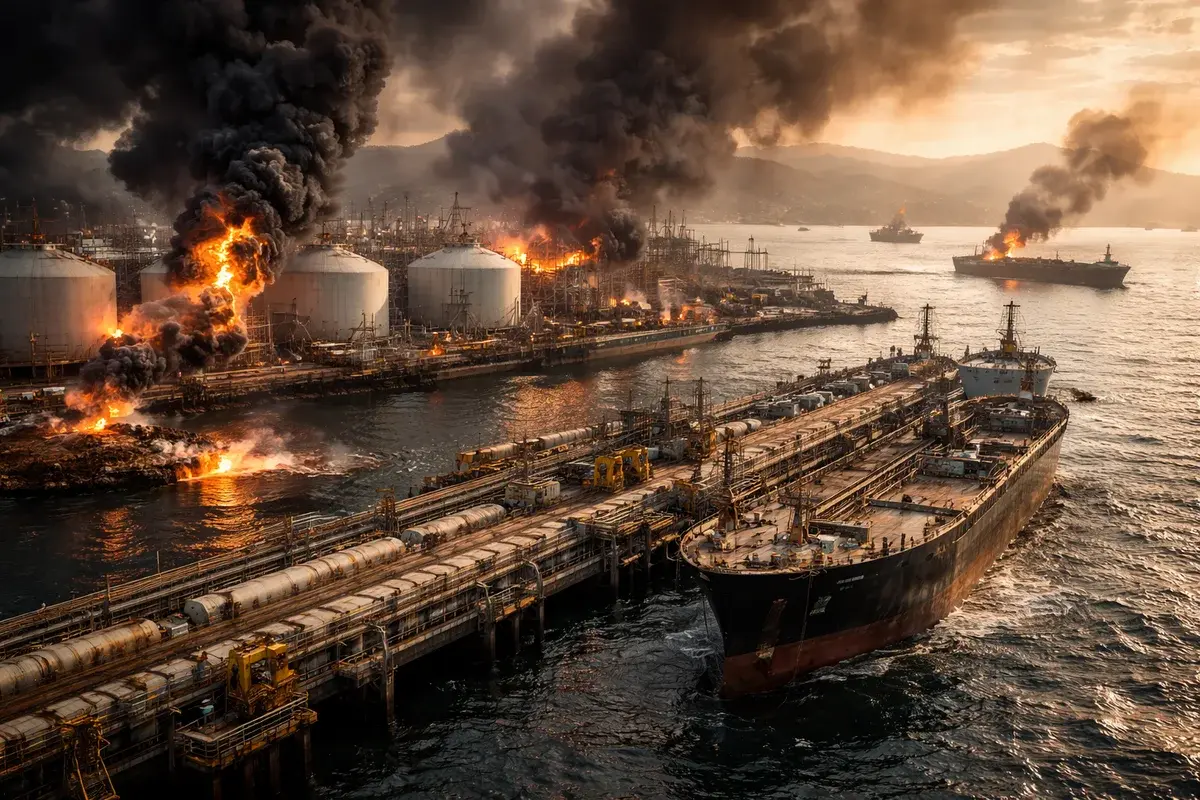
Escalating tensions in the Middle East have begun to directly disrupt global energy infrastructure after Oman evacuated vessels from its primary oil export terminal at Mina Al Fahal. The precautionary move followed attacks on crude oil tankers in nearby Iraqi waters and growing fears that the conflict could spread further across key energy shipping routes. The developments have intensified concerns about the stability of global oil supply chains and triggered immediate volatility in energy markets.
The evacuation underscores the fragile nature of energy logistics in the Gulf region, where a large portion of the world’s crude oil exports pass through narrow maritime corridors. With the ongoing regional war expanding into shipping lanes and oil facilities, investors and policymakers are closely watching the situation for signs of further disruption.
The crisis intensified after two crude oil tankers were reportedly struck near Iraq’s coast, prompting authorities to halt operations at several oil terminals and raise security alerts across the Gulf. Maritime incidents in these waters carry enormous consequences because the region hosts some of the world’s most important export hubs for crude oil and liquefied natural gas.
Officials reported that multiple vessels loaded with Iraqi crude were damaged or set ablaze during the attacks, causing temporary shutdowns of oil loading facilities. The strikes also heightened fears that energy infrastructure and commercial shipping could increasingly become targets as the conflict escalates.
The attacks highlight how modern geopolitical conflicts increasingly extend beyond traditional battlefields to critical economic infrastructure such as ports, pipelines, and shipping routes.
Energy markets reacted immediately to the escalating crisis. Brent crude oil prices surged sharply as traders priced in the risk of major disruptions to Middle Eastern oil exports. The rapid price movement reflects the market’s sensitivity to any threat to supply routes in the Gulf region, which remains one of the world’s most important energy corridors.
Below is a snapshot of how the market reacted to the latest developments.
| Commodity | Price Movement | Market Reaction |
|---|---|---|
| Brent Crude | Surged above $100 per barrel | Driven by fears of supply disruption |
| WTI Crude | Jumped sharply near $95 | Reflecting rising geopolitical risk |
| Energy Stocks | Mixed but volatile | Investors repositioning portfolios |
| Shipping Costs | Rising rapidly | Insurance premiums increasing |
The sudden spike in crude prices demonstrates how geopolitical tensions can rapidly alter global energy markets. Even temporary disruptions in oil transport can lead to significant price swings.
The unfolding crisis has drawn renewed attention to the Strait of Hormuz, one of the world’s most critical energy chokepoints. The strait connects the Persian Gulf with the Arabian Sea and serves as the primary transit route for oil exports from major producers such as Saudi Arabia, Iraq, the United Arab Emirates, and Kuwait.
Approximately 20% of the world’s seaborne oil supply passes through this narrow waterway each day, making it a vital artery for global energy markets.
The following table illustrates the strategic importance of this route.
| Key Metric | Value |
|---|---|
| Share of global oil passing through Strait of Hormuz | ~20% |
| Estimated daily oil transit | ~20 million barrels |
| Major exporting countries | Saudi Arabia, UAE, Iraq, Kuwait, Qatar |
| Main destination markets | Asia, Europe, North America |
When shipping traffic through this corridor is disrupted, oil markets across the world immediately experience volatility due to fears of supply shortages.
Beyond the immediate spike in oil prices, the crisis has broader implications for global trade and energy security. Tanker attacks and port evacuations can trigger cascading effects across shipping networks, including delayed cargo shipments, higher freight costs, and increased insurance premiums.
Shipping companies have already begun reassessing the safety of routes passing through the Gulf region. Some vessels are delaying transit or rerouting shipments to avoid high-risk areas. Such decisions can significantly increase transportation costs and delivery times.
For energy-importing economies—particularly in Asia—these developments could lead to higher fuel costs and inflationary pressures if the disruptions persist.
The implications of the crisis extend well beyond the energy sector. Higher oil prices often translate into rising transportation and manufacturing costs across industries.
The table below outlines how various sectors could be affected.
| Sector | Potential Impact |
|---|---|
| Airlines | Higher jet fuel costs affecting profitability |
| Shipping & Logistics | Rising freight and insurance costs |
| Manufacturing | Increased raw material and energy expenses |
| Financial Markets | Higher volatility in equities and currencies |
| Energy Companies | Potential gains due to higher oil prices |
For multinational companies operating in global supply chains, the uncertainty surrounding energy routes may require adjustments to sourcing strategies and risk management frameworks.
Energy analysts believe the situation could remain unstable as long as geopolitical tensions continue across the region. Oil markets are particularly sensitive to developments involving maritime infrastructure or export terminals.
Several key factors will determine the direction of the crisis in the coming weeks:
| Key Factor | Possible Market Effect |
|---|---|
| Further tanker attacks | Higher oil price spikes |
| Diplomatic negotiations | Potential stabilization of markets |
| Military escalation | Severe supply disruptions |
| Strategic reserve releases | Temporary price relief |
If attacks on shipping infrastructure continue or if additional oil facilities are targeted, energy markets could face prolonged volatility and potentially even larger price surges.
The evacuation of vessels from Oman’s Mina Al Fahal oil terminal highlights the growing vulnerability of global energy supply chains amid escalating Middle East tensions. With tanker attacks disrupting oil exports and pushing Brent crude prices sharply higher, the situation has become a major concern for global markets.
As the conflict evolves, the security of key shipping routes and energy infrastructure will remain one of the most critical factors influencing oil prices, global trade flows, and economic stability in the months ahead.

Financial journalist specializing in market analysis, stock research, and investment trends. Dedicated to providing accurate, timely insights for informed decision-making.
Credentials: Experienced financial journalist with expertise in equity markets and economic analysis
The information provided in this article is for educational and informational purposes only and should not be construed as financial, investment, or legal advice. Finscann does not provide personalized investment recommendations.
For detailed terms and conditions, please read our Disclaimer and Terms of Service.

Global markets reel as Iran-Israel-US conflict escalates in March 2026. Oil prices soar, gold surges, and Indian equities plunge amid severe Strait...

India's Russian crude imports surge 50% in March 2026 to 1.5M bpd, driven by a US waiver and Strait of Hormuz disruptions.

US–Iran conflict enters its 13th day with rising casualties and ongoing airstrikes, while global fuel prices remain stable despite Middle East...

iQOO launches Z11x in India with Dimensity 7400 Turbo chipset, 7200mAh battery, and AI cameras, targeting the competitive mid-range smartphone market.

India's oil tankers gain critical access to Strait of Hormuz after Iran talks. FinScann analyzes the impact on India's energy security and global oil...