Loading market data...
The US Supreme Court has struck down former President Donald Trump’s sweeping tariff orders, ruling that the executive branch exceeded its authority under the International Emergency Economic Powers Act (IEEPA). The landmark decision clarifies constitutional limits on presidential power in trade policy and shifts greater authority back to Congress. Markets had been closely watching the verdict amid prolonged uncertainty. The ruling is expected to reshape US trade strategy, influence global supply chains, and impact industries reliant on imports. Businesses and investors are now reassessing cost structures, inflation pressures, and future tariff frameworks as Washington recalibrates its economic and trade policy direction.
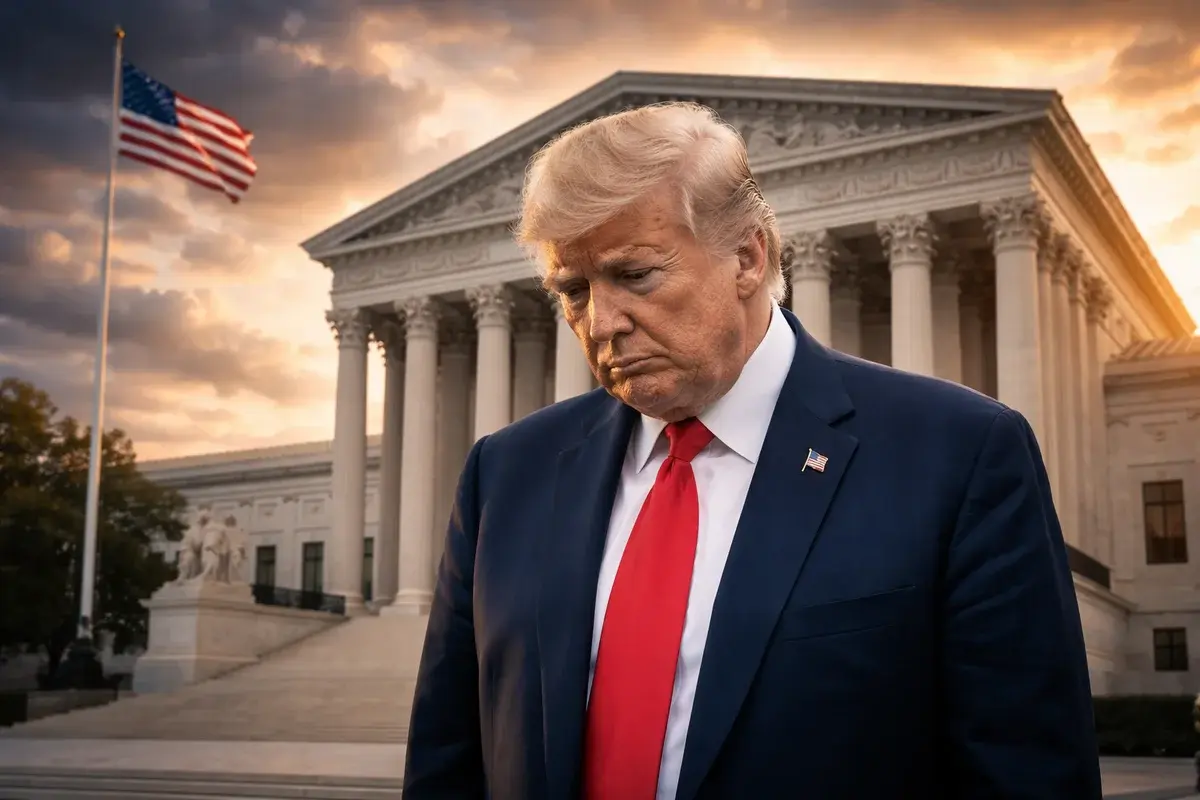
In a landmark ruling that could reshape US trade policy for years to come, the Supreme Court of the United States has struck down sweeping tariff orders issued under the Trump administration, declaring them beyond the scope of executive authority under the International Emergency Economic Powers Act (IEEPA).
This high-stakes decision not only overturns the legality of broad tariff measures imposed through executive orders but also sets a powerful precedent regarding the limits of presidential authority in economic and trade matters.
With global markets closely watching US trade policy shifts, this ruling introduces a new chapter in America’s economic governance and international trade strategy.
The ruling stems from consolidated cases filed in 2025 — Learning Resources v. Trump and Trump v. V.O.S. Selections, Inc. — which challenged whether the executive branch could impose wide-ranging tariffs under IEEPA without explicit congressional approval.
IEEPA historically allows the president to regulate commerce during national emergencies. However, the court determined that using the statute to justify broad, economy-wide tariff measures exceeded its intended scope.
The decision effectively narrows the interpretation of emergency economic powers and reinforces the constitutional balance between executive and legislative branches in trade policymaking.
This clarification significantly impacts how future administrations may approach tariff implementation, especially during trade disputes or geopolitical tensions.
Markets had been navigating months of uncertainty as the Supreme Court repeatedly deferred its verdict. Investors across sectors — from manufacturing to technology and retail — were closely monitoring potential outcomes.
With the ruling now delivered:
Companies heavily exposed to global supply chains such as Apple Inc., Walmart Inc., and Ford Motor Company had previously faced tariff-related cost implications. The removal of these measures may ease margin pressures for import-reliant businesses.
However, the decision also signals that future tariff measures will require stronger legislative backing, potentially slowing rapid policy responses to trade imbalances.
The overturned tariffs had been part of broader protectionist strategies aimed at recalibrating trade relationships, particularly with major economic partners.
The ruling could:
For institutions such as the Office of the United States Trade Representative, this judgment may alter how trade enforcement mechanisms are structured moving forward.
Tariffs function as taxes on imported goods, often passed on to consumers through higher prices. By striking down the tariff orders, the court potentially opens the door to:
Retailers, industrial manufacturers, and technology firms may benefit in the short term from improved cost structures.
At the same time, domestic industries previously shielded by tariff protections may face renewed global competition.
The extended legal uncertainty had contributed to cautious market positioning. The clarity offered by the Supreme Court decision may:
However, markets may also interpret the ruling as limiting rapid trade intervention tools during geopolitical escalations, which could introduce a different type of policy risk.
At its core, the decision reinforces constitutional boundaries. The court emphasized that significant economic policy shifts — especially those affecting broad sectors of the economy — require clearer legislative authorization.
This precedent will likely shape:
The decision could also influence how future administrations craft trade strategies under emergency statutes.
International partners will closely evaluate the implications of this judgment. The ruling may:
As global supply chains remain interconnected, the legal stability of trade policy is crucial for long-term investment planning.
This landmark decision marks more than the invalidation of specific tariff orders — it defines the legal boundaries of executive power in economic governance.
Future trade strategies will likely require stronger collaboration between the White House and Congress, potentially resulting in:
For businesses, investors, and global partners, the ruling introduces clarity — but also a recalibrated policy landscape.
The intersection of constitutional law, economic policy, and international trade will remain a defining theme for Washington’s economic outlook in the years ahead.
Disclaimer: This article is for informational purposes only and does not constitute legal or financial advice.

Financial journalist specializing in market analysis, stock research, and investment trends. Dedicated to providing accurate, timely insights for informed decision-making.
Credentials: Experienced financial journalist with expertise in equity markets and economic analysis
The information provided in this article is for educational and informational purposes only and should not be construed as financial, investment, or legal advice. Finscann does not provide personalized investment recommendations.
For detailed terms and conditions, please read our Disclaimer and Terms of Service.

Indian solar stocks face sharp decline after new US import duties of 126%, impacting major players like Waaree Energies and Adani Green.

Potpie AI secures $2.2 million in pre-seed funding led by Emergent Ventures with backing from All In Capital, DeVC, and PointOne Capital.
The US officially implements a 10% tariff following a Supreme Court ruling, reshaping trade policy expectations.

China’s export controls targeting major Japanese industrial companies escalate geopolitical tensions, raising supply chain risks, margin pressure,...

Meta AI director faces email crisis as OpenClaw unexpectedly deletes crucial data. FinScann analyzes the financial and ethical implications for Meta...