Loading market data...
FinScann's March 2026 analysis reveals the US S&P 500's resilience amidst a slight dip, as global oil prices, fueled by the Iran conflict, hover around the crucial $90 per barrel mark.
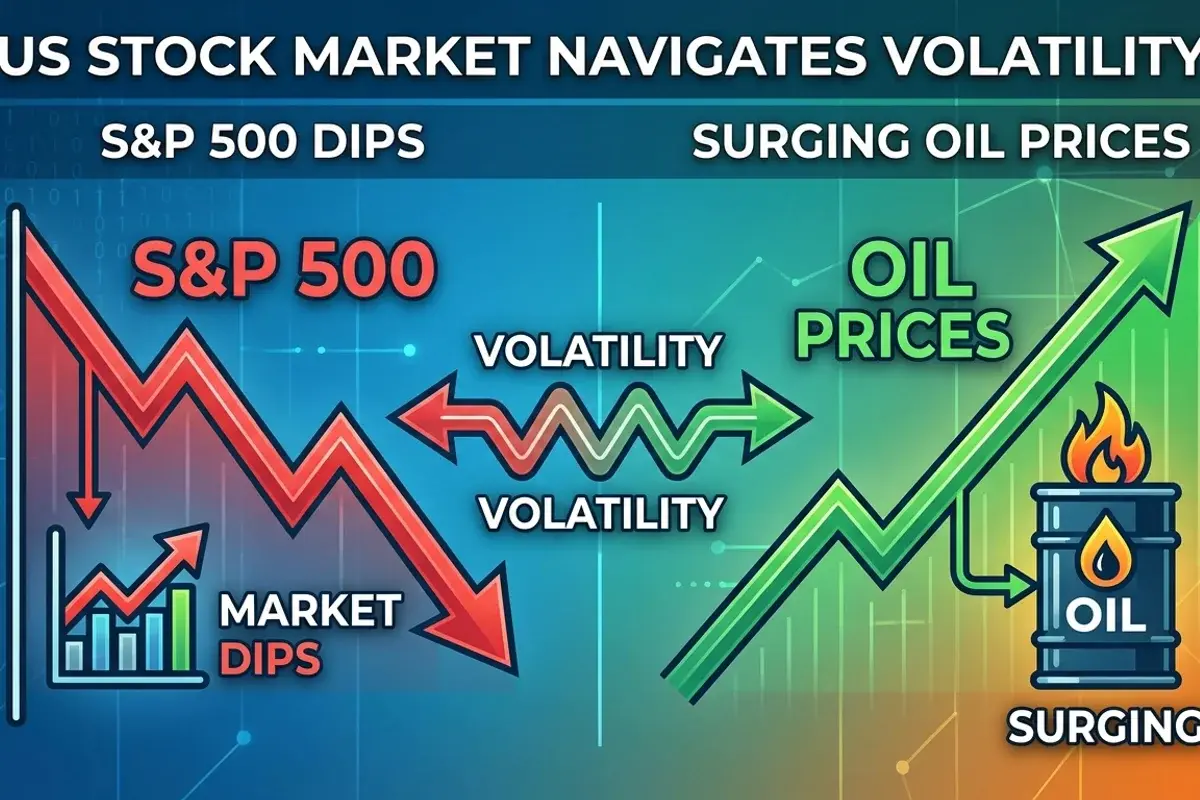
The US stock market is demonstrating remarkable stability in early March 2026, with the S&P 500 Index experiencing a modest dip even as global oil prices have surged significantly, driven by the escalating Middle East conflict involving Iran. This equilibrium comes after a period of intense volatility that gripped financial markets in the wake of geopolitical tensions. While the broader market shows resilience, a crucial rotation is underway beneath the surface, with traditional energy and materials sectors gaining prominence.
The Catalyst
The primary catalyst for the current market dynamics is the ongoing Middle East conflict, which has sent global oil prices rocketing. In early March 2026, Brent crude, the international benchmark, surged over 25%, briefly climbing above $100 per barrel and even touching $119.50 per barrel on March 9, 2026. Similarly, West Texas Intermediate (WTI) crude also spiked, briefly surpassing the $100 per barrel mark, settling around $90 per barrel on March 7, 2026. This sharp increase in crude prices, representing a 40-42% jump since January 2026 (from approximately $65/bbl for Brent), is largely attributed to concerns over supply disruptions, particularly through the strategically vital Strait of Hormuz, a key chokepoint for global oil and gas transport. While prices eased slightly on March 10, 2026, following news of potential de-escalation and G7 nations considering releasing strategic reserves, the underlying geopolitical risk premium remains a dominant factor.
Financial Forensics
Despite the dramatic rise in oil prices, the S&P 500 Index has shown relative steadiness. In February 2026, the S&P 500 experienced a slight decline of 0.87%. Year-to-date, as of early March 2026, the index is down 1.54%, yet it remains close to its all-time high despite increased volatility, which has been observed drifting towards 19-20% in 2026. This masks a significant sector rotation, as investors shift focus from growth-oriented technology stocks to more defensive and cyclical sectors.
For instance, the Morningstar US Energy Index soared 24.97% year-to-date through February 2026, with Basic Materials rising 18.73% and Industrials climbing 16.99%. Conversely, the Financial Services and Technology sectors experienced declines of 5.95% and 5.41%, respectively. This rotation indicates a market adapting to the new economic realities shaped by commodity prices and inflation concerns. Corporate earnings, however, continue to show strength, with S&P 500 profits projected to grow 14% in 2026, supporting the overall US economic outlook for 2%+ growth this year.
Comparative Market Performance (February 2026)
| Asset Class | Performance (February 2026) | Year-to-Date (YTD) Performance (through Feb 2026) | Key Driver |
|---|---|---|---|
| S&P 500 Index | -0.87% | -1.54% | Sector rotation, AI concerns |
| Nasdaq Composite Index | -3.38% | N/A (fell more than S&P 500) | Rotation away from large technology |
| Russell 2000 Index | +0.71% | N/A (outperformed large-cap) | Shift into smaller capitalization stocks |
| Brent Crude Oil | ~+25% to $100+ | ~+40-42% (from Jan 2026 lows) | Middle East conflict, supply concerns |
Source: FinScann Analysis based on market data from Thrivent Mutual Funds, Gulf News, Wealth Briefing.
Market Impact
The sustained high oil prices pose a significant inflationary threat, which could impact the Federal Reserve's monetary policy decisions. Inflation currently remains above the Fed's 2.0% target, and a prolonged energy price shock could make the central bank hesitant to implement anticipated interest rate cuts later in 2026. Goldman Sachs has warned that an extended period of high oil prices could substantially threaten S&P 500 earnings, with every 1% drop in US economic growth potentially reducing earnings by as much as 4%. While geopolitical risks often lead to short-lived equity market volatility, their enduring impact hinges on their effect on the real economy, particularly through inflation and consumer spending. The increased cost of transportation and manufacturing due to higher oil prices could squeeze corporate margins, affecting profitability across various sectors, though energy companies would naturally benefit.
Key Takeaways for Investors
FinScann Verdict
The US stock market in March 2026 presents a complex picture of underlying strength against a backdrop of significant geopolitical headwinds. While the S&P 500 has remained relatively stable on the surface, the sharp rise in oil prices due to the Iran conflict is reshaping sector leadership and reintroducing inflation as a primary concern. Investors should brace for continued volatility and prioritize robust portfolio construction that can withstand fluctuating commodity markets and evolving monetary policy signals from the US Federal Reserve.
Q: How has the S&P 500 performed year-to-date in 2026? A: As of early March 2026, the S&P 500 Index is down 1.54% year-to-date. However, it remains close to its all-time high despite this minor dip.
Q: What is driving the recent surge in oil prices? A: The primary driver is the escalating Middle East conflict involving Iran, particularly concerns over potential supply disruptions, including threats to the Strait of Hormuz, a critical shipping route.
Q: Will high oil prices lead to increased inflation in the US? A: Yes, sustained high oil prices are expected to fuel inflation, potentially complicating the Federal Reserve's efforts to manage price stability and possibly delaying anticipated interest rate cuts.
Q: Which sectors are benefiting from the current market environment? A: Energy, Materials, and Industrials sectors have seen strong performance, indicating a rotation of capital towards parts of the economy that are either direct beneficiaries of higher commodity prices or are considered more defensive.
Q: What is the risk of "stagflation" in the current environment? A: There is a risk of "stagflation," a scenario where economic activity stagnates while inflation increases, particularly if oil prices remain persistently high and impact economic growth.
Disclaimer: For information only; not investment advice. Stock market investments carry risks. Please consult a SEBI-registered advisor before investing. FinScann assumes no liability for decisions made based on this report.

Financial journalist specializing in market analysis, stock research, and investment trends. Dedicated to providing accurate, timely insights for informed decision-making.
Credentials: Experienced financial journalist with expertise in equity markets and economic analysis
The information provided in this article is for educational and informational purposes only and should not be construed as financial, investment, or legal advice. Finscann does not provide personalized investment recommendations.
For detailed terms and conditions, please read our Disclaimer and Terms of Service.
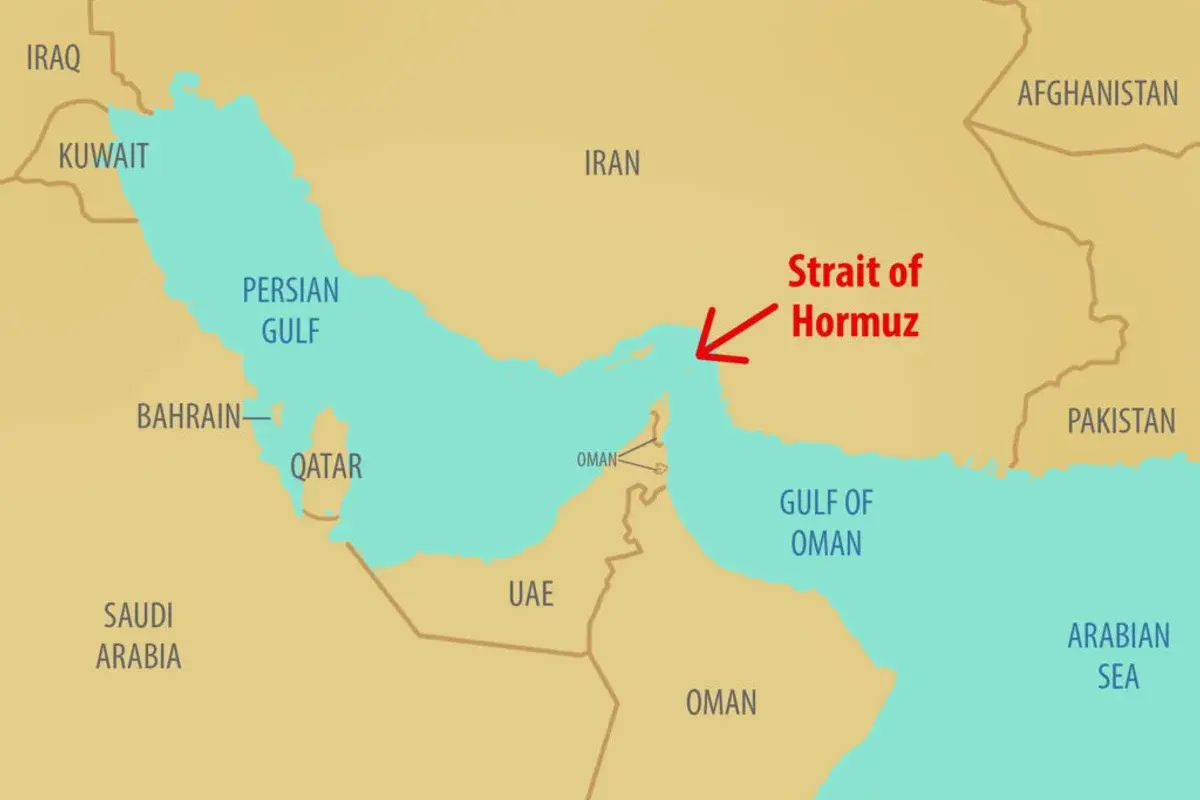
The Strait of Hormuz is a narrow but strategically vital waterway located between Iran and Oman, connecting the Persian Gulf to the Gulf of Oman and...

Global markets reel as Iran-Israel-US conflict escalates in March 2026. Oil prices soar, gold surges, and Indian equities plunge amid severe Strait...

India's Russian crude imports surge 50% in March 2026 to 1.5M bpd, driven by a US waiver and Strait of Hormuz disruptions.

US–Iran conflict enters its 13th day with rising casualties and ongoing airstrikes, while global fuel prices remain stable despite Middle East...

iQOO launches Z11x in India with Dimensity 7400 Turbo chipset, 7200mAh battery, and AI cameras, targeting the competitive mid-range smartphone market.