Loading market data...
US–Iran tensions have entered a critical phase after President Donald Trump said a decision on a potential Tehran deal could come within 10 days. With US aircraft carriers deployed, Iran conducting military drills near the Strait of Hormuz, and nuclear talks stalled, global markets are on edge. The crisis carries major implications for oil prices, regional stability, and global security as diplomacy and military readiness unfold simultaneously.
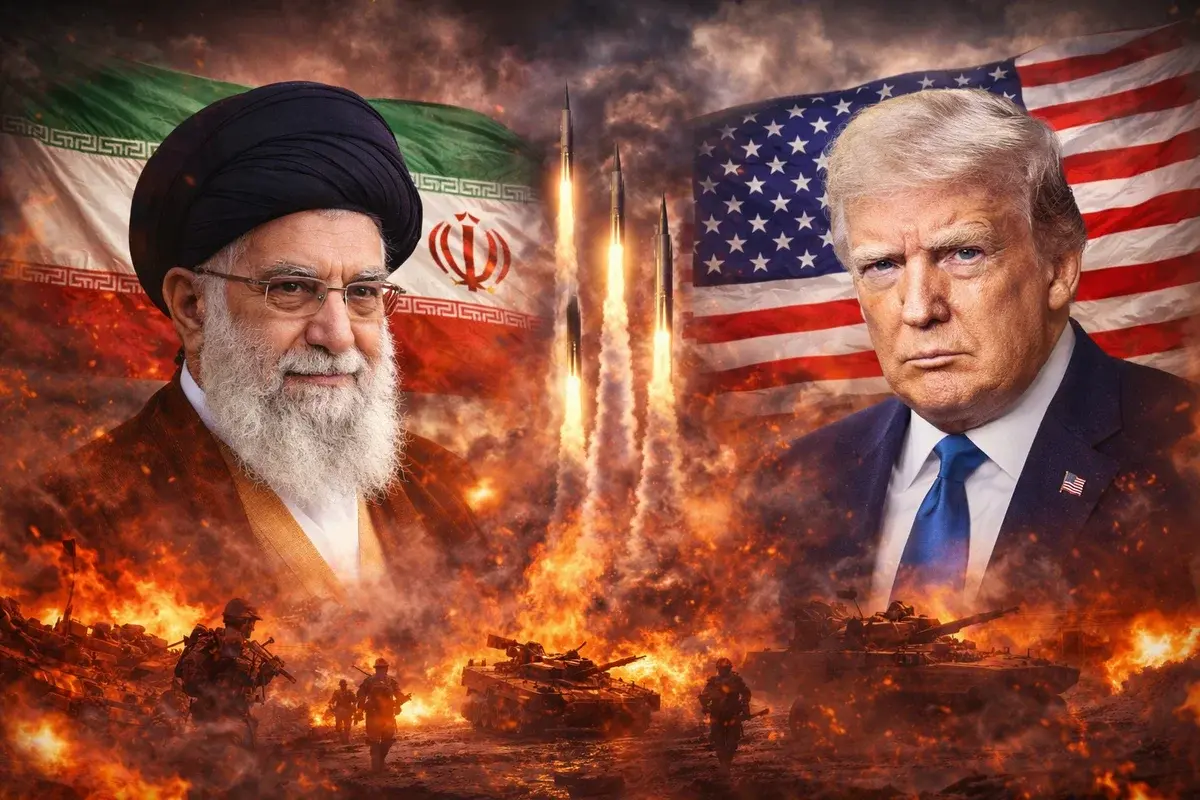
The fragile geopolitical balance in the Middle East is once again under strain.
US President Donald Trump has stated that the world will know within “probably the next 10 days” whether a potential agreement between Washington and Tehran can be reached. The statement comes amid rising military deployments, intensified rhetoric, renewed nuclear disagreements, and Iran’s temporary closure of the Strait of Hormuz for live-fire drills.
With aircraft carriers moving into position, missile systems on alert, and global oil markets on edge, the next 10 days could define the trajectory of US–Iran relations for years to come.
The current escalation stems from several overlapping issues:
The Joint Comprehensive Plan of Action (JCPOA), signed in 2015, limited Iran’s uranium enrichment to 3.67% in exchange for sanctions relief. The agreement collapsed in 2018 after the US withdrew under President Trump’s first administration.
Since then:
The current talks aim to determine whether a new framework can be negotiated — or whether military escalation becomes inevitable.
President Trump’s “10-day” comment signals:
US Vice President JD Vance emphasized that Iran has not acknowledged key American “red lines,” particularly the demand that Iran must not obtain a nuclear weapon.
This creates a high-stakes environment where diplomacy and military preparation are unfolding simultaneously.
The United States has significantly expanded its presence in the region.
Two aircraft carriers reportedly positioned near the region:
Destroyers armed with Tomahawk cruise missiles
Possible presence of nuclear-powered submarines
Over 100 combat aircraft stationed across regional bases
Aircraft types reportedly in position include:
This arsenal provides strike capability against:
Such deployments significantly increase operational readiness.
Iran has responded with visible military posturing:
The Strait of Hormuz is critical because:
Even temporary closure exercises are interpreted by markets as warning signals.
The Strait of Hormuz is approximately 33 km wide at its narrowest point. Despite bordering Iran and Oman, it is treated as an international waterway.
If conflict escalates:
A prolonged closure could cause:
Israel strongly opposes Iran’s nuclear program.
Prime Minister Benjamin Netanyahu has reportedly urged the US to ensure any agreement includes:
Israel has conducted past strikes on Iranian nuclear infrastructure and remains deeply involved in regional security calculations.
Iran is facing domestic challenges:
Recent protests were met with a crackdown, increasing domestic instability.
This internal vulnerability could influence Iran’s strategic decisions.
Probability: Moderate
Probability: High
Probability: Uncertain but rising
Probability: Lower but high impact
Poland’s Prime Minister has urged citizens to leave Iran immediately, signaling concern over potential escalation.
Russia has:
China and other major oil importers are monitoring developments closely.
Unlike previous standoffs, current tensions include:
This combination makes the situation unusually volatile.
Under the 2015 deal:
Currently:
The US position:
Iran’s position:
The impasse remains unresolved.
The next 10 days represent a defining moment in US–Iran relations.
The diplomatic window is narrow. Military forces are in position. Energy markets are sensitive. Regional tensions are high.
Whether this phase ends in negotiation or escalation will depend on decisions made behind closed doors in Washington and Tehran.
For now, the world watches, markets brace, and the Middle East stands at a potential turning point.

Financial journalist specializing in market analysis, stock research, and investment trends. Dedicated to providing accurate, timely insights for informed decision-making.
Credentials: Experienced financial journalist with expertise in equity markets and economic analysis
The information provided in this article is for educational and informational purposes only and should not be construed as financial, investment, or legal advice. Finscann does not provide personalized investment recommendations.
For detailed terms and conditions, please read our Disclaimer and Terms of Service.
Indian solar stocks face sharp decline after new US import duties of 126%, impacting major players like Waaree Energies and Adani Green.

Potpie AI secures $2.2 million in pre-seed funding led by Emergent Ventures with backing from All In Capital, DeVC, and PointOne Capital.
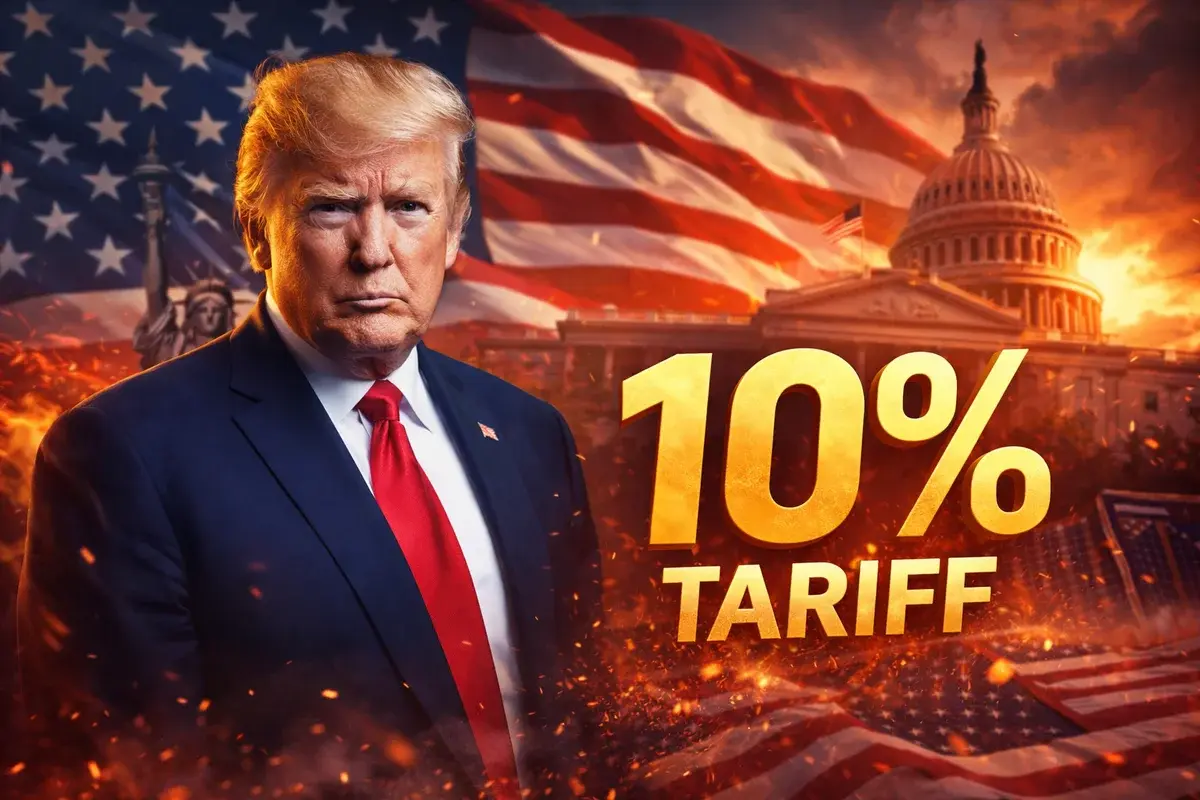
The US officially implements a 10% tariff following a Supreme Court ruling, reshaping trade policy expectations.

China’s export controls targeting major Japanese industrial companies escalate geopolitical tensions, raising supply chain risks, margin pressure,...

Meta AI director faces email crisis as OpenClaw unexpectedly deletes crucial data. FinScann analyzes the financial and ethical implications for Meta...