Loading market data...
The UK has reportedly warned the United States against using British-controlled military bases such as Diego Garcia and RAF Fairford for potential strikes on Iran, citing concerns over international law. Prime Minister Keir Starmer’s stance marks a significant diplomatic shift amid escalating US-Iran tensions. The development raises questions about NATO unity, transatlantic defense cooperation, and global military strategy. Markets are closely monitoring possible ripple effects on defense stocks, oil prices, and geopolitical risk sentiment as the situation unfolds.
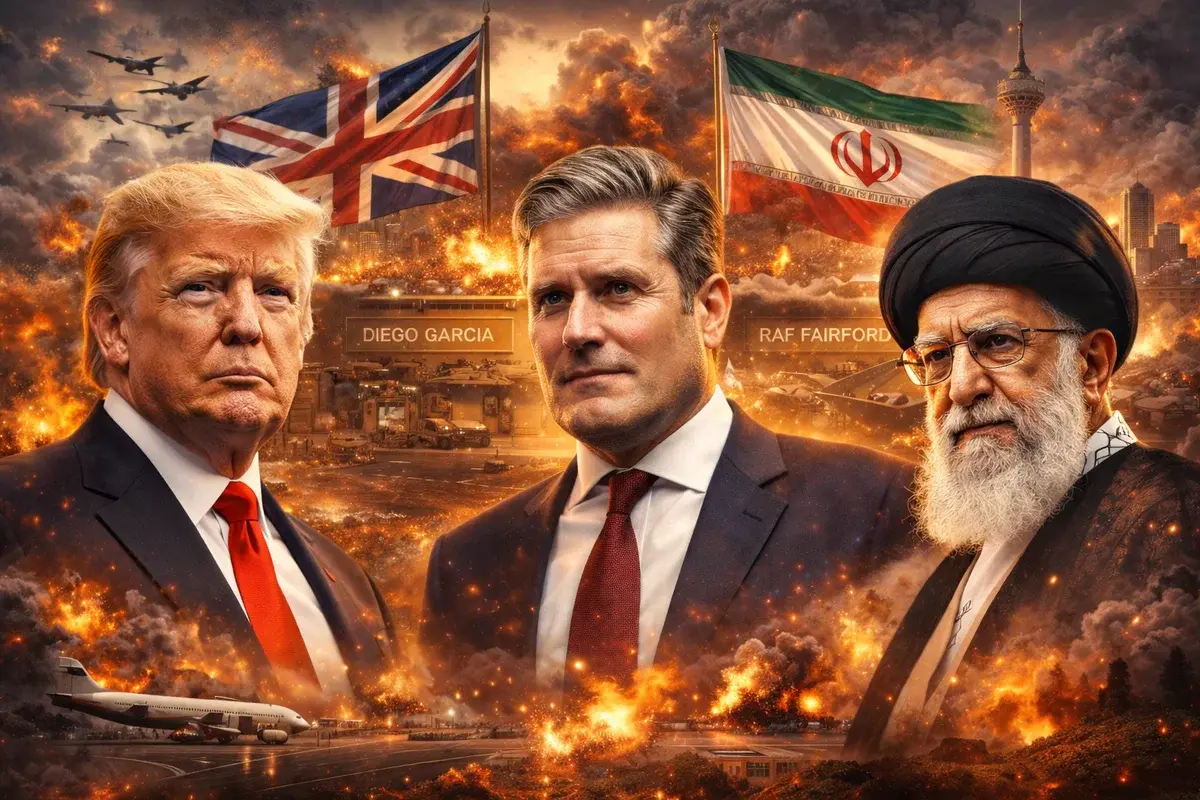
The United Kingdom has reportedly warned the United States against using British-controlled military bases for potential strikes on Iran, citing concerns over international law. Prime Minister Keir Starmer’s stance marks a sharp diplomatic shift amid escalating US-Iran tensions. Strategic facilities like Diego Garcia and RAF Fairford could now become focal points of geopolitical friction. The development raises questions about NATO coordination, transatlantic defense alignment, and the broader impact on global security, defense stocks, and energy markets.
In a move that could reshape global military coordination, the UK government under Prime Minister Keir Starmer has reportedly signaled that allowing US military operations against Iran from British bases may breach international law.
The warning comes as Washington evaluates strategic options amid rising tensions with Tehran. The diplomatic tone signals not just policy caution — but a recalibration of UK-US military alignment.
At the center of the dispute are two critical strategic assets:
Both bases have historically played pivotal roles in US-led operations in the Middle East.
Located in the Indian Ocean, Diego Garcia is one of the US military’s most important forward operating bases. It has been used for:
This UK airbase has hosted US B-52 and B-2 bombers during prior operations in the Middle East and Eastern Europe.
Blocking access to these bases could complicate:
The UK’s reported stance hinges on compliance with international law. This signals a shift toward:
This is particularly significant given prior US-led operations where UK bases were utilized under existing defense agreements.
Tensions between Washington and Tehran have intensified in recent months due to:
If the US were to proceed with military action without UK base support, it could:
The UK is one of America’s closest defense partners. Any restriction on base access raises broader alliance questions:
| Strategic Area | Potential Impact |
|---|---|
| NATO cohesion | Diplomatic strain |
| Military coordination | Operational delays |
| Intelligence sharing | Policy recalibration |
| Transatlantic unity | Public signaling divergence |
This situation may test NATO’s internal balance between strategic deterrence and legal oversight.
While markets have not yet reacted sharply, geopolitical uncertainty typically influences:
Heightened tensions often drive short-term demand expectations.
Iran tensions frequently affect:
Energy volatility could ripple into inflation expectations.
Escalation risks may:
The diplomatic friction reportedly intersects with long-standing sovereignty discussions over the Chagos Islands.
Diego Garcia sits within the Chagos Archipelago, which has been subject to historical dispute between the UK and Mauritius. Any escalation involving the base could amplify diplomatic complexity.
Several potential outcomes could emerge:
US opts for sanctions and diplomatic pressure rather than military action.
US leverages other European or Gulf bases.
Legal clarifications lead to conditional operational cooperation.
Alliance members reassess military engagement thresholds.
The UK’s firm stance reflects a broader global trend:
As multipolar geopolitics intensifies, traditional alliances are increasingly being tested by national legal and political constraints.
This is not merely a UK-US disagreement. It is a signal of:
The coming weeks could define whether this remains a diplomatic disagreement — or evolves into a deeper structural shift in transatlantic relations.
The UK’s reported move to restrict US military base access amid Iran tensions marks a significant geopolitical development. It raises complex questions about international law, alliance dynamics, and operational readiness.
With global security, energy markets, and defense alliances in delicate balance, this evolving story could shape international relations far beyond London and Washington.
⚠️ DISCLAIMER: This article is for informational purposes only and does not constitute political or investment advice.

Financial journalist specializing in market analysis, stock research, and investment trends. Dedicated to providing accurate, timely insights for informed decision-making.
Credentials: Experienced financial journalist with expertise in equity markets and economic analysis
The information provided in this article is for educational and informational purposes only and should not be construed as financial, investment, or legal advice. Finscann does not provide personalized investment recommendations.
For detailed terms and conditions, please read our Disclaimer and Terms of Service.

Indian solar stocks face sharp decline after new US import duties of 126%, impacting major players like Waaree Energies and Adani Green.

Potpie AI secures $2.2 million in pre-seed funding led by Emergent Ventures with backing from All In Capital, DeVC, and PointOne Capital.
The US officially implements a 10% tariff following a Supreme Court ruling, reshaping trade policy expectations.

China’s export controls targeting major Japanese industrial companies escalate geopolitical tensions, raising supply chain risks, margin pressure,...

Meta AI director faces email crisis as OpenClaw unexpectedly deletes crucial data. FinScann analyzes the financial and ethical implications for Meta...