Loading market data...
A detailed analysis of the ongoing Iran–Israel–US war, examining military developments, oil market disruption, and the potential global economic consequences.
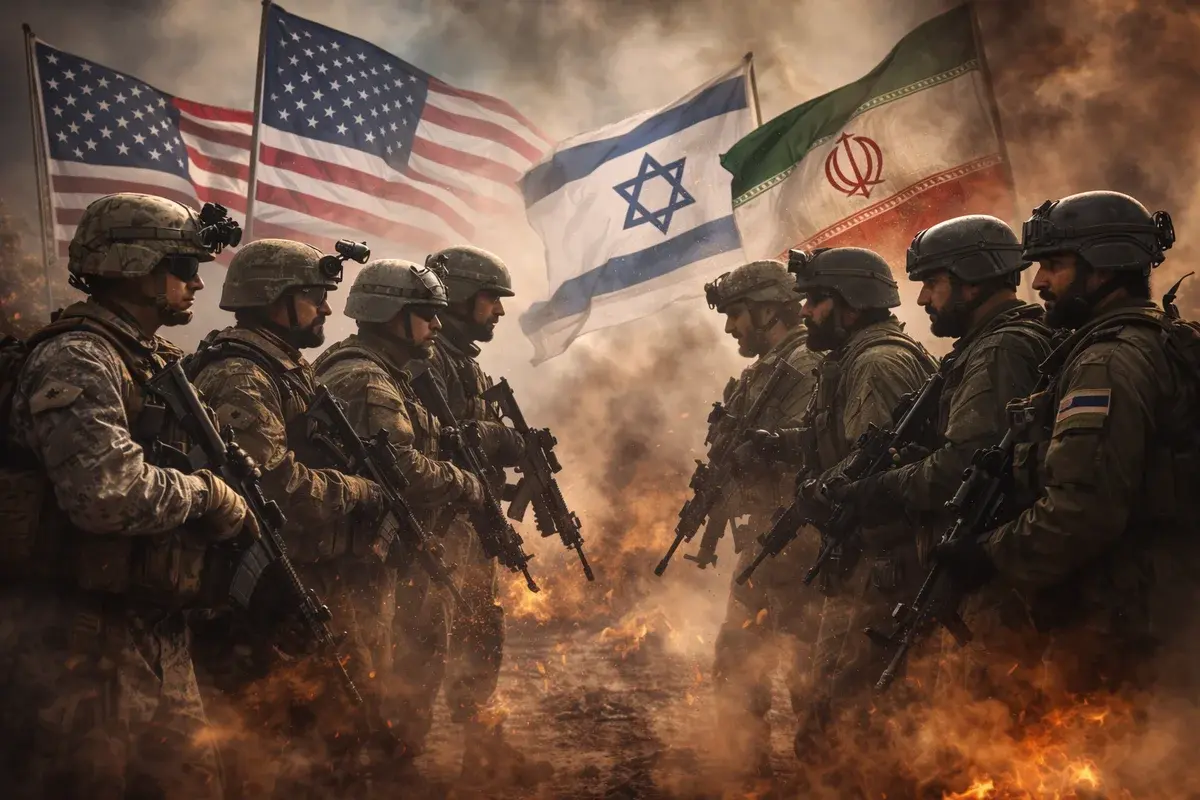
The ongoing war involving Iran, Israel, and the United States has quickly become one of the most significant geopolitical crises in recent years. The conflict began with large-scale military strikes on Iranian targets and has since escalated into a broader regional confrontation involving multiple actors across the Middle East. Missile attacks, drone strikes, cyber operations, and disruptions to global energy supply routes have pushed the crisis into global headlines and triggered economic and political consequences worldwide.
What initially appeared to be a limited military operation has evolved into a complex geopolitical conflict with the potential to reshape the Middle East’s balance of power and impact global financial markets.
The conflict escalated dramatically after coordinated military strikes targeted Iranian military and nuclear-related infrastructure. The attacks were intended to weaken Iran’s military capabilities and limit its strategic influence in the region.
Iran responded quickly with retaliatory missile and drone strikes targeting military sites and strategic infrastructure linked to Israel and its allies. These attacks expanded the conflict across several countries in the region, turning it into a multi-front confrontation.
In just days, the war moved beyond a bilateral confrontation and began affecting countries across the Gulf and the wider Middle East.
One of the defining features of the war has been the extensive use of missile and drone technology. Iran has launched large numbers of drones and ballistic missiles toward strategic targets, while Israel and its allies have responded with airstrikes and advanced missile defense systems.
This technological dimension of warfare has intensified the conflict and increased the speed at which military actions unfold.
The involvement of Hezbollah in Lebanon has added another layer of complexity. Hezbollah forces have launched missile attacks targeting northern Israeli cities and military installations.
In response, Israel has carried out airstrikes on southern Lebanon and areas around Beirut suspected of hosting Hezbollah infrastructure.
This escalation has raised concerns that the conflict could spread into a full-scale Israel–Lebanon war.
Iran’s network of allied groups across the Middle East has also influenced the conflict. These groups include militias operating in Iraq and Syria, as well as other organizations aligned with Iranian strategic interests.
Although not all of these groups have fully entered the war, they remain capable of escalating tensions and opening additional fronts.
One of the most critical elements of the conflict is the risk to the Strait of Hormuz, one of the most important maritime chokepoints for global energy supply.
A significant share of the world’s oil and liquefied natural gas shipments pass through this narrow waterway between Iran and Oman. Even partial disruptions to traffic in the strait can have immediate effects on global energy markets.
Since the escalation of the conflict, tanker traffic in the region has declined sharply, with shipping companies facing security risks and rising insurance costs.
These developments have triggered major volatility in oil markets, with prices rising sharply during the early stages of the conflict.
The war has already triggered spikes in global oil prices due to fears of supply disruptions. Since the Middle East accounts for a large share of global oil production, prolonged conflict in the region could push energy prices significantly higher.
Higher oil prices typically lead to increased transportation and manufacturing costs, which can drive inflation across global economies.
Shipping disruptions in the Persian Gulf have created uncertainty for global trade routes. Many shipping companies have either delayed shipments or rerouted vessels to avoid high-risk areas.
Because a large share of global trade moves by sea, disruptions in energy and shipping corridors can have ripple effects across supply chains worldwide.
Financial markets tend to react quickly to geopolitical conflicts. Since the war began, several global trends have emerged:
These reactions reflect investor attempts to reposition portfolios amid geopolitical uncertainty.
Another defining aspect of the war has been the rise of cyber warfare. Both sides and their allied groups have reportedly engaged in cyber operations targeting financial systems, government networks, and energy infrastructure.
These attacks demonstrate how modern warfare increasingly extends beyond physical battlefields into digital systems that support critical infrastructure.
Cyber warfare has the potential to disrupt financial markets, power grids, and communication systems even without direct military confrontation.
One of the biggest concerns among global policymakers is that the conflict could expand into a broader regional war.
Several factors contribute to this risk:
If additional countries become directly involved, the conflict could escalate into one of the largest military confrontations in the region in decades.
The war has also triggered strong reactions from governments around the world. Some countries have supported the military campaign as a necessary measure to contain Iran’s strategic ambitions.
Others have warned that the conflict risks destabilizing the Middle East and undermining international security.
Diplomatic efforts are ongoing, with several countries attempting to mediate between the parties involved to prevent further escalation.
Diplomatic negotiations could lead to a ceasefire agreement, particularly if global economic pressure mounts due to rising energy prices.
If hostilities continue and additional groups join the war, the conflict could evolve into a prolonged regional confrontation.
A prolonged disruption of energy supplies from the Middle East could trigger a global economic slowdown, particularly in energy-dependent economies.
The 2026 Middle East war involving Iran, Israel, and the United States has already reshaped geopolitical dynamics and triggered major economic consequences. The conflict now spans multiple countries and includes conventional military operations, proxy conflicts, cyber warfare, and disruptions to global energy markets.
While diplomatic efforts are underway, the situation remains highly volatile. The coming weeks will be crucial in determining whether the conflict moves toward de-escalation or expands into a broader regional crisis.

Financial journalist specializing in market analysis, stock research, and investment trends. Dedicated to providing accurate, timely insights for informed decision-making.
Credentials: Experienced financial journalist with expertise in equity markets and economic analysis
The information provided in this article is for educational and informational purposes only and should not be construed as financial, investment, or legal advice. Finscann does not provide personalized investment recommendations.
For detailed terms and conditions, please read our Disclaimer and Terms of Service.
Global markets reel as Iran-Israel-US conflict escalates in March 2026. Oil prices soar, gold surges, and Indian equities plunge amid severe Strait...

India's Russian crude imports surge 50% in March 2026 to 1.5M bpd, driven by a US waiver and Strait of Hormuz disruptions.
US–Iran conflict enters its 13th day with rising casualties and ongoing airstrikes, while global fuel prices remain stable despite Middle East...

iQOO launches Z11x in India with Dimensity 7400 Turbo chipset, 7200mAh battery, and AI cameras, targeting the competitive mid-range smartphone market.

India's oil tankers gain critical access to Strait of Hormuz after Iran talks. FinScann analyzes the impact on India's energy security and global oil...