Loading market data...
India's AI future accelerates as global tech giants pledge over $100 billion in investments at the India AI Impact Summit 2026, boosting digital infrastructure and economic growth.

Breaking: Global Tech Titans Unleash Multi-Billion-Dollar AI Investment Wave in India, February 2026
New Delhi, India – In a landmark week for India's technological ambitions, global tech behemoths Microsoft, Amazon, Google, and Nvidia, among others, have collectively pledged commitments exceeding ₹8.3 lakh crore (approximately US$100 billion) towards India's burgeoning Artificial Intelligence (AI) sector during the high-profile India AI Impact Summit 2026 held in New Delhi from February 16-20. This unprecedented influx of capital signals a pivotal moment for the nation, positioning India as a critical hub in the global AI ecosystem and reinforcing its vision to become an AI superpower by 2047. The significant pledges, targeting everything from hyperscale data centers and advanced computing infrastructure to AI research and startup funding, underscore a strategic shift by these firms to leverage India's vast talent pool and rapidly expanding digital public infrastructure (DPI).
The Catalyst
The India AI Impact Summit 2026, the first global AI summit hosted in the Global South, served as the primary platform for these monumental announcements. Orchestrated to showcase India's deep talent pool, expand its digital public infrastructure, and foster startup growth, the summit attracted over 40 CEOs, 20 heads of state, and delegations from more than 45 countries. Prime Minister Narendra Modi, addressing the plenary, underscored India's commitment to building a human-centric AI framework, emphasizing its role in inclusive growth and empowering the Global South. The government's proactive "IndiaAI Mission," with an allocated budget of ₹10,372 crore (US$1.2 billion) over five years, aims to deploy over 10,000 GPUs through public-private partnerships, directly addressing critical infrastructure gaps. Furthermore, the recently notified Information Technology (Intermediary Guidelines and Digital Media Ethics Code) Rules, 2026, signal India's intent to establish a robust and responsible AI governance framework, focusing on issues like deepfakes and ethical deployment. This comprehensive approach to policy, infrastructure, and talent development has made India an attractive destination for global tech investments.
Financial Forensics
The scale of investments announced at the summit is staggering, highlighting India's rising prominence in the global AI landscape. Microsoft has committed a substantial US$50 billion by 2030 to bolster AI capabilities across the Global South, with a significant US$17.5 billion specifically earmarked for India over four years (2026-2029), focusing on hyperscale data center infrastructure and workforce readiness. Amazon followed suit with a pledge of US$35 billion by 2030 for its India operations, directed towards AI, digitization, and export expansion. Google is investing US$15 billion over five years to enhance India's AI infrastructure, including a major AI data hub in Visakhapatnam and new subsea cable connectivity to Singapore, South Africa, and Australia.
Chip titan Nvidia unveiled strategic tie-ups with Indian computing firms, including a partnership with Larsen & Toubro (L&T) to build what is touted as "India's largest gigawatt-scale AI factory". Nvidia is also collaborating with Yotta Data Services Pvt Ltd, which will deploy over 20,000 top-end Nvidia Blackwell processors as part of a US$2 billion investment. Additionally, Qualcomm Ventures announced a new Strategic AI Venture Fund of up to US$150 million to support India's growing AI startup ecosystem, targeting areas like automotive, robotics, IoT, and mobile applications.
Indian tech giants are also stepping up. Tata Consultancy Services (TCS) is expanding its collaboration with Advanced Micro Devices (AMD) to bring AMD's rack-scale "Helios" AI architecture to India through its subsidiary HyperVault, aiming for an AI-ready data center blueprint supporting up to 200 megawatts (MW) of capacity. Infosys has partnered with Anthropic to build enterprise AI agents, initially for the telecoms industry, with plans to expand into financial services, manufacturing, and engineering. The government itself has announced a fresh US$1.1 billion state-backed venture capital fund for AI and advanced manufacturing startups. Overall, India expects to attract over US$200 billion in AI-driven investments within the next two years.
Major Tech Firm AI Investment Pledges in India (February 2026)
| Company | Commitment (USD) | Focus Areas | Source |
|---|---|---|---|
| Microsoft | $17.5 Billion (by 2029)* | Hyperscale Data Centers, AI Integration, Workforce Readiness | |
| Amazon | $35 Billion (by 2030) | AI, Digitization, Export Expansion | |
| $15 Billion (over 5 years) | AI Data Hub (Visakhapatnam), Subsea Cables, Connectivity, AI Tools | ||
| Nvidia | $2 Billion (Yotta deal) | Gigawatt-scale AI Factory (L&T), Advanced Processors (Yotta) | |
| Qualcomm | $150 Million | AI Startup Venture Fund (Automotive, IoT, Robotics, Mobile) | |
| TCS | ~ | AI-ready Data Centers (with AMD Helios architecture) | |
| Infosys | ~ | Enterprise AI Agents (with Anthropic), Sector-specific AI solutions | |
| Total Expected (2 years) | >$200 Billion | Across AI stack: compute, solutions, applications, research, deep-tech startups |
*Microsoft's US$50 billion commitment is for the Global South, with US$17.5 billion specifically for India.
Market Impact
This massive influx of investment is set to profoundly impact India's financial markets, particularly the technology sector. While concerns about AI's potential to disrupt traditional IT services have recently led to a correction in Indian IT stocks, with the Nifty IT index falling significantly from its peak, the long-term outlook is increasingly optimistic. Brokerages are now identifying opportunities in companies with strong AI capabilities and digital transformation exposure. The current investments are expected to accelerate India's digital transformation, leading to significant productivity gains across manufacturing, services, agriculture, and healthcare.
AI is projected to contribute substantially to India's GDP, with estimates ranging from US$500 billion by 2025 to US$1 trillion by 2035. The AI market in India alone is forecast to surge from US$6 billion in 2024 to nearly US$32 billion by 2031. This growth is expected to create a significant number of new, high-skill jobs, countering initial fears of job displacement. India's AI workforce is expected to nearly double by 2027, growing to over 1.25 million professionals. However, addressing the existing talent shortages and skill mismatches remains crucial for maximizing these benefits. The government's focus on Digital Public Infrastructure (DPI), such as Aadhaar and UPI, is also seen as a foundational layer for scaling AI applications, fostering equitable competition, and expanding access to computing resources.
Key Takeaways for Investors
FinScann Verdict
The India AI Impact Summit 2026 has firmly established India's position as a burgeoning global AI powerhouse. The multi-billion-dollar commitments from leading tech firms, combined with the government's ambitious IndiaAI Mission and robust regulatory framework, are set to catalyze an unparalleled era of innovation and economic expansion. FinScann believes that discerning investors should closely monitor the execution of these pledges and focus on companies that are strategically aligned with India's AI growth narrative, particularly those contributing to infrastructure, specialized AI solutions, and talent development.
Q: What is India's AI market projected to reach by 2031? A: India's AI market is projected to grow from US$6 billion in 2024 to nearly US$32 billion by 2031, a nearly fivefold increase, driven by open-source innovation, strong startup momentum, and global demand for Indian AI talent.
Q: How are open-source AI tools helping Indian startups? A: Open-source AI tools are proving instrumental by lowering barriers to entry, enabling cost-effective innovation, and allowing Indian developers to tailor AI solutions to local languages, sectors, and unique connectivity conditions across the country. A significant majority of Indian AI startups are leveraging these free technologies.
Q: What are examples of AI solutions Indian startups are building? A: Indian startups are developing diverse AI solutions, including medical chatbots for healthcare guidance, AI-enabled tools for farmers (such as CropIn for crop monitoring, weather forecasting, and disease prediction), and applications aimed at improving access to justice, clinical decision-making, and digital services in areas with limited connectivity.
Q: Why is Meta supporting India's open-source AI development? A: Meta's partnership with the Linux Foundation to research India's AI ecosystem indicates its interest in the country's unique model of leveraging open-source innovation, workforce development, and digital public infrastructure to drive AI growth. This approach could serve as a template for other emerging economies globally.
Q: What percentage of India's population benefits from rural AI solutions? A: Research highlights that nearly 70% of India's population resides in rural areas, and AI is increasingly being deployed to bridge gaps in access to infrastructure and essential services in these regions, extending the benefits of technology to a vast segment of the population.
Disclaimer: For information only; not investment advice. Stock market investments carry risks. Please consult a SEBI-registered advisor before investing. FinScann assumes no liability for decisions made based on this report.

Financial journalist specializing in market analysis, stock research, and investment trends. Dedicated to providing accurate, timely insights for informed decision-making.
Credentials: Experienced financial journalist with expertise in equity markets and economic analysis
The information provided in this article is for educational and informational purposes only and should not be construed as financial, investment, or legal advice. Finscann does not provide personalized investment recommendations.
For detailed terms and conditions, please read our Disclaimer and Terms of Service.

Indian solar stocks face sharp decline after new US import duties of 126%, impacting major players like Waaree Energies and Adani Green.
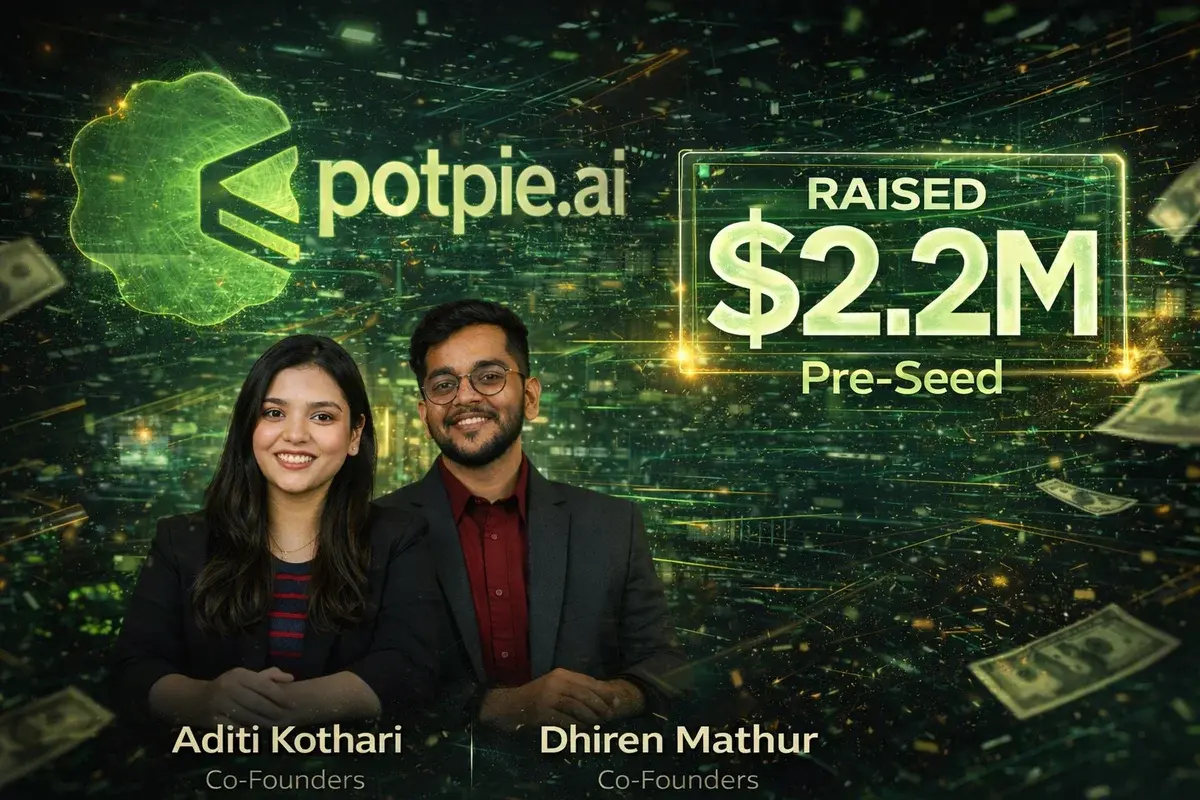
Potpie AI secures $2.2 million in pre-seed funding led by Emergent Ventures with backing from All In Capital, DeVC, and PointOne Capital.

The US officially implements a 10% tariff following a Supreme Court ruling, reshaping trade policy expectations.

China’s export controls targeting major Japanese industrial companies escalate geopolitical tensions, raising supply chain risks, margin pressure,...
Meta AI director faces email crisis as OpenClaw unexpectedly deletes crucial data. FinScann analyzes the financial and ethical implications for Meta...