Loading market data...
Hindustan Unilever Ltd (HUL) is rapidly expanding its presence in the quick commerce segment, one of the fastest-growing channels in India’s FMCG industry. Currently contributing around 3% of overall sales, the channel is gaining traction due to premium product mixes, higher margins, and faster consumer adoption in urban markets. As quick commerce platforms drive impulse purchases and high-value baskets, HUL’s digital-first strategy could play a key role in boosting volume growth, premiumisation, and long-term profitability, making it an important theme for investors tracking FMCG stocks.

Synopsis: Hindustan Unilever Ltd (HUL) is accelerating its push into quick commerce as the fastest-growing FMCG channel in India. The segment already contributes around 3% of HUL’s total sales and is expected to scale meaningfully, supported by premium product mixes and higher gross margins. With the broader quick commerce market witnessing 50–100% YoY growth in FMCG sales, HUL’s digital-first strategy could become a critical driver of volume growth, premiumisation, and long-term alpha generation.
India’s fast-moving consumer goods sector is undergoing a structural shift. Traditional kirana-led distribution is increasingly being complemented—and in urban pockets, challenged—by quick commerce platforms that promise deliveries in under 30 minutes.
For legacy giants like Hindustan Unilever, the shift is not optional—it is strategic. With changing consumer behavior, smaller basket sizes, impulse buying, and digital discovery, quick commerce is emerging as the new battleground for brand visibility and growth.
The Structural Shift Toward Quick Commerce 📦⚡
Quick commerce has evolved from a niche experiment into one of the fastest-growing retail channels in India.
Key industry indicators:
This growth is driven by:
For FMCG giants, this changes the entire playbook—from pack sizes to pricing strategies.
HUL’s Quick Commerce Strategy 🧠📈
HUL has begun building a dedicated organisational structure for quick commerce to capture this structural growth channel, as highlighted in its investor updates.
| Strategic Lever | Impact on Business |
|---|---|
| Dedicated quick commerce teams | Faster channel execution |
| Premium product mix | Higher gross margins |
| Digital-first brand launches | New consumer acquisition |
| Investment in future channels | Long-term volume growth |
Channel contribution:
Importantly, the quick commerce portfolio is more premium, making it margin-accretive compared to traditional trade channels.
Financial Context: Growth with Margin Pressures 💰
Recent financial performance shows a mixed picture, with steady volumes but pressure on margins.
| Metric | Recent Trend |
|---|---|
| Revenue Growth | Mid-single-digit YoY growth |
| Volume Growth | ~4–5% YoY |
| EBITDA Margin | ~23% range |
| Profit Trend | Some quarterly margin pressure |
Margin pressure is being driven by:
Yet, volume growth remains intact—suggesting consumption demand is stable.
Why Quick Commerce Is a Margin Game, Not Just a Volume Game 🛒
Unlike traditional retail, quick commerce is:
This creates a new equation for HUL:
Faster sales velocity + premium products = margin expansion potential
Expert Insight: “Quick commerce is becoming the fastest-growing channel for FMCG companies in India. For large players like HUL, success in this channel depends on premiumisation, assortment strategy, and data-driven inventory. Those who master quick commerce economics will lead the next phase of FMCG growth.” — FMCG Sector Strategist
Competitive Pressures and Strategic Imperatives ⚔️
HUL’s shift toward quick commerce is also driven by rising competition.
Key competitive forces:
To counter this, HUL is:
Key Metrics to Watch for Investors 🔍
Bullish indicators:
Risk indicators:
Strategic Outlook: A Digital-First FMCG Future 🌐
Quick commerce is no longer just a distribution channel—it is becoming a consumer discovery engine.
Industry projections suggest:
For HUL, this means:
If executed well, quick commerce could become a major driver of long-term alpha generation.
Trading Platforms for Indian Stocks
Investors looking to trade HUL or other Indian equities can use:
⚠️ DISCLAIMER: We Are Not Financial Advisors This article is for informational purposes only and does not constitute investment advice. Stock market investments are subject to risks. Please consult a SEBI-registered financial advisor before making any investment decisions.

Financial journalist specializing in market analysis, stock research, and investment trends. Dedicated to providing accurate, timely insights for informed decision-making.
Credentials: Experienced financial journalist with expertise in equity markets and economic analysis
The information provided in this article is for educational and informational purposes only and should not be construed as financial, investment, or legal advice. Finscann does not provide personalized investment recommendations.
For detailed terms and conditions, please read our Disclaimer and Terms of Service.
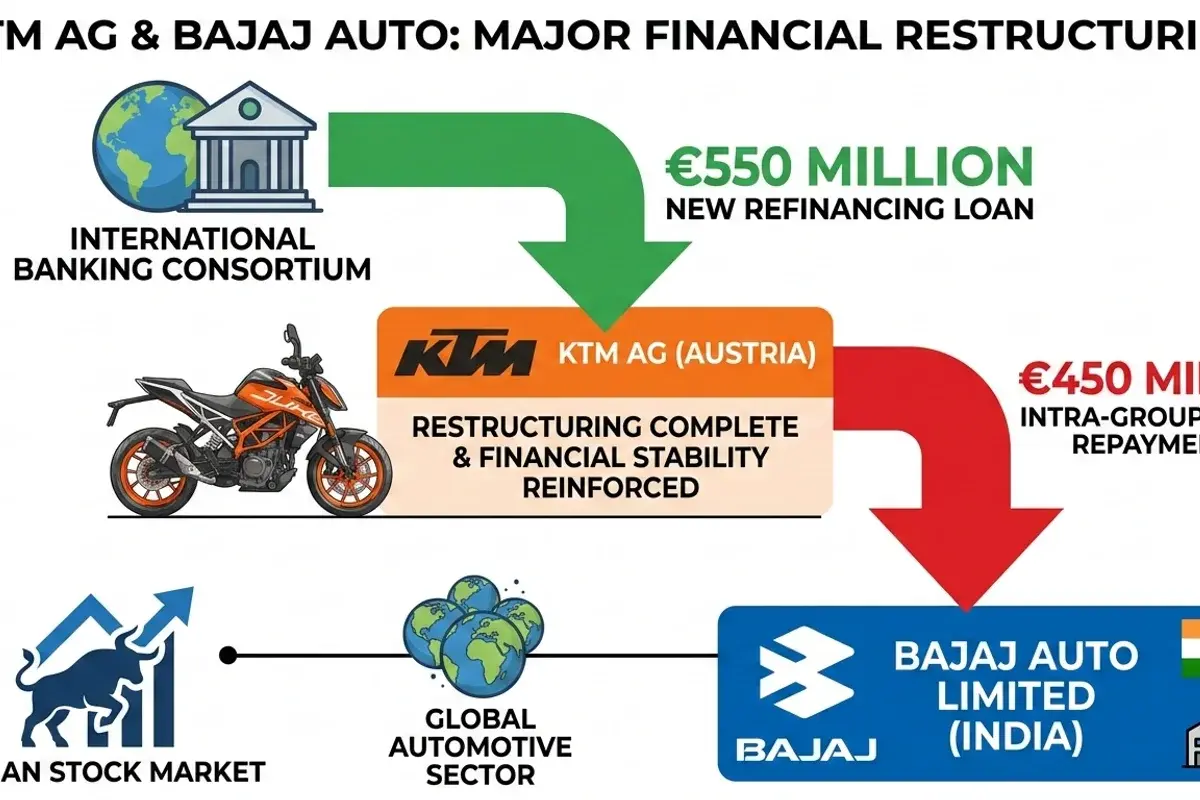
KTM AG repays €450M loan to Bajaj Auto's unit, completing restructuring. FinScann analyzes the financial impact on Bajaj Auto, Pierer Mobility, and...

Tata Elxsi launches DevStudio.ai, an ASPICE-aligned GenAI platform, poised to accelerate automotive software engineering and enhance productivity for...

Waaree Energies bags a significant 300 MW wind power project in Gujarat, marking a strategic expansion and contributing to India's ambitious...
“ABCL is entering a structurally stronger earnings phase, supported by synchronized momentum across lending, AMC, and insurance.
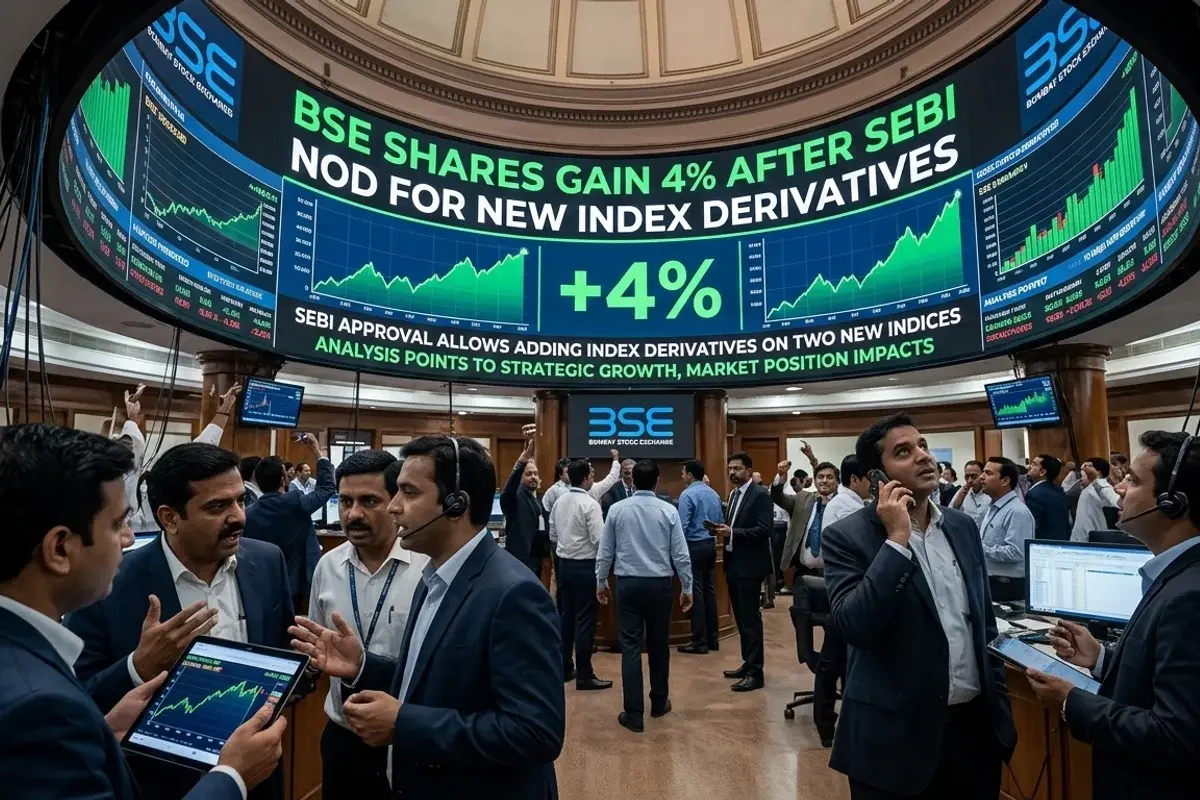
BSE shares surge over 4% after SEBI's critical nod for Sensex Next 30 index derivatives, bolstering its market position and revenue potential.