Loading market data...
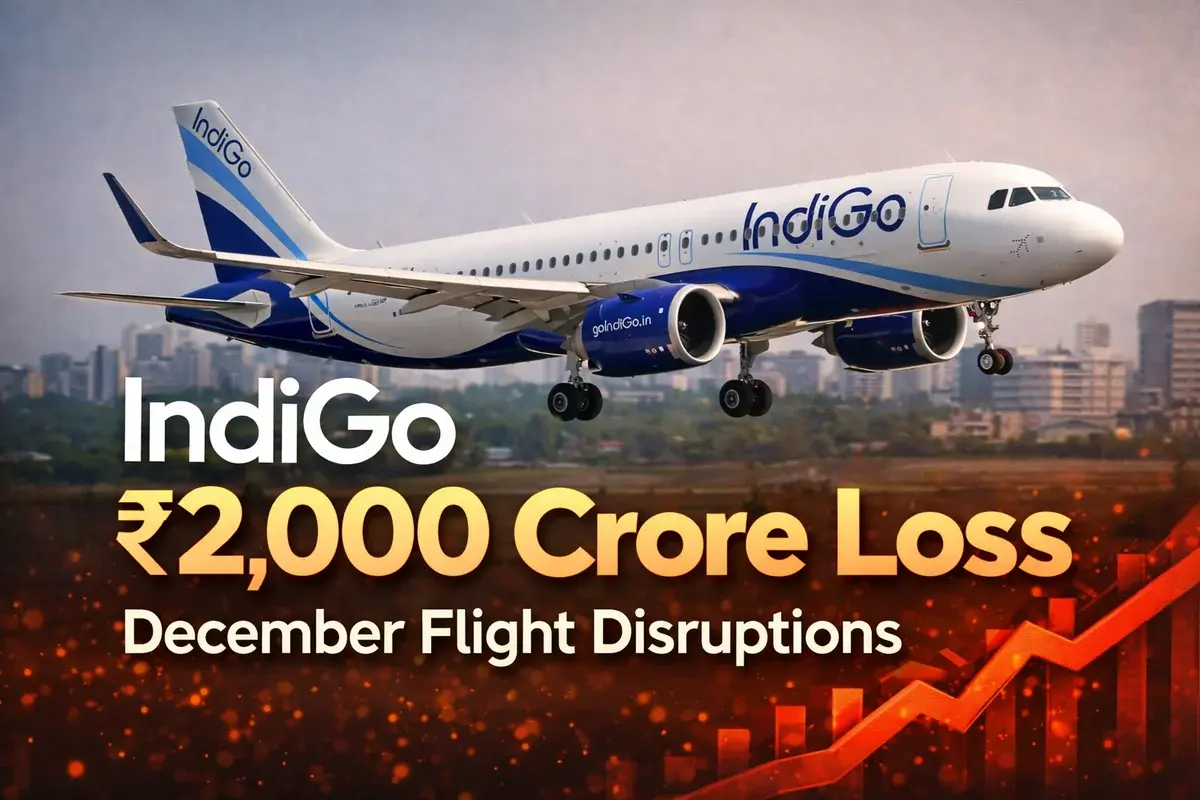
India’s largest airline, IndiGo, is staring at one of its biggest operational and financial setbacks in recent years. Industry estimates suggest that the widespread flight disruptions witnessed in early December 2025 could cost the airline more than ₹2,000 crore, making it a significant hit to earnings in FY26.
The disruption, which temporarily paralysed India’s domestic aviation network, triggered mass flight cancellations, delays, stranded passengers, regulatory scrutiny, and reputational damage—despite IndiGo’s swift operational recovery.
What Happened in December 2025
Between December 2 and December 5, IndiGo cancelled over 2,500 flights, impacting more than 300,000 passengers across the country. The chaos was largely attributed to a combination of:
• Revised Flight Duty Time Limitation (FDTL) rules • Aggressive winter schedule planning • Crew availability mismatches • Operational oversight lapses
The fallout was immediate, forcing the airline to ground capacity, rework rosters, and initiate large-scale passenger relief measures.
₹2,000+ Crore Impact: Cost Breakdown
According to aviation analysts and industry sources, the financial hit is spread across multiple heads:
| Cost Component | Estimated Impact |
|---|---|
| Ticket refunds | ₹800+ crore |
| Passenger compensation (CAR norms) | ₹300–400 crore |
| ‘Gesture of Care’ goodwill vouchers | ₹500–1,000 crore |
| Revenue loss due to capacity curtailment | ₹250–300 crore |
| Regulatory penalties & compliance costs | ₹70+ crore |
| Hotels, transport & logistics | Significant (unquantified) |
Within the first week alone, IndiGo refunded ₹827 crore to affected passengers.
‘Gesture of Care’: A Costly Goodwill Move
To rebuild passenger trust, IndiGo launched a customer outreach initiative called “Gesture of Care”.
• Eligible passengers included those whose flights were cancelled or delayed beyond three hours • Voucher value stood at ₹10,000 per passenger • Estimated financial impact ranged between ₹500–1,000 crore
While the move was widely appreciated, analysts note that it significantly inflated short-term costs.
Regulatory Action Tightens the Noose
India’s aviation watchdog, the Directorate General of Civil Aviation (DGCA), took stern action following the disruption:
• ₹22.2 crore penalty imposed • ₹50 crore bank guarantee mandated • Formal warnings issued to the CEO, COO, and senior flight operations executives • Senior VP – Operations Control Centre (OCC) relieved of duties • Multiple accountability restrictions imposed
However, DGCA also acknowledged IndiGo’s rapid operational recovery, noting that services returned to near-normal levels within days.
Impact on Financials: EBITDA Under Pressure
According to analysts at Anand Rathi Institutional Equities:
• Estimated EBITDA margin impact of ~290 basis points for FY26 • Revenue impact estimated at ~6.2% for the full year • Majority of costs expected to reflect across Q3 and Q4 FY26
An analyst tracking the stock noted that the total impact is conservatively estimated at ₹1,913 crore, with potential spillovers into the March quarter.
How Many Flights Is IndiGo Operating Now?
Post stabilisation, IndiGo has steadily rebuilt capacity:
• 2,100–2,200 flights per day • Carrying over one million passengers every three days • Operations fully aligned with revised FDTL norms
The airline has also accelerated crew hiring and strengthened internal audits.
Market Reaction and Investor Sentiment
Shares of IndiGo’s parent company, InterGlobe Aviation, have shown resilience despite near-term concerns:
• Stock has rebounded from December lows • Investors largely view the disruption as a one-off operational shock • Long-term demand outlook for Indian aviation remains strong
That said, analysts caution that earnings volatility could persist in the next two quarters.
Key Risks to Watch Going Forward
• Execution risks amid heightened regulatory oversight • Rising employee and compliance costs • Margin pressure if demand weakens • Reputation management in a competitive aviation market
What This Means for the Indian Aviation Sector
The December disruption serves as a wake-up call for the broader aviation industry:
• Rapid capacity expansion must align with regulatory readiness • Crew planning and operational buffers are now critical • Passenger rights enforcement is becoming stricter
Several airlines are already reassessing schedules and staffing models ahead of peak travel seasons.
Outlook: Short-Term Pain, Long-Term Stability
Despite the financial hit, industry experts believe IndiGo’s scale, strong balance sheet, and dominant market share provide sufficient cushion to absorb the shock.
Key focus areas going forward include:
• Rebuilding passenger confidence • Strengthening operational governance • Protecting margins amid rising compliance costs
If managed effectively, the December crisis could ultimately enhance IndiGo’s long-term operational discipline.
Frequently Asked Questions (FAQs)
How much will IndiGo lose due to December flight disruptions?
Industry estimates suggest losses exceeding ₹2,000 crore, covering refunds, compensation, goodwill gestures, and lost revenue.
Will this affect IndiGo’s FY26 earnings?
Yes. Analysts expect margin pressure in Q3 and Q4 FY26, with EBITDA impact of nearly 290 bps.
Has IndiGo resumed normal operations?
Yes. The airline restored near-normal operations by December 9, 2025.
Did DGCA penalise IndiGo?
Yes. DGCA imposed a ₹22.2 crore fine, demanded a bank guarantee, and issued multiple warnings.
Disclaimer This article is for informational and educational purposes only and does not constitute investment advice. Aviation and stock market investments are subject to risks. Readers are advised to conduct their own research or consult certified financial advisors before making investment decisions.

Financial journalist specializing in market analysis, stock research, and investment trends. Dedicated to providing accurate, timely insights for informed decision-making.
Credentials: Experienced financial journalist with expertise in equity markets and economic analysis
The information provided in this article is for educational and informational purposes only and should not be construed as financial, investment, or legal advice. Finscann does not provide personalized investment recommendations.
For detailed terms and conditions, please read our Disclaimer and Terms of Service.
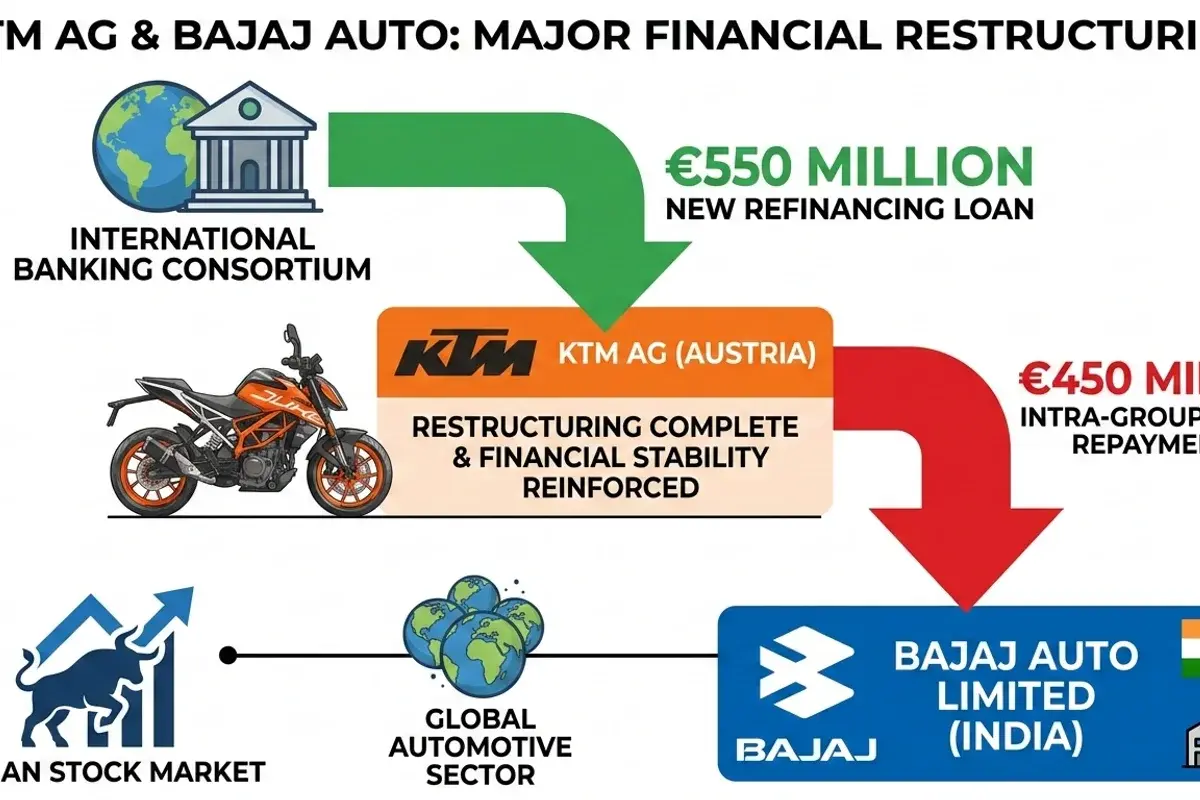
KTM AG repays €450M loan to Bajaj Auto's unit, completing restructuring. FinScann analyzes the financial impact on Bajaj Auto, Pierer Mobility, and...

Tata Elxsi launches DevStudio.ai, an ASPICE-aligned GenAI platform, poised to accelerate automotive software engineering and enhance productivity for...

Waaree Energies bags a significant 300 MW wind power project in Gujarat, marking a strategic expansion and contributing to India's ambitious...
“ABCL is entering a structurally stronger earnings phase, supported by synchronized momentum across lending, AMC, and insurance.
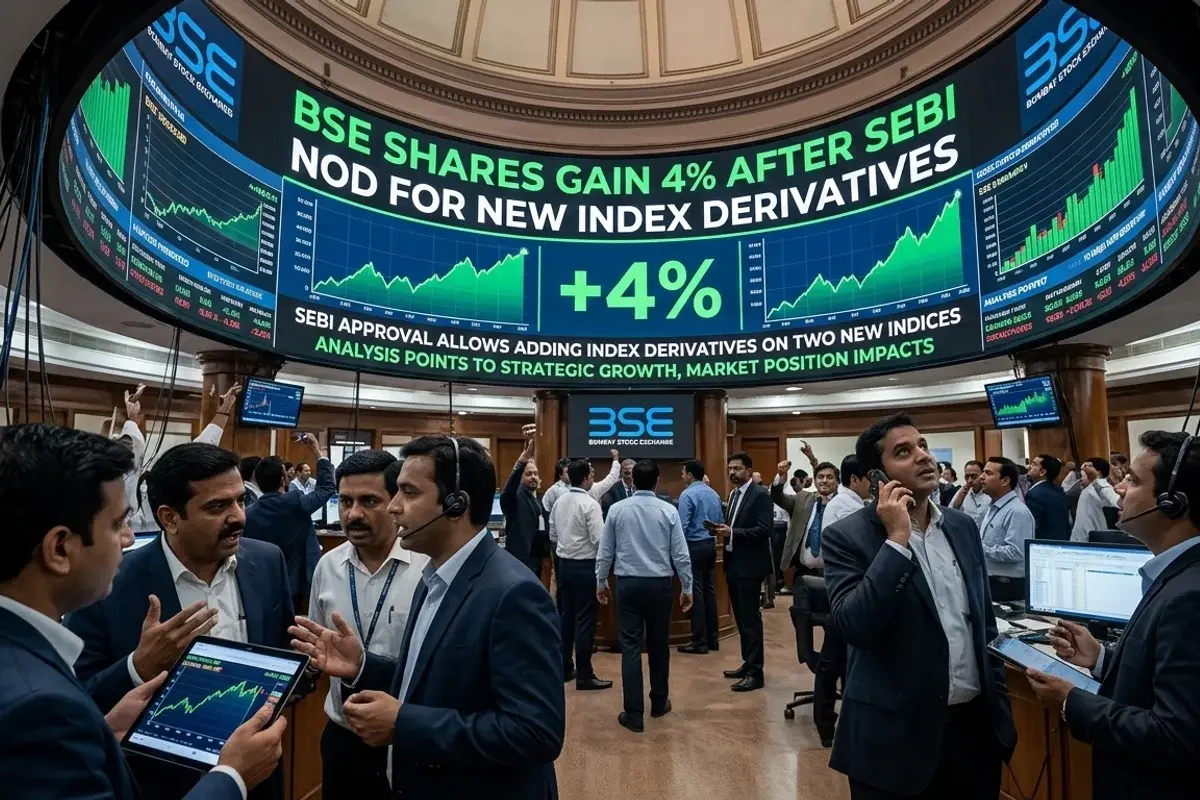
BSE shares surge over 4% after SEBI's critical nod for Sensex Next 30 index derivatives, bolstering its market position and revenue potential.