Loading market data...
Bharti Airtel plans to invest ₹20,000 crore into its RBI-licensed NBFC, Airtel Money Limited, shifting from loan distributor to direct lender and competing with Jio Financial Services and Bajaj Finance in India’s fast-growing credit market.
India’s telecom battlefield is no longer just about spectrum and subscribers. It’s about balance sheets, credit underwriting, and financial ecosystems.
With a ₹20,000 crore capital infusion into its RBI-licensed NBFC, Airtel Money Limited, Bharti Airtel has formally stepped into the ring as a direct lender. The move pits it head-on against Jio Financial Services, Bajaj Finance, and a crowded fintech field.
The big question: Is this Airtel’s Jio moment — or an expensive distraction?
For the past two years, Airtel has quietly operated as a lending service provider (LSP), partnering with institutions such as:
Through these partnerships, Airtel facilitated over ₹9,000 crore in cumulative loan disbursements.
Now, it wants to own the balance sheet — not just the distribution channel.
This transition fundamentally changes Airtel’s risk profile. As an NBFC, it will assume credit risk directly, manage underwriting, and absorb potential defaults.
That is not a small shift.
India’s formal credit-to-GDP ratio stands at roughly 53%, according to Care Edge Ratings. This gap represents a massive underserved lending opportunity.
At the same time, retail lending has become hyper-competitive, with aggressive expansion by:
The post-Covid lending boom has intensified competition across unsecured credit, BNPL, and MSME financing.
Airtel believes its edge lies in data.
Airtel Money’s platform includes:
With over 370 million telecom subscribers and 500+ data scientists, Airtel is betting that alternate data underwriting can help it price risk more accurately than traditional lenders.
The strategy mirrors ecosystem monetisation models pioneered by Jio — use telecom penetration to cross-sell financial products.
But underwriting is not marketing.
Analysts estimate Airtel is generating approximately ₹77,000 crore in operating free cash flow on a run-rate basis in FY26.
Even after spectrum and AGR liabilities of roughly ₹34,000 crore over the next four years, the company retains substantial deployable cash.
In theory, funding the ₹20,000 crore NBFC build-out is manageable.
However, this capital-intensive model contrasts sharply with Airtel’s historically asset-light digital strategy.
Morgan Stanley has already cautioned that this move increases capex intensity and risk exposure.
The shadow of Reliance Industries looms large.
Jio Platforms built a consumer ecosystem and layered financial services on top, backed by one of India’s strongest balance sheets.
Can Airtel replicate that model with less capital and a later start?
The cross-sell thesis includes:
The Airtel Thanks App becomes the lending distribution engine.
But scale in lending depends on three things:
Airtel’s biggest challenge is limited static pool data and credit cycle experience.
| Player | Strength | Risk |
|---|---|---|
| Jio Financial Services | Deep capital backing | Execution scale risk |
| Bajaj Finance | Decades of underwriting expertise | Slower digital pivot |
| Traditional Banks | Low cost of funds | Legacy systems |
| Airtel Money | Massive customer base + data | Limited lending track record |
Airtel is entering one of India’s most competitive and capital-intensive sectors.
There are two possible outcomes:
If Airtel successfully monetises its subscriber base through disciplined credit growth, it could unlock a high-margin recurring revenue stream and reduce telecom dependency.
If underwriting misfires or competition compresses margins, the NBFC could dilute returns and distract management focus.
Lending is unforgiving during economic downturns.
The first two years will define whether Airtel Money becomes a fintech powerhouse or a costly experiment.
Bharti Airtel’s ₹20,000 crore NBFC move is not incremental — it is transformational.
It signals a structural pivot from telecom operator to ecosystem-driven financial player.
Whether it becomes India’s second successful telecom-to-fintech crossover story after Jio will depend not on ambition, but on execution discipline.
Telecom built the pipe. Now Airtel wants to own the money flowing through it.

Financial journalist specializing in market analysis, stock research, and investment trends. Dedicated to providing accurate, timely insights for informed decision-making.
Credentials: Experienced financial journalist with expertise in equity markets and economic analysis
The information provided in this article is for educational and informational purposes only and should not be construed as financial, investment, or legal advice. Finscann does not provide personalized investment recommendations.
For detailed terms and conditions, please read our Disclaimer and Terms of Service.
No related topics available
Rail Vikas Nigam Limited (RVNL) bags ₹1,978 crore NMDC contract and ₹270 crore Central Railway project, boosting its order book and reinforcing...

XTGlobal Infotech Ltd (NSE: XTGLOBAL) shares jump 20% to upper circuit after securing a $796,900 AI contract from the Texas Department of...
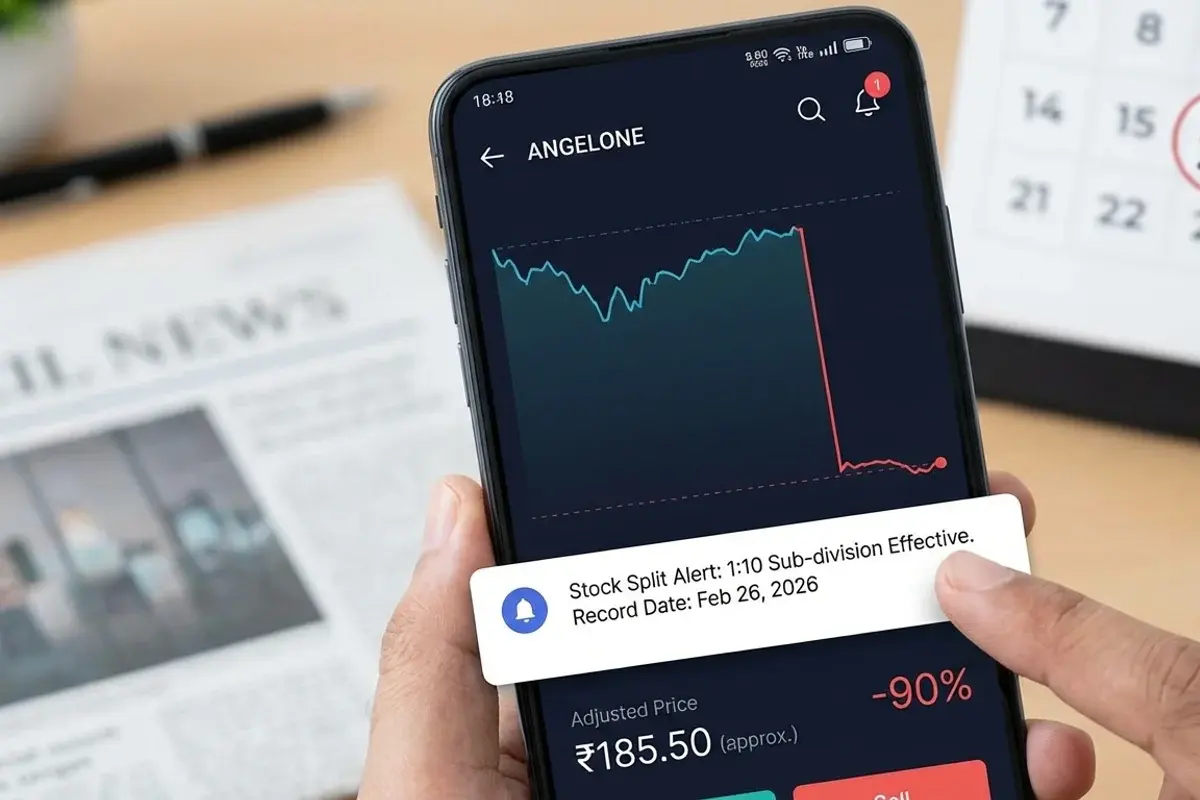
Angel One's 1:10 stock split has adjusted its share price, making it more accessible. FinScann analyzes the impact, financials, and market outlook...
FinScann reveals top 5 pivotal Indian stocks set for significant action on Feb 26, 2026. Get in-depth analysis on InfraBridge, TechGen, PharmaCare,...
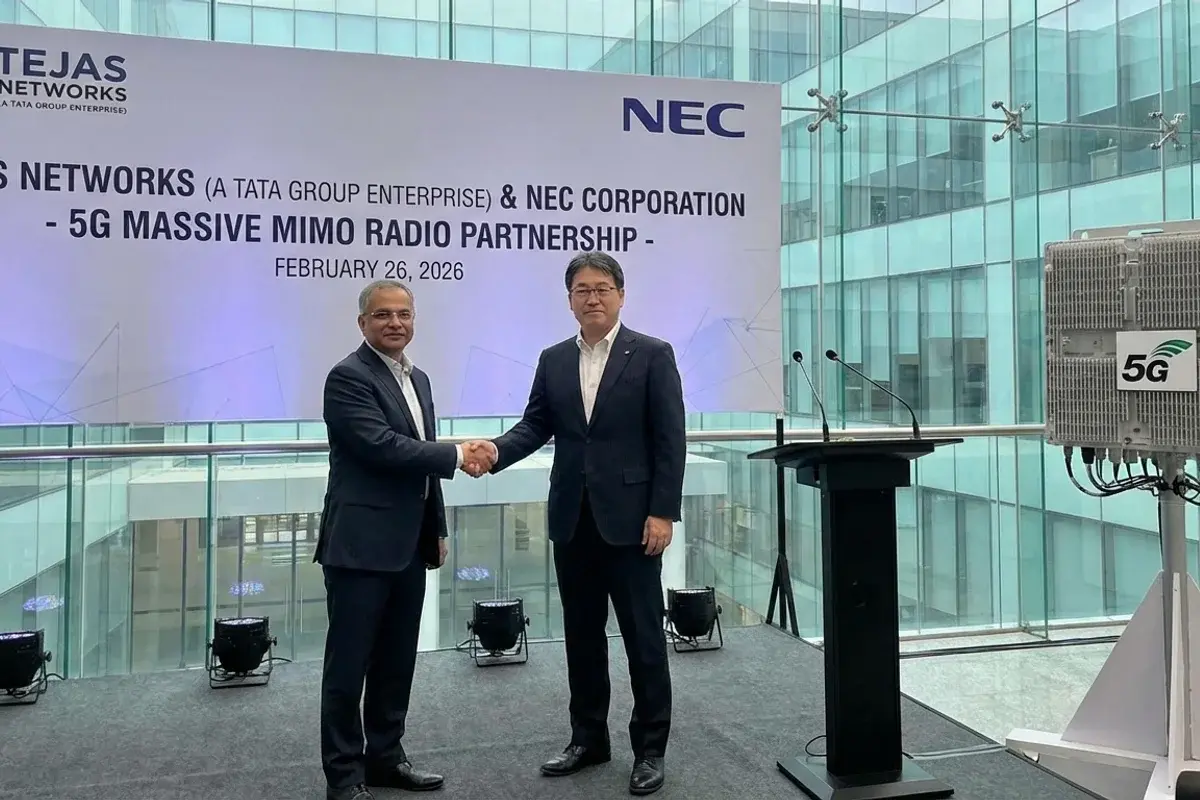
Tejas Networks signs a significant agreement with NEC Corporation for 5G Massive MIMO radio supply.