Loading market data...
London-based biomaterials startup Shellworks secures $15 million in Series A funding to scale its biodegradable plastic alternative Vivomer. The company plans expansion across the US and Europe to accelerate sustainable packaging adoption.
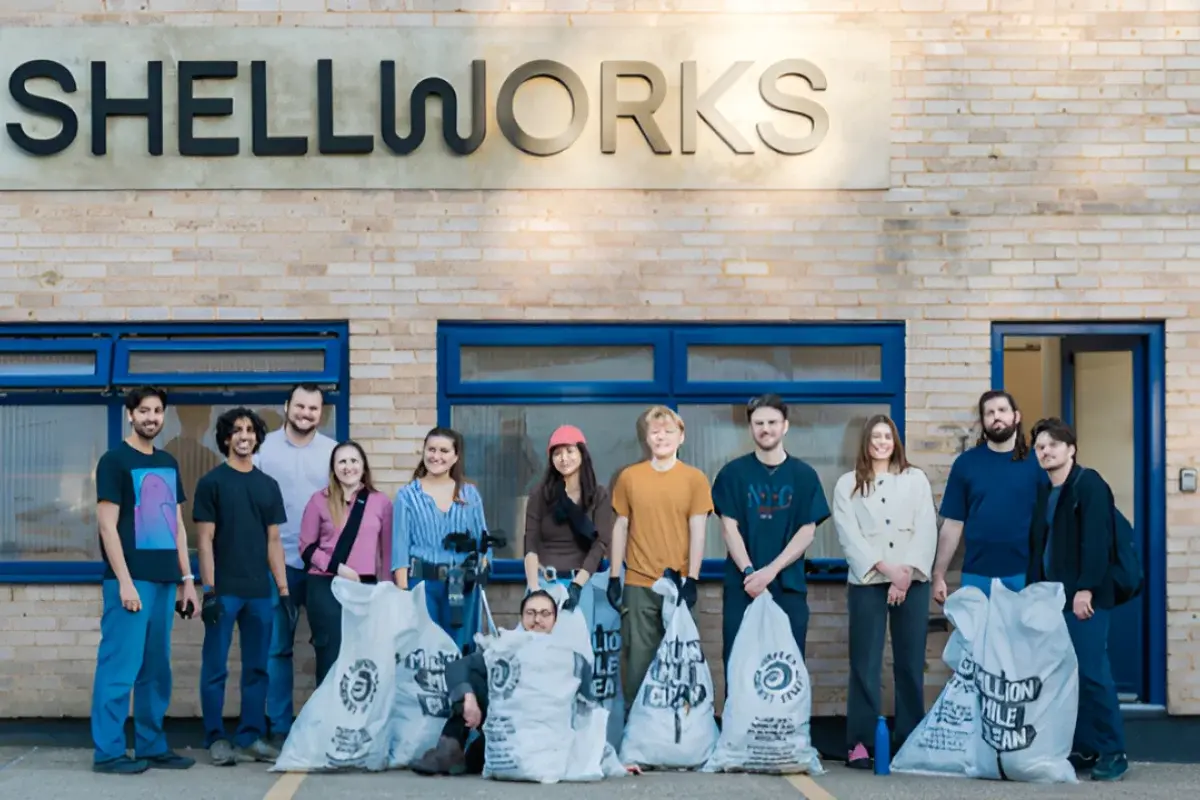
The global packaging industry is under increasing pressure to move away from petroleum-based plastics as governments tighten environmental regulations and consumers demand sustainable alternatives. However, one of the biggest barriers to change has been cost. Many eco-friendly materials struggle to match traditional plastics in terms of affordability, scalability, and performance.
London-based biomaterials startup Shellworks believes it has developed a solution that addresses these challenges. The company has raised $15 million in Series A funding to scale production of its biodegradable plastic alternative called Vivomer and expand its manufacturing footprint across the United States and Europe.
The funding round was led by the Paris-based impact investment firm Alter Equity, with participation from technology investor Nat Friedman through NFDG, JamJar Investments, and existing investors including Founder Collective, LocalGlobe, and Third Sphere.
The new capital will help Shellworks accelerate production capacity, expand its global supply chain infrastructure, and support large-scale packaging deployments for consumer brands.
Shellworks plans to use the newly raised capital to build a global manufacturing network capable of supporting the growing demand for sustainable packaging. The company intends to expand production facilities across Europe and the United States while improving manufacturing efficiency and reducing transportation emissions.
By locating production closer to consumer markets, Shellworks aims to reduce logistics costs and improve supply chain resilience while scaling the adoption of biodegradable packaging solutions.
| Category | Details |
|---|---|
| Company | Shellworks |
| Founded | 2019 |
| Headquarters | London, United Kingdom |
| Funding Round | Series A |
| Amount Raised | $15 million |
| Lead Investor | Alter Equity |
| Additional Investors | NFDG, JamJar Investments |
| Existing Investors | Founder Collective, LocalGlobe, Third Sphere |
| Expansion Regions | United States and Europe |
At the center of Shellworks’ technology is Vivomer, a bio-based material designed to replace conventional plastic while maintaining similar durability and functionality during use. Unlike traditional plastics that rely on fossil fuels, Vivomer is produced through a microbial fermentation process that converts renewable feedstocks into biodegradable polymers.
The material is created using second-generation feedstocks such as used cooking oil. Through fermentation, microbes convert these feedstocks into polymer chains that can then be processed and molded into packaging materials using existing industrial manufacturing methods.
One of the key advantages of Vivomer is that it behaves like conventional plastic during its lifecycle but naturally biodegrades after disposal. This significantly reduces the long-term environmental impact compared with petroleum-based plastics, which can persist in ecosystems for hundreds of years.
Shellworks spent approximately six years developing this material, focusing on solving the primary barriers that have historically prevented sustainable packaging from achieving widespread adoption.
| Feature | Description |
|---|---|
| Production Method | Microbial fermentation |
| Raw Materials | Second-generation feedstocks such as used cooking oil |
| Material Type | Bio-based biodegradable polymer |
| Packaging Applications | Personal care, cosmetics, and consumer goods |
| End-of-Life Behavior | Fully biodegradable |
| Manufacturing Compatibility | Works with existing plastic molding systems |
A major challenge for environmentally friendly packaging materials has been cost. Many biodegradable alternatives remain significantly more expensive than traditional plastics, which has slowed their adoption across industries.
Shellworks claims it has reached cost competitiveness with materials such as aluminium and glass even while operating at relatively small production volumes. The company has produced approximately five million units of Vivomer packaging so far, demonstrating that the material can be commercially viable even before reaching full industrial scale.
According to Shellworks CEO and co-founder Insiya Jafferjee, the perception that sustainable materials are too expensive for mass adoption is beginning to change. She explains that the company’s ability to achieve cost parity at such an early stage indicates strong potential for further cost reductions as production volumes increase.
As manufacturing scales, economies of scale and improved production efficiencies are expected to make Vivomer even more competitive with traditional plastics.
To support large-scale production, Shellworks is investing in manufacturing technologies commonly used in the plastics industry. One of the key techniques the company is deploying is blow moulding, which enables the mass production of packaging containers such as bottles and cosmetic packaging.
Using existing industrial production methods allows Shellworks to integrate its biodegradable materials into current manufacturing systems without requiring brands to completely redesign their packaging supply chains.
This compatibility is critical for accelerating adoption among major consumer goods companies.
Félix Mounier from Alter Equity highlighted that Shellworks is building not only a new material but also the industrial infrastructure required to make sustainable packaging accessible at scale.
Shellworks’ packaging material is already being used by several consumer brands that are seeking sustainable alternatives to traditional plastic packaging.
One of the company’s most prominent partnerships is with the personal care brand Wild, which operates within the portfolio of global consumer goods company Unilever. Products using Vivomer packaging are currently sold through major retail chains including Tesco.
The technology is also being used by Sonsie Skin, the skincare brand founded by Pamela Anderson. Additionally, Vivomer packaging has been introduced in the United States through products sold at Whole Foods Market via the brand Phil’s.
| Brand | Industry | Retail Distribution |
|---|---|---|
| Wild | Personal care | Tesco and international retail stores |
| Sonsie Skin | Skincare | Online and specialty retailers |
| Phil’s | Consumer products | Whole Foods Market |
Freddy Ward, co-founder and CEO of Wild, noted that Vivomer represents a major step forward in sustainable packaging innovation. He emphasized that Shellworks’ commitment to solving packaging waste challenges aligns closely with the brand’s environmental mission.
The global shift toward sustainable packaging is accelerating as governments introduce stricter environmental regulations and corporations commit to reducing plastic waste.
Consumer brands across sectors such as cosmetics, food, beverages, and personal care are actively seeking alternatives that can match plastic’s durability and cost while minimizing environmental harm.
Biotechnology-driven materials like Vivomer represent a promising solution. By combining renewable feedstocks with advanced fermentation technology, companies like Shellworks are creating materials that can integrate into existing supply chains while addressing the long-term environmental impact of plastic waste.
With its latest funding round, Shellworks is positioning itself as a key player in the emerging bio-materials sector. If the company succeeds in scaling production and maintaining cost competitiveness, it could help accelerate the transition toward a circular packaging economy.

Financial journalist specializing in market analysis, stock research, and investment trends. Dedicated to providing accurate, timely insights for informed decision-making.
Credentials: Experienced financial journalist with expertise in equity markets and economic analysis
The information provided in this article is for educational and informational purposes only and should not be construed as financial, investment, or legal advice. Finscann does not provide personalized investment recommendations.
For detailed terms and conditions, please read our Disclaimer and Terms of Service.

Deeptech startup Turiyam AI secures $4 million (₹36 Cr) in pre-seed funding led by Ankur Capital and Micelio Fund.

Deep analysis of Constelli’s $20 million growth round led by General Catalyst and 360 ONE Asset.

Deep analysis of Inamo’s $8 million Series A funding led by Prime Venture Partners. Explore India’s quick-commerce infrastructure shift, dark store...
Deepinder Goyal’s entry into health-tech with Temple marks a pivot from consumer services to deep-tech hardware.

Origa’s success underscores a broader market trend: Vertical AI is the new frontier. By solving the "complexity problem" in pre-sales, Origa is...