Loading market data...
Deeptech startup Turiyam AI secures $4 million (₹36 Cr) in pre-seed funding led by Ankur Capital and Micelio Fund. Explore strategic analysis, venture capital trends, AI infrastructure growth drivers, risks, and investor insights.
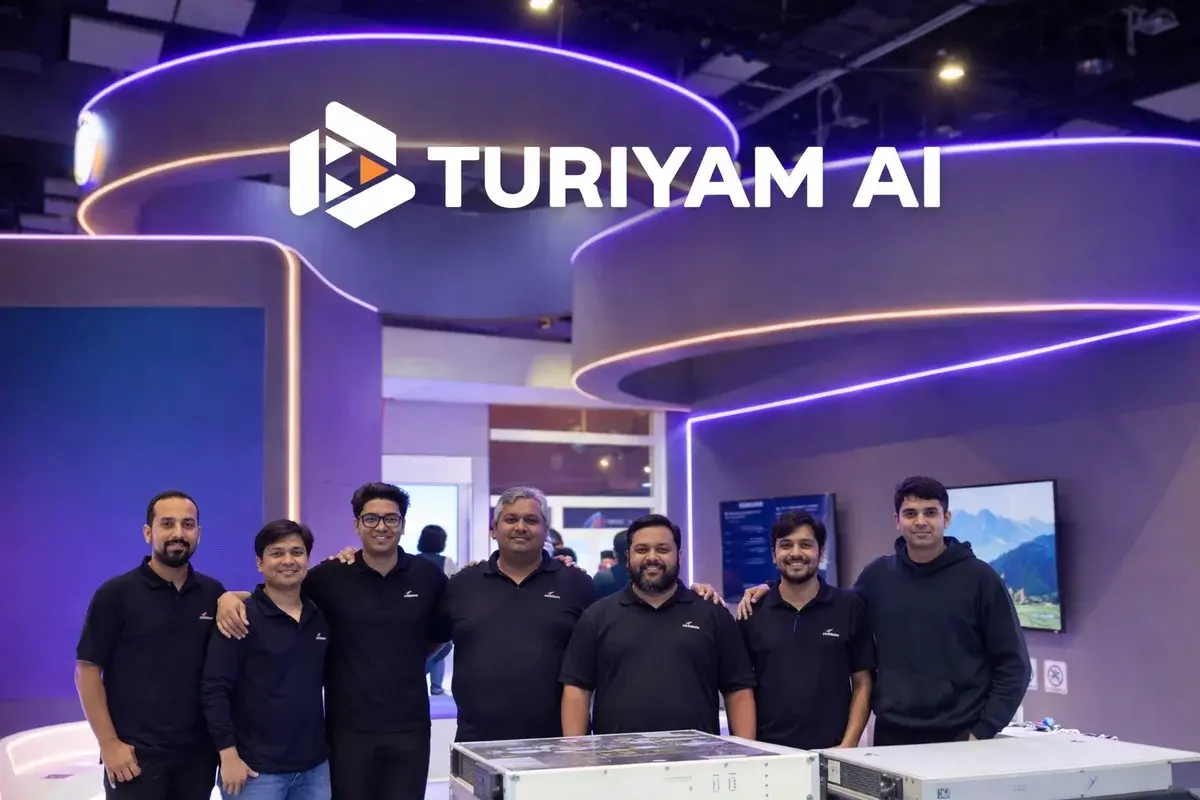
Turiyam AI has raised $4 million (₹36 crore) in a pre-seed round led by Ankur Capital and Micelio Fund, marking one of the most strategic early-stage deeptech infrastructure bets in India. The capital will fund product acceleration, R&D expansion, and enterprise rollouts across India and global data centres. In a market increasingly focused on EBITDA margins, capital discipline, and scalable AI infrastructure, Turiyam AI’s funding underscores rising institutional appetite for deeptech with defensible IP and enterprise-grade monetization potential.
India’s startup funding ecosystem is undergoing a structural recalibration. After the excess liquidity cycle of 2020–2022 and the subsequent valuation reset, venture capital trends now favour deeptech infrastructure, capital efficiency, and tangible commercial deployments over pure growth narratives. The emphasis has shifted from aggressive user acquisition to sustainable revenue visibility, stronger EBITDA margins, and extended cash runway management.
Against this backdrop, Turiyam AI has secured $4 million (approximately ₹36 crore) in a pre-seed funding round led by Ankur Capital and Micelio Fund, the early-stage investment arm of Axilor Ventures. The deal may appear modest in absolute size, but strategically it signals rising investor conviction in India’s AI infrastructure layer at a time when enterprises and data centres are recalibrating compute efficiency and deployment economics.
This round is not structured around blitzscaling. It is focused on building durable AI infrastructure with measurable commercial outcomes.
Turiyam AI plans to deploy the fresh capital toward accelerating product development, strengthening its engineering and research teams, and expanding R&D capabilities. A significant portion of the funding will support early enterprise rollouts and deployments across data centres in India and overseas markets.
Unlike consumer AI startups that depend heavily on marketing-led growth, Turiyam AI’s capital allocation roadmap reflects infrastructure-driven monetization. This model typically aligns with improving gross margins over time as fixed R&D investments begin to normalize against expanding enterprise revenue streams.
| Metric | Details |
|---|---|
| Founded | Early-stage deeptech venture |
| Sector | AI Infrastructure / DeepTech |
| Revenue Model | Enterprise contracts and data centre deployments |
| Market Position | Pre-seed, IP-led AI infrastructure player |
| Key Financial Metrics | Not publicly disclosed |
| Competitive Edge | Infrastructure optimization and enterprise-grade AI deployment |
The global AI landscape is moving beyond application-layer experimentation toward infrastructure-level optimization. Enterprises deploying large language models and generative AI systems face increasing pressure to optimize compute utilization, reduce energy intensity, and ensure scalable deployment architectures across hybrid environments.
Deeptech startups operating in this foundational layer play a critical role in enhancing unit economics for enterprise AI adoption. By focusing on compute efficiency and deployment frameworks, infrastructure-focused players directly influence cost structures and long-term profitability for enterprise clients. This strategic positioning often results in stronger switching costs and higher defensibility compared to consumer-facing AI applications.
Institutional capital is increasingly flowing toward businesses that enhance enterprise gross margin expansion rather than relying on user-growth-driven valuation narratives.
“Institutional investors are increasingly prioritizing EBITDA visibility and sustainable cash flow generation over top-line growth,” says a Mumbai-based fund manager tracking the sector.
This structural shift aligns closely with Turiyam AI’s infrastructure-centric model.
At the pre-seed stage, detailed financial disclosures remain limited. However, investors evaluating Turiyam AI’s trajectory will focus on revenue growth visibility from enterprise pilots, conversion rates to long-term contracts, and burn multiple efficiency.
Deeptech infrastructure businesses typically experience heavy R&D expenditure in early years. Over time, once commercial deployments scale, gross margins tend to improve as incremental costs per deployment decline. The $4 million raise provides operational runway estimated between 18 to 24 months, depending on hiring velocity and product development intensity.
Importantly, the company is equity-funded at this stage, with no leverage exposure, thereby reducing balance sheet risk during early expansion. In the post-reset funding environment, disciplined valuations and milestone-based capital deployment are viewed positively by institutional investors seeking alpha generation through sustainable scaling rather than speculative growth.
Turiyam AI’s business model durability hinges on enterprise contracts and integration within data centre ecosystems. Infrastructure solutions embedded within enterprise systems often benefit from long-term agreements, providing predictable revenue streams once initial pilots convert successfully.
Competitive positioning will depend on proprietary algorithms, optimization frameworks, and integration capabilities. If Turiyam AI builds defensible intellectual property and embeds itself deeply into enterprise AI stacks, switching costs could become meaningful, strengthening long-term margin resilience.
Scalability in AI infrastructure typically occurs through modular deployment across enterprise networks and multi-location data centres. Unit economics improve as deployment templates become standardized, lowering marginal integration costs.
Capital efficiency remains central. Unlike growth-heavy SaaS plays, infrastructure-led deeptech startups can scale through focused institutional partnerships, reducing customer acquisition inefficiencies. Regulatory scrutiny around AI governance may also create opportunities for infrastructure providers that enable compliant and energy-efficient deployments.
Enterprise AI adoption continues to accelerate across industries seeking automation and productivity gains. Simultaneously, India’s data centre capacity expansion over the next five years is expected to create sustained demand for compute optimization solutions.
Rising GPU infrastructure investments, increasing energy costs, and a stronger regulatory push for digital infrastructure further enhance tailwinds for AI infrastructure startups. Global enterprises are also prioritizing cost optimization within AI deployments, creating structural demand for efficiency-focused solutions.
Despite strong tailwinds, deeptech infrastructure startups face long enterprise sales cycles, which can delay revenue realization. High R&D intensity in early stages may compress margins until commercial scale is achieved.
Competitive pressure from global AI infrastructure firms poses another challenge. Rapid technological evolution could also shorten product relevance cycles if innovation does not keep pace. Additionally, funding constraints could emerge if subsequent rounds are delayed due to macroeconomic tightening or milestone slippage.
| Segment | Current Momentum | Outlook | Capital Flow Sentiment |
|---|---|---|---|
| Generative AI Applications | High | Moderating | Selective |
| AI Infrastructure Optimization | Rising | Strong | Positive |
| Data Centre Automation | Strong | Expanding | Increasing |
| Compute Efficiency Solutions | High | Structural | Institutional-backed |
Capital allocation trends clearly indicate a pivot from hype-led consumer AI models toward infrastructure-driven durability and capital discipline.
The broader startup funding India narrative now reflects fewer mega rounds and a stronger emphasis on EBITDA margins, extended cash runway, and profitability roadmap clarity. Venture capital trends suggest investors are seeking resilience, defensibility, and measurable enterprise traction.
Turiyam AI’s raise fits squarely within this recalibrated funding landscape. It represents conviction capital backing infrastructure rather than speculative valuation expansion.
| Company Type | Revenue Scale | EBITDA | Valuation | Strategic Position |
|---|---|---|---|---|
| Consumer AI Apps | User-driven | Often negative | Volatile | Hype-sensitive |
| DeepTech Infrastructure | Enterprise contracts | Improving over time | Disciplined | Structural backbone |
Infrastructure players are increasingly viewed as long-duration vehicles for sustainable alpha generation.
Long-term investors should monitor enterprise contract wins, burn efficiency, intellectual property defensibility, and progress toward recurring revenue scale. The next funding round valuation will likely hinge on proof of scalable deployments and improved unit economics.
Short-term market observers should track broader AI infrastructure deal flow, data centre capacity announcements, and evolving venture capital sentiment toward deeptech.
Valuation comfort in the current capital cycle favors disciplined pricing and milestone-based scaling. Capital allocation discipline will ultimately determine whether Turiyam AI transitions smoothly into Series A with stronger EBITDA visibility.
Investors tracking AI infrastructure themes within Indian markets can access listed technology and digital infrastructure companies via platforms such as Zerodha, Groww, Upstox, and Angel One. Evaluating balance sheet strength, net interest margin where applicable, and long-term capital discipline remains critical before allocating capital.
Q: Why is AI infrastructure gaining more investor interest than consumer AI applications?
Investors are prioritizing EBITDA visibility, sustainable cash flow, and structural durability over rapid user growth narratives.
Q: Is a $4 million pre-seed round considered strong in the current market?
In a disciplined valuation environment, a $4 million raise reflects meaningful investor conviction, particularly in deeptech infrastructure.
Q: What metrics will determine Turiyam AI’s next funding round?
Enterprise conversion rates, burn efficiency, recurring revenue visibility, and proprietary technology defensibility.
Q: What are the primary risks in deeptech infrastructure startups?
Long sales cycles, high R&D intensity, technological disruption, and funding cycle volatility.
Turiyam AI’s $4 million pre-seed funding signals more than early-stage capital inflow. It reflects the maturation of India’s AI ecosystem toward infrastructure-led value creation. As venture capital trends shift toward profitability roadmaps and capital discipline, deeptech infrastructure startups may define the next durable phase of India’s innovation economy.

Financial journalist specializing in market analysis, stock research, and investment trends. Dedicated to providing accurate, timely insights for informed decision-making.
Credentials: Experienced financial journalist with expertise in equity markets and economic analysis
The information provided in this article is for educational and informational purposes only and should not be construed as financial, investment, or legal advice. Finscann does not provide personalized investment recommendations.
For detailed terms and conditions, please read our Disclaimer and Terms of Service.
Deep analysis of Constelli’s $20 million growth round led by General Catalyst and 360 ONE Asset.

Deep analysis of Inamo’s $8 million Series A funding led by Prime Venture Partners. Explore India’s quick-commerce infrastructure shift, dark store...
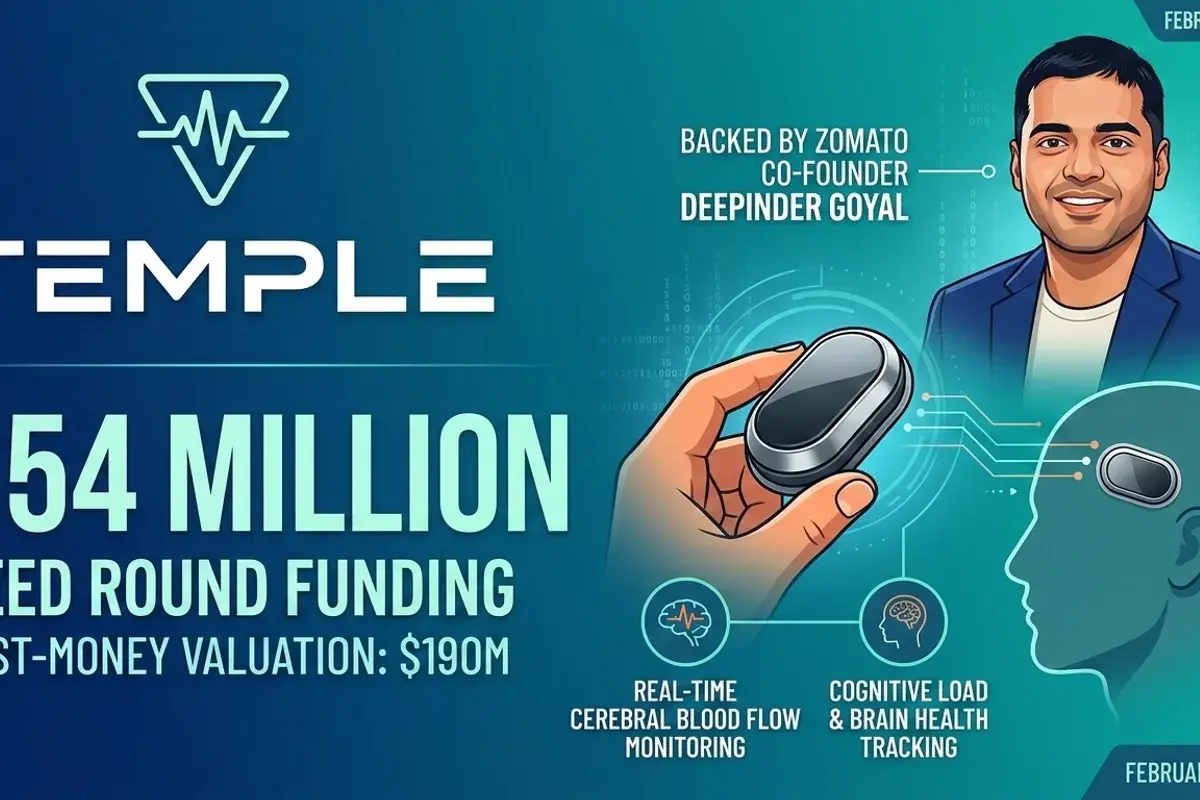
Deepinder Goyal’s entry into health-tech with Temple marks a pivot from consumer services to deep-tech hardware.

Origa’s success underscores a broader market trend: Vertical AI is the new frontier. By solving the "complexity problem" in pre-sales, Origa is...
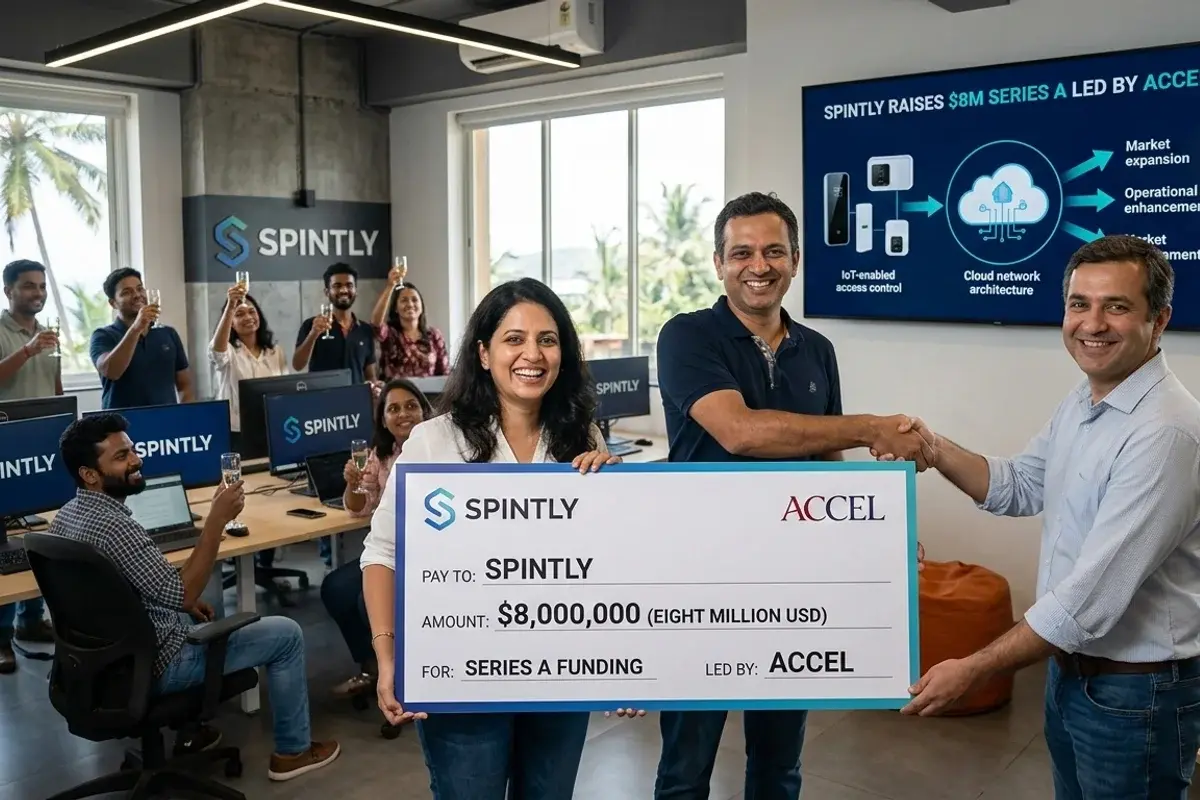
Goa-based IoT and security tech firm Spintly raises ₹66.5 Cr ($8M) Series A led by Accel to fuel global expansion and AI-driven R&D in February 2026.