Loading market data...
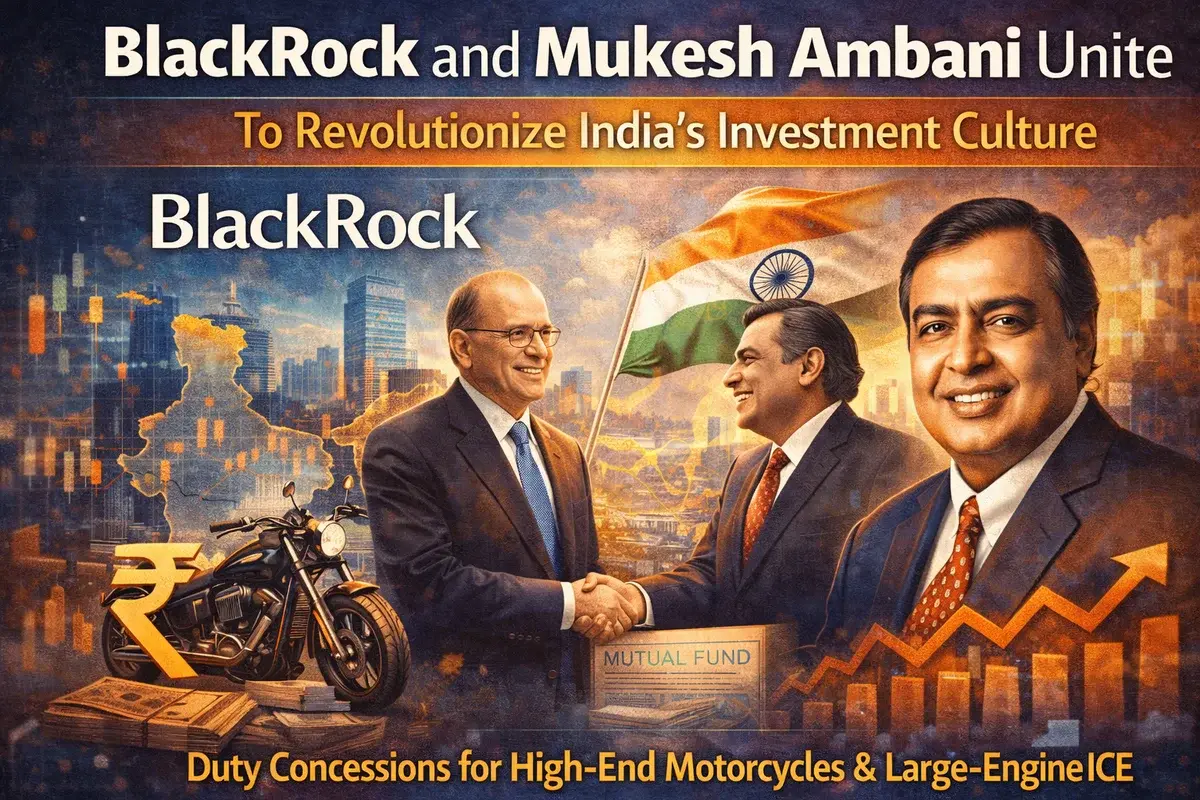
BlackRock and Reliance Industries Forge Strategic Association, Aiming to Reshape India's Investment Landscape
Overview BlackRock, the world's largest asset manager, with Assets Under Management (AUM) recently surpassing $14 trillion, is making a significant push into the Indian market. A recent high-profile discussion between BlackRock Chairman and CEO Larry Fink and Reliance Industries Chairman Mukesh Ambani in Mumbai signaled a new association and a clear message: India's savings culture needs to transition into a robust investing culture, with a particular emphasis on passive investment vehicles like Exchange-Traded Funds (ETFs) and index funds.
Key Developments
Business Impact This strategic association between BlackRock and Reliance Industries, spearheaded by prominent figures like Larry Fink and Mukesh Ambani, is poised to significantly influence the asset management sector in India. The focus on passive investing through ETFs and index funds could lead to substantial inflows for BlackRock and a shift in investment strategies for Indian households, potentially impacting the market share of traditional active fund managers.
Market Context The Indian capital markets are demonstrating robust growth, with substantial resource mobilization from primary markets. The increasing participation of individual investors in equity ownership indicates a maturing market. BlackRock's entry and emphasis on passive funds could intensify competition within the mutual fund industry, potentially driving down costs and increasing efficiency for investors.
Industry Context India has historically been characterized by a strong savings culture, with a significant portion of household wealth held in physical assets like gold and silver. The article points to a gradual but significant evolution towards financial savings, particularly in equities and mutual funds. BlackRock's global expertise in passive investing aims to accelerate this transition, aligning India with global trends in asset management.
Looking Ahead The partnership is expected to drive further evolution in India's investment culture, with a potential increase in the adoption of passive investment products and a continued growth in capital market participation.

Financial journalist specializing in market analysis, stock research, and investment trends. Dedicated to providing accurate, timely insights for informed decision-making.
Credentials: Experienced financial journalist with expertise in equity markets and economic analysis
The information provided in this article is for educational and informational purposes only and should not be construed as financial, investment, or legal advice. Finscann does not provide personalized investment recommendations.
For detailed terms and conditions, please read our Disclaimer and Terms of Service.
India's benchmark indices Sensex and Nifty staged a robust recovery in March 2026, gaining significantly despite ongoing geopolitical tensions.

Geopolitical tensions surrounding the US-Iran conflict led FIIs to dump ₹12,000 crore from Indian shares.

Indian refinery stocks, including Reliance, MRPL, and CPCL, surge up to 5% after China reportedly suspends diesel and gasoline exports amidst...
Indian markets surged in March 2026, with Sensex and Nifty rebounding on de-escalation hopes in the Middle East.
Morgan Stanley cuts 2,500 jobs across investment banking, wealth management, and trading. Despite strong financials, this strategic move signals a...