Loading market data...
Navigate the volatile crypto futures market in February 2026 to target a ₹1 crore portfolio. FinScann provides expert strategies, top altcoins, and platform analysis.
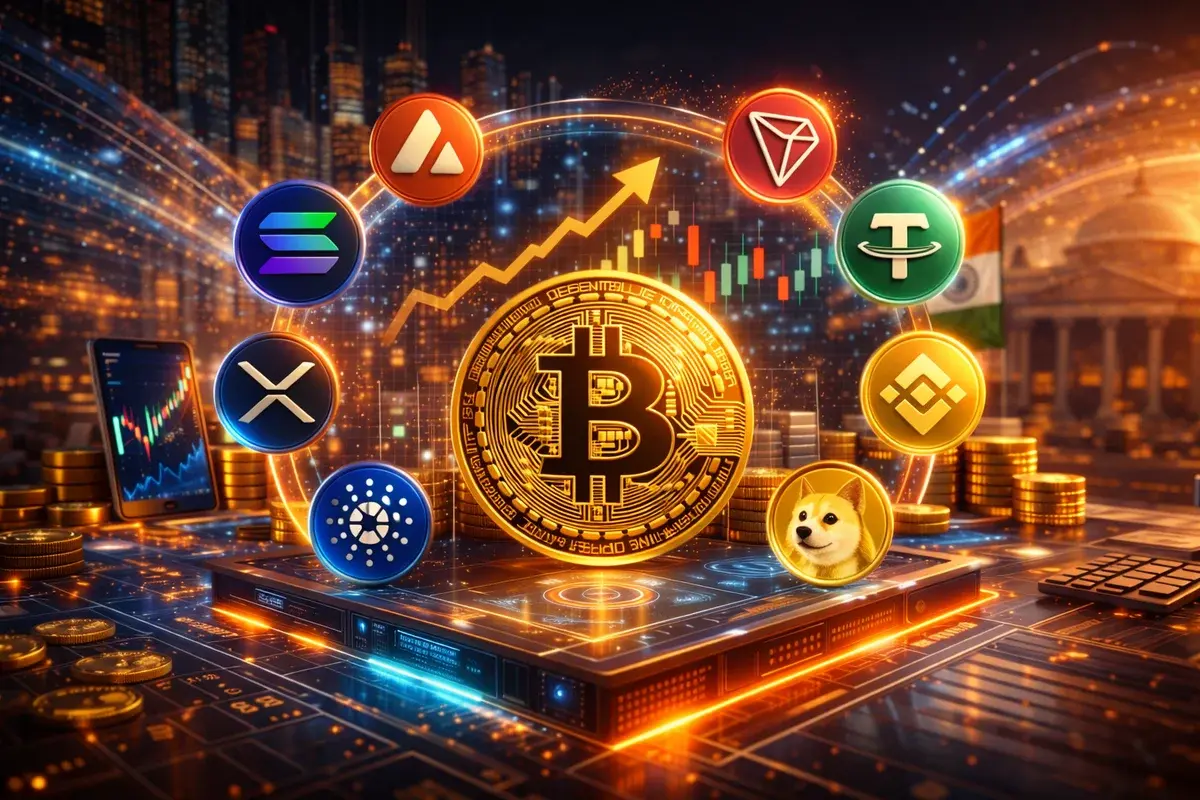
The allure of generational wealth in the digital asset space has never been stronger, with crypto futures offering unprecedented leverage for high-conviction traders. FinScann's in-depth analysis for February 2026 reveals a market poised for significant movements, driven by institutional capital and evolving regulatory clarity. Astute futures trading, focused on high-potential assets like Bitcoin (BTC), Ethereum (ETH), and select altcoins, combined with disciplined risk management and strategic platform selection, presents a pathway to potentially achieve a ₹1 crore portfolio for those ready to navigate its inherent volatility.
Introduction
The cryptocurrency market, known for its rapid price swings and exponential growth cycles, continues to attract an increasing number of Indian investors seeking to generate substantial wealth. While traditional spot trading offers exposure, crypto futures trading has emerged as a powerful, albeit high-risk, instrument capable of magnifying returns through leverage. As we progress through February 2026, the landscape of digital assets is dynamic, shaped by global macroeconomic factors, technological advancements, and a maturing regulatory environment. This comprehensive FinScann guide delves into the intricacies of crypto futures, providing a data-driven roadmap for ambitious traders aiming to secure significant financial gains, potentially reaching the coveted ₹1 crore milestone. The key lies in understanding market mechanics, identifying catalysts, and executing strategies with precision and an unwavering commitment to risk management.
The Catalyst: The High-Stakes Appeal of Crypto Futures
The shift towards crypto derivatives is undeniable. In 2025, futures trading notably surpassed spot activity in India, driven by traders' demand for leverage and sophisticated product structures. Unlike direct ownership of cryptocurrencies, futures contracts allow traders to speculate on future price movements of assets like Bitcoin (BTC) and Ethereum (ETH) without actually holding the underlying coins. This mechanism enables participants to potentially profit from both rising (long) and falling (short) markets, offering unparalleled flexibility. The primary catalyst attracting high-net-worth individuals and aggressive retail traders is the potential for amplified profits through high leverage, where a small capital outlay can control a significantly larger position. While the promise of outsized returns is compelling, especially during predicted altcoin seasons in 2026, the magnified risk of liquidation necessitates a rigorous understanding of market dynamics and robust risk mitigation strategies. The growing institutional interest, with ETFs purchasing more than 100% of the new supply of Bitcoin, Ethereum, and Solana in 2025, further underscores the increasing sophistication and capital flows into the crypto derivatives space.
Q: Why are crypto futures becoming so popular in India? A: Crypto futures are gaining popularity in India because they allow traders to profit from both rising and falling markets, offer significant leverage to amplify potential gains, and can be more tax-efficient in some cases compared to spot trading due to the 1% TDS on spot transactions.
Q: What is the main appeal of using leverage in crypto futures trading? A: The main appeal of leverage is the ability to control a larger trading position with a relatively small amount of capital, significantly magnifying potential profits from even minor price movements.
Financial Forensics: Decoding Derivatives and Managing Risk
Understanding the intricate mechanics of crypto futures is paramount. These are financial contracts obligating the buyer to purchase or the seller to sell an asset at a predetermined price and date. In the crypto sphere, perpetual futures are particularly popular, as they lack an expiry date, allowing positions to be held indefinitely, subject to funding rates. The core of futures trading, especially with the ambition of earning a ₹1 crore, involves leverage and margin. Leverage, often ranging from 2x to 100x on various platforms, allows traders to open positions larger than their initial capital. However, this amplification cuts both ways: a small adverse price movement can quickly lead to substantial losses or, critically, liquidation. Liquidation occurs when your margin falls below the maintenance requirement, and the exchange automatically closes your position to prevent further losses.
Key metrics for forensic analysis include Open Interest (OI) and Trading Volume. Open Interest represents the total number of outstanding futures or options contracts that have not yet been settled, indicating new money entering or leaving the market and overall market sentiment. Increasing OI alongside a price trend suggests strength and continuation, while decreasing OI might signal a weakening trend. Volume refers to the total number of units traded in a specific period, confirming market activity and momentum. High volume with increasing OI can confirm a strong price movement, whereas high volume with decreasing OI might indicate short-term speculation rather than a sustained trend.
Expert Insight:
"The 2026 crypto market is poised for transformative growth, with clearer regulation and accelerating institutional integration. Traders must focus on robust risk management, understanding that while leverage amplifies returns, it equally magnifies losses. The smart money is not just looking for gains, but for sustainable strategies that protect capital in inherently volatile conditions." — FinScann Chief Market Strategist.
Q: How does leverage impact a trader's capital in crypto futures? A: Leverage allows traders to control a much larger position than their initial capital, but it also means that both potential profits and losses are significantly magnified, making risk management crucial.
Q: What is "liquidation" in crypto futures trading? A: Liquidation is the automatic closing of a trader's position by the exchange when their margin balance falls below the required maintenance margin due to adverse price movements, to prevent further losses.
Market Impact: Navigating Volatility and Capital Flows
The burgeoning crypto futures market profoundly influences the broader digital asset ecosystem. The availability of derivatives enhances price discovery and market liquidity, allowing for more efficient capital allocation. Institutional adoption, fueled by clarity in regulatory frameworks and the success of spot Bitcoin ETFs, is increasingly channeling traditional finance capital into crypto derivatives. This influx of sophisticated players can lead to more predictable, albeit still volatile, market movements compared to purely retail-driven cycles. Predictions for 2026 suggest Bitcoin may break its four-year cycle, setting new all-time highs, with Ethereum and Solana also projected for significant gains if regulatory clarity improves.
However, the leverage inherent in futures trading can also amplify systemic volatility. Large-scale liquidations, often triggered by sudden price drops, can create a "liquidation cascade," pushing prices even lower and exacerbating market downturns. Conversely, a surge in leveraged long positions can rapidly fuel upward trends. Traders aiming for a ₹1 crore target must closely monitor macro liquidity, global economic trends, and regulatory developments, particularly in India, where discussions between the Ministry of Finance, SEBI, and the RBI are ongoing to establish a formal regulatory framework for crypto exchanges and derivatives. The 30% capital gains tax and 1% TDS on crypto transactions in India also heavily influence trading strategies and platform choices.
Q: How do crypto futures impact the overall crypto market? A: Crypto futures increase market liquidity and facilitate price discovery. They also allow institutional investors to gain exposure, leading to deeper integration with traditional finance, though leverage can also amplify market volatility.
Q: What is the regulatory outlook for crypto in India for 2026? A: In 2026, India is moving towards a formal regulatory framework, with the Ministry of Finance discussing roles for SEBI (as primary supervisor for exchanges) and RBI (for foreign investment/cross-border transactions), building on existing 30% capital gains tax and 1% TDS.
Key Takeaways for Astute Investors
To navigate the high-stakes world of crypto futures and target substantial wealth, consider these critical takeaways:
Q: What is the most important aspect of crypto futures trading for beginners? A: For beginners, the most important aspect is rigorous risk management, including starting with low leverage, setting stop-loss orders, and understanding the high probability of liquidation with aggressive strategies.
Q: How can Indian traders optimize for tax efficiency in crypto futures? A: Indian traders can optimize for tax efficiency by choosing platforms that offer INR-margined perpetual futures, which can help avoid the 1% TDS on every trade that is typically incurred when converting INR to USDT or other stablecoins.
FinScann Verdict
The pursuit of a ₹1 crore portfolio through crypto futures trading in February 2026 is ambitious but achievable for the well-informed and disciplined trader. The market is ripe with opportunity, driven by increasing institutional capital and the innovative flexibility of derivatives. However, the magnified risks associated with high leverage demand an exceptional commitment to risk management and continuous market analysis. FinScann advises a strategic approach, focusing on key market indicators like Open Interest and Volume, selecting robust and compliant trading platforms, and meticulously managing capital to transform potential into profit.
Q: Is it realistic to aim for ₹1 crore through crypto futures trading? A: While the potential for high returns exists due to leverage, aiming for ₹1 crore is highly ambitious and comes with significant risk, including the possibility of substantial losses or liquidation. It requires advanced strategies, deep market understanding, and exceptional risk management.
Q: What is FinScann's primary advice for crypto futures traders? A: FinScann's primary advice is to prioritize risk management above all else, combining disciplined strategy with thorough market analysis and the judicious use of leverage to navigate the inherent volatility of crypto futures.
High-Potential Cryptos for Futures Trading: February 2026 Watchlist
As of February 2026, certain cryptocurrencies are showing strong technical and fundamental indicators for futures trading, especially as the market anticipates potential altcoin seasons and continued institutional interest. These assets exhibit robust market capitalization, significant trading volume, and growing ecosystems.
| Cryptocurrency | Symbol | Current Price (Approx.) | Market Cap (Approx.) | Key Factors for Futures Trading |
|---|---|---|---|---|
| Bitcoin | BTC | $68,226 | $1.36 Trillion | Flagship asset, institutional flows via ETFs, benchmark for market sentiment. Strong liquidity. |
| Ethereum | ETH | $1,956 | $236 Billion | Core of DeFi & Web3, ongoing upgrades, high Open Interest, barometer for altcoins. |
| Solana | SOL | $84.70 | $48 Billion | High performance, rapid transaction throughput, growing dApp ecosystem, CME futures launch. |
| XRP | XRP | $1.45 | $88 Billion | Cross-border payments utility, improving legal clarity, active community. |
| Binance Coin | BNB | $611.44 | $83 Billion | Binance ecosystem utility, strong platform growth, active trading pairs. |
| Dogecoin | DOGE | $0.10 | $17 Billion | High volatility, strong community, often sees rapid speculative pumps. |
| Cardano | ADA | $0.28 | $10 Billion | Robust development, strong community, potential for breakout above key resistance. |
Note: Prices and market caps are indicative as of February 16, 2026. Market data is highly volatile; conduct your own research.
Q: Which cryptocurrencies are considered high-potential for futures trading in February 2026? A: Bitcoin (BTC), Ethereum (ETH), and Solana (SOL) are highlighted due to institutional interest and strong ecosystems, while XRP, BNB, Dogecoin (DOGE), and Cardano (ADA) also offer significant potential for futures traders.
Q: Why is Bitcoin still important for futures traders even when looking at altcoins? A: Bitcoin is crucial because it often acts as the "gateway" for institutional capital and its futures contracts serve as a key measure of overall crypto market liquidity and sentiment, influencing the direction of other altcoins.
Trading Platforms for Indian Traders
Choosing the right platform is critical for successful crypto futures trading, especially for Indian investors navigating local regulations and tax implications. The ideal platform offers competitive fees, robust security, a wide range of assets, and seamless INR support. In 2026, several platforms have emerged as strong contenders, with some specifically addressing India's unique market needs.
When selecting a platform, consider not just trading fees (maker/taker fees are crucial), but also liquidity, leverage availability, risk management tools, and the platform's regulatory compliance with Indian authorities.
Q: Which crypto trading platform is most tax-efficient for Indian futures traders? A: Pi42 is highlighted as highly tax-efficient for Indian futures traders because it offers INR-margined perpetual futures, which can help users avoid the 1% TDS typically applied to crypto transactions involving USDT conversions.
Q: Are global exchanges like Binance compliant with Indian regulations? A: Many global exchanges, including Binance, have become FIU-compliant entities in India by 2024, which is essential for fund safety and indicates they meet certain regulatory standards for Indian users. However, the broader regulatory framework for crypto is still evolving in India.
Disclaimer: For information only; not investment advice. Stock market investments carry risks. Please consult a SEBI-registered advisor before investing. FinScann assumes no liability for decisions made based on this report.

Financial journalist specializing in market analysis, stock research, and investment trends. Dedicated to providing accurate, timely insights for informed decision-making.
Credentials: Experienced financial journalist with expertise in equity markets and economic analysis
The information provided in this article is for educational and informational purposes only and should not be construed as financial, investment, or legal advice. Finscann does not provide personalized investment recommendations.
For detailed terms and conditions, please read our Disclaimer and Terms of Service.
Bitcoin price plunges below $65,000 in February 2026 as global tariff concerns escalate. FinScann analyzes the market impact & investment outlook for...
Explore a data-driven 2026 crypto investment strategy covering Bitcoin, Ethereum, Solana and Layer-2 ecosystems.
XRP ETFs are gaining momentum as XRPI and XRPR rise while XRP-USD defends the crucial $1.40 support level.