Loading market data...
Overview
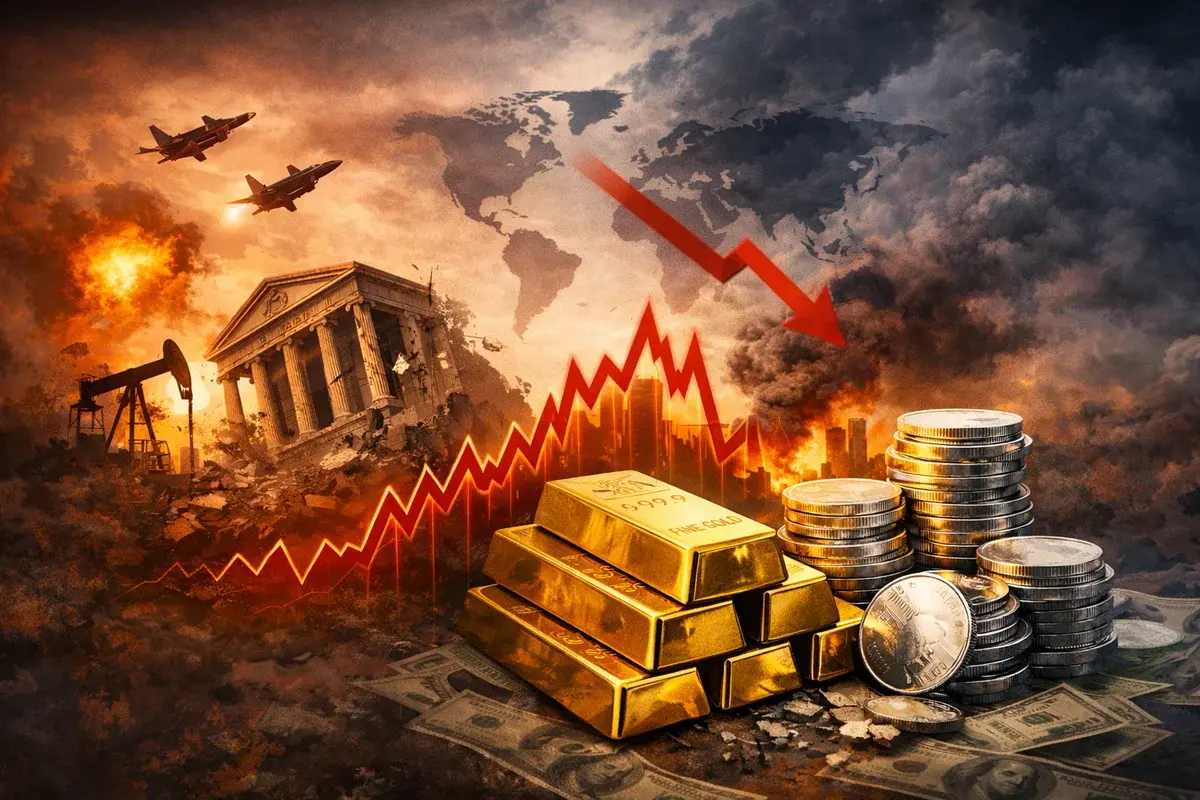
Whenever gold and silver prices rise sharply together, global financial markets tend to enter a phase of heightened uncertainty. Across multiple decades, sustained rallies in precious metals have coincided with financial crises, geopolitical escalations, recessions, inflation shocks, currency devaluations, and major equity market drawdowns. While gold and silver do not directly cause market collapses, they consistently act as early warning indicators, reflecting stress long before it becomes visible in stock indices, earnings data, or economic headlines.
The recent surge in gold and silver has once again sparked a critical question among investors, fund managers, and policymakers:
Are markets ignoring a deeper risk signal?
This analysis explores historical precedents, macroeconomic mechanics, monetary theory, and investor behavior to understand why rising precious metals often precede major global events — and what this renewed rally could be signaling now.
Why Gold and Silver Matter More Than Other Assets
Gold and silver are not ordinary commodities. They function as monetary instruments embedded deeply in the global financial system, reacting to forces that equities and bonds often price much later.
Gold represents
• A hedge against currency debasement
• A reserve asset for central banks
• Protection during systemic and banking risk
• A barometer of confidence in fiat money
• Insurance against policy mistakes
Silver represents
• A hybrid asset tied to both monetary fear and industrial demand
• A volatility amplifier during liquidity stress
• A speculative signal during late-cycle excess
• Sensitivity to manufacturing, infrastructure, and energy demand
When both metals rise together, it often reflects simultaneous stress in monetary policy, currency markets, and real-economy growth expectations — a combination that has historically preceded large market moves.
The Macro Mechanics Behind Precious-Metal Rallies
Falling Real Interest Rates
Gold thrives when real interest rates decline.
• Inflation expectations accelerate
• Nominal yields fail to compensate investors
• Cash and bonds lose purchasing power
• Opportunity cost of holding gold collapses
Historically, prolonged declines in real yields have aligned with:
• Equity market corrections • Currency depreciation • Rising debt sustainability concerns • Increased capital flight into hard assets
Central Bank Accumulation
One of the most important structural shifts of the last decade is persistent central-bank gold accumulation.
Central banks increase gold reserves when:
• Confidence in reserve currencies weakens
• Geopolitical fragmentation accelerates
• Sanctions and asset freezes become common
• Long-term monetary credibility is questioned
This is strategic demand, not speculative positioning.
Institutional Capital Rotation
Large institutional flows into gold-backed vehicles and physical bullion tend to appear when:
• Equity valuations become stretched
• Credit spreads begin widening
• Liquidity conditions tighten
• Market volatility increases
• Correlation risk rises across asset classes
These flows often precede major repricing in equities and credit, making them a critical early signal.
Historical Evidence: When Gold and Silver Rose Before Major Crises
Gold — key historical reference prices (approx.)
| Date (approx.) | Event / Context | Gold price (USD/oz) | Reference |
|---|---|---|---|
| Jan 1978 | Pre-oil shock baseline | ~$217 | Historical macro data |
| Jan 1980 | Inflation & geopolitical peak | ~$850 | Long-term bullion records |
| Sep 2011 | Post-QE sovereign debt crisis peak | ~$1,895 | Global market data |
| Aug 2020 | COVID liquidity & stimulus peak | ~$2,047 | Institutional bullion tracking |
| Apr 2025 | Multi-year high amid central-bank buying | ~$3,168 | Global financial reporting |
Silver — key historical reference prices (approx.)
| Date (approx.) | Event / Context | Silver price (USD/oz) | Reference |
|---|---|---|---|
| 1979–1980 | Inflation & monetary stress cycle | ~$49 | Historical silver archives |
| Apr–May 2011 | Commodity super-cycle spike | ~$48–$50 | Global commodity data |
| Aug 2020 | Pandemic volatility peak | ~$29 | Market volatility records |
Gold vs Silver: Interpreting Relative Strength During Market Cycles
Gold vs Silver Ratio — crisis periods vs normal periods
| Market Phase | Approx. Gold/Silver Ratio | Interpretation |
|---|---|---|
| Normal economic growth | 55–65 | Balanced risk appetite |
| Late-cycle expansion | 65–75 | Rising uncertainty |
| Financial stress / crisis | 80–100+ | Strong risk-off sentiment |
| Extreme panic events | 100+ | Liquidity shock |
A widening gold-silver ratio has historically signaled risk aversion and capital flight, while falling ratios align with economic optimism and industrial demand.
Gold vs Equities — Behavior During Stress Events
| Market Condition | Gold Performance | Equity Market Performance |
|---|---|---|
| Inflation shock | Strong rise | Valuation pressure |
| Banking crisis | Outperformance | Sharp drawdowns |
| Sovereign debt stress | New highs | Volatile / declining |
| Liquidity crunch | Capital preservation | Forced selling |
Gold does not move in isolation — it often diverges sharply from equities during crises, acting as a defensive anchor.
Real Yields vs Gold Price Direction
| Real Yield Environment | Gold Price Trend |
|---|---|
| Rising real yields | Gold under pressure |
| Flat real yields | Range-bound |
| Falling real yields | Sustained rally |
| Deeply negative real yields | Explosive upside |
This inverse relationship explains why gold often accelerates during periods of policy stress.
Central-Bank Gold Buying — Macro Signal Impact
| Central-Bank Behavior | Market Interpretation |
|---|---|
| Stable holdings | Monetary confidence |
| Gradual accumulation | Reserve diversification |
| Aggressive buying | Currency & geopolitical risk |
| Coordinated accumulation | Structural monetary shift |
How Precious Metals Influence Broader Markets
• Capital rotates away from equities • Credit conditions tighten • Volatility increases • Currency stability weakens • Policy credibility comes under scrutiny
Gold does not crash markets — it exposes stress already building beneath the surface.
Current Market Environment: Why the Signal Matters Now
The present macro environment displays several historically dangerous traits:
• Elevated geopolitical conflict
• High global debt burdens
• Uncertain interest-rate trajectories
• Tightening liquidity conditions
• Sustained central-bank gold demand
• Rising inflation sensitivity
In such conditions, rising gold and silver prices deserve serious attention, not complacency.
What This Means for Investors
For Long-Term Investors
• Gold acts as portfolio insurance
• Precious-metal rallies often precede equity corrections
• Ignoring early signals has historically been costly
For Traders
• Precious-metal strength often leads volatility
• Defensive positioning becomes more attractive
• Risk-reward shifts away from leverage
Key Takeaway
Markets rarely collapse without warning. They usually signal stress quietly first.
Across history, gold and silver have repeatedly acted as early indicators of financial instability. When both metals rise together — especially amid weakening liquidity and policy uncertainty — complacency becomes dangerous.
Gold and silver are not predicting disaster. They are reflecting fear that has not yet been priced elsewhere.
Ignoring that message has never aged well.
Disclaimer:
This article is intended solely for informational and educational purposes and does not constitute financial, investment, trading, or legal advice. Market views expressed are based on historical data, market observations, and publicly available information and may change without notice. Financial markets, including precious metals and equities, are subject to risk and volatility, and past performance is not a guarantee of future results. Readers are advised to conduct their own research and consult with a qualified financial advisor before making any investment decisions. The author and publisher disclaim any liability for losses or damages arising from the use of this information, and all investment actions taken based on this content are at the reader’s own risk.

Financial journalist specializing in market analysis, stock research, and investment trends. Dedicated to providing accurate, timely insights for informed decision-making.
Credentials: Experienced financial journalist with expertise in equity markets and economic analysis
The information provided in this article is for educational and informational purposes only and should not be construed as financial, investment, or legal advice. Finscann does not provide personalized investment recommendations.
For detailed terms and conditions, please read our Disclaimer and Terms of Service.
Gold and silver rates jump on MCX today amid dollar weakness and escalating US-Iran conflict.

Global crude oil prices have soared by 18% this week, with Brent nearing $85/barrel. FinScann analyzes the Middle East crisis, Strait of Hormuz...
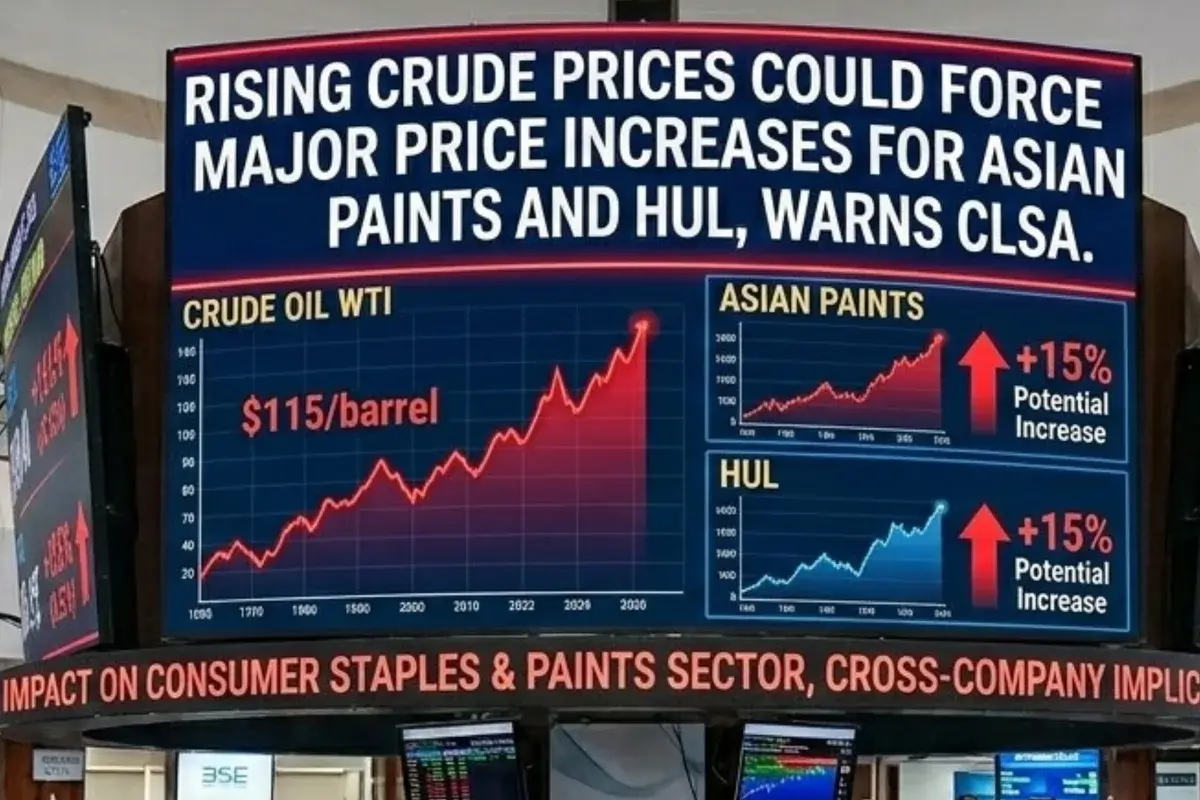
Surging crude oil prices could force major price increases for Indian giants Asian Paints and HUL, warns CLSA.
Gold prices on MCX soar to ₹1.64 lakh in March 2026, driven by intense US-Iran tensions. FinScann analyzes safe-haven demand and future outlook for...
Silver prices soar over 3% in March 2026 as Middle East tensions escalate and a weaker US dollar fuels safe-haven demand.