Loading market data...
Gold and silver prices witnessed a sharp and sudden sell-off, with silver plunging nearly 17 percent and gold sliding over 3 percent, erasing a major part of their recent rally. The crash was triggered by a stronger US dollar, easing geopolitical tensions, and shifting expectations around US interest rates. While volatility remains elevated, analysts are divided on whether the correction offers a buying opportunity or signals further downside.
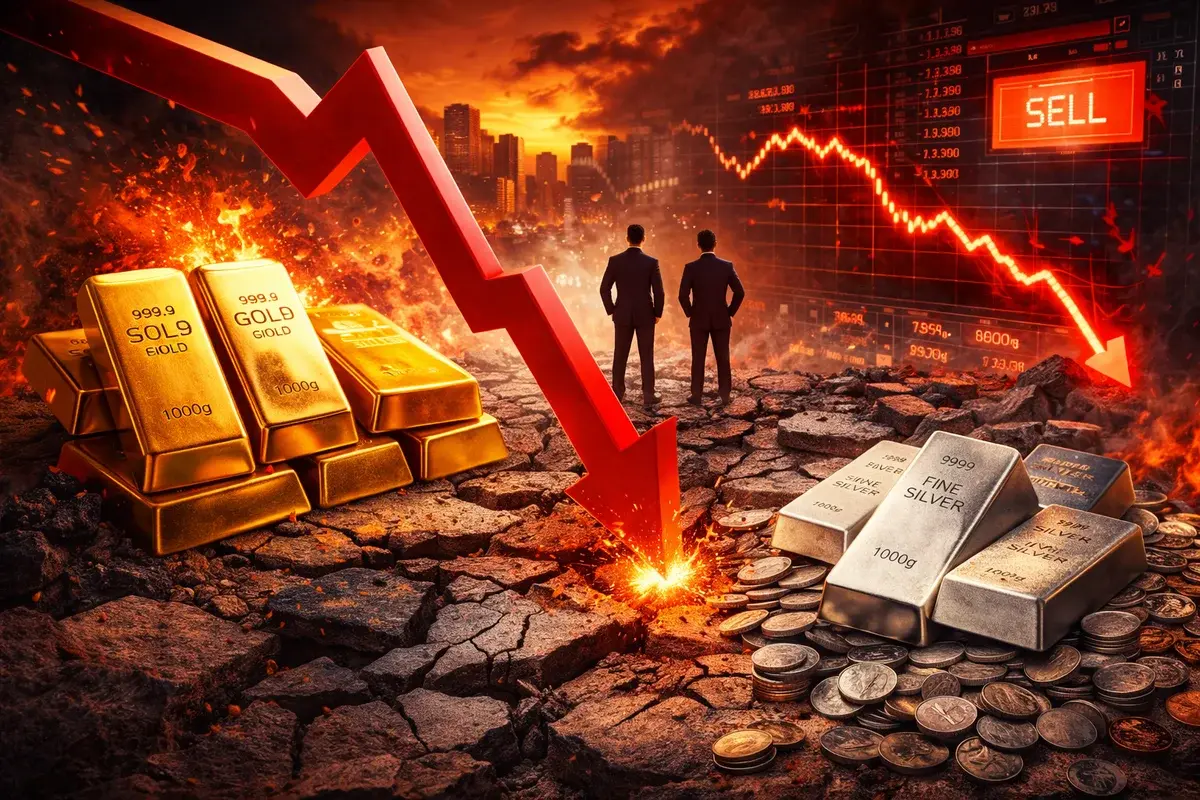
The precious metals market is witnessing another brutal sell-off, with silver crashing nearly 17 percent in Asian trade and gold sliding more than 3 percent, wiping out a significant portion of the massive rally seen over the past few months. The correction has been sharp, swift, and unforgiving, triggering panic across bullion markets and exchange-traded funds.
Indian markets felt the full impact of the rout, as MCX silver futures plunged, gold prices weakened, and bullion-linked ETFs collapsed by as much as 21 percent in a single session. The sudden reversal has left investors grappling with a critical question: is this a once-in-a-cycle buying opportunity, or the start of a deeper unwind?
Live global bullion prices are tracked via COMEX metals prices.
A Sudden End to a Parabolic Rally
Just days ago, silver was trading above $90 an ounce, while gold was flirting with record highs near $5,600. Over the past 12 months, precious metals had nearly doubled, powered by geopolitical tensions, aggressive speculative positioning, and expectations of easier US monetary policy.
That optimism evaporated quickly.
Silver has now retreated more than one-third from its January peak, while gold briefly slipped below $4,500 earlier this week before stabilising near $4,850. The scale of the fall underscores how crowded and leveraged the bullish trade had become.
Three Big Reasons Behind the Gold and Silver Crash
1. Dollar Roars Back as Rate-Cut Hopes Cool
The biggest trigger behind the bullion sell-off has been a sharp rebound in the US dollar, which surged to a near two-week high. A stronger dollar makes gold and silver more expensive for holders of other currencies, directly hurting demand.
Markets are recalibrating expectations after the nomination of Kevin Warsh as a potential Federal Reserve chair candidate. Warsh is widely viewed as less dovish, favouring a smaller Fed balance sheet and a more cautious approach to rate cuts.
This shift has fuelled expectations that US interest rates may stay higher for longer — a negative for non-yielding assets like gold and silver.
Federal Reserve policy signals influencing bullion markets can be tracked on the US Federal Reserve monetary policy page.
2. Geopolitical Tensions Ease, Weakening Safe-Haven Demand
Another major blow to bullion came from cooling geopolitical risks, which had earlier acted as rocket fuel for precious metals.
Diplomatic developments — including renewed dialogue between the US and Iran, as well as easing tensions in multiple global flashpoints — have reduced the urgency for investors to seek safe-haven assets.
When geopolitical fear fades, gold and silver lose one of their strongest support pillars. With risk sentiment improving marginally across equities and currencies, money has started flowing out of defensive assets and back into riskier trades.
Market experts warn that without sustained geopolitical stress, bullion prices struggle to justify extreme valuations.
3. Trump–Xi Call Dampens Risk Premium in Asia
The sharp fall in Asian bullion markets was also influenced by a high-profile phone call between Donald Trump and Xi Jinping.
Both leaders publicly struck an optimistic tone, emphasising the importance of stable US-China relations. The discussion covered sensitive issues including trade, Taiwan, and security cooperation — areas that had previously contributed to global uncertainty.
The market interpreted the call as a de-escalation signal, reducing the perceived need for safe-haven hedges. With Asia being a major demand centre for precious metals, sentiment turned sharply negative.
Indian Markets Hit Hard: ETFs and MCX in Focus
The impact was especially severe in India:
• MCX Silver futures dropped sharply • MCX Gold weakened despite rupee volatility • Silver ETFs collapsed up to 21 percent in a single session • Gold ETFs also posted steep losses
Domestic bullion futures and contract data can be tracked on MCX India.
Retail and ETF-driven flows amplified the downside, as forced redemptions and stop-loss triggers accelerated selling pressure.
Should Investors Buy the Dip or Stay Cautious?
Analysts are sharply divided.
The Bullish View: Healthy Correction, Trend Intact
Several market experts argue the crash represents healthy consolidation, not a structural breakdown.
Gold is finding strong buying interest in the $4,700–$4,800 zone internationally, while MCX gold is holding above key long-term support levels. Silver, despite its violence, is approaching zones where long-term accumulation demand historically emerges.
From this perspective, the pullback is seen as price digestion after an unsustainable rally, rather than the end of the bullish cycle.
The Cautious View: Volatility Far From Over
Others warn that silver, in particular, remains vulnerable due to its speculative nature and industrial exposure. Failed rebounds and weak global cues suggest further downside cannot be ruled out, especially if the dollar strengthens further or rate-cut expectations are delayed.
Short-term traders are advised to maintain strict risk management, while long-term investors may consider staggered accumulation rather than aggressive buying.
What Investors Should Watch Next
Key triggers that will decide the next big move in bullion:
• US inflation and employment data • Federal Reserve policy signals • Dollar index trajectory (DXY) • ETF inflows and outflows • Fresh geopolitical developments
Dollar movements impacting bullion prices can be monitored via the US Dollar Index (DXY).
Until monetary policy clarity improves, volatility is likely to remain elevated.
Bottom Line
The latest bullion bloodbath highlights how quickly sentiment can flip in overcrowded trades. While gold and silver still retain strong long-term fundamentals as inflation and geopolitical hedges, the path ahead will be volatile and unforgiving.
For investors, this is not a market for blind dip-buying — but for disciplined allocation, staggered entries, and patience. The fear may offer opportunity, but only for those prepared to manage risk in an unusually turbulent commodity cycle.

Financial journalist specializing in market analysis, stock research, and investment trends. Dedicated to providing accurate, timely insights for informed decision-making.
Credentials: Experienced financial journalist with expertise in equity markets and economic analysis
The information provided in this article is for educational and informational purposes only and should not be construed as financial, investment, or legal advice. Finscann does not provide personalized investment recommendations.
For detailed terms and conditions, please read our Disclaimer and Terms of Service.
Gold and silver rates jump on MCX today amid dollar weakness and escalating US-Iran conflict.

Global crude oil prices have soared by 18% this week, with Brent nearing $85/barrel. FinScann analyzes the Middle East crisis, Strait of Hormuz...
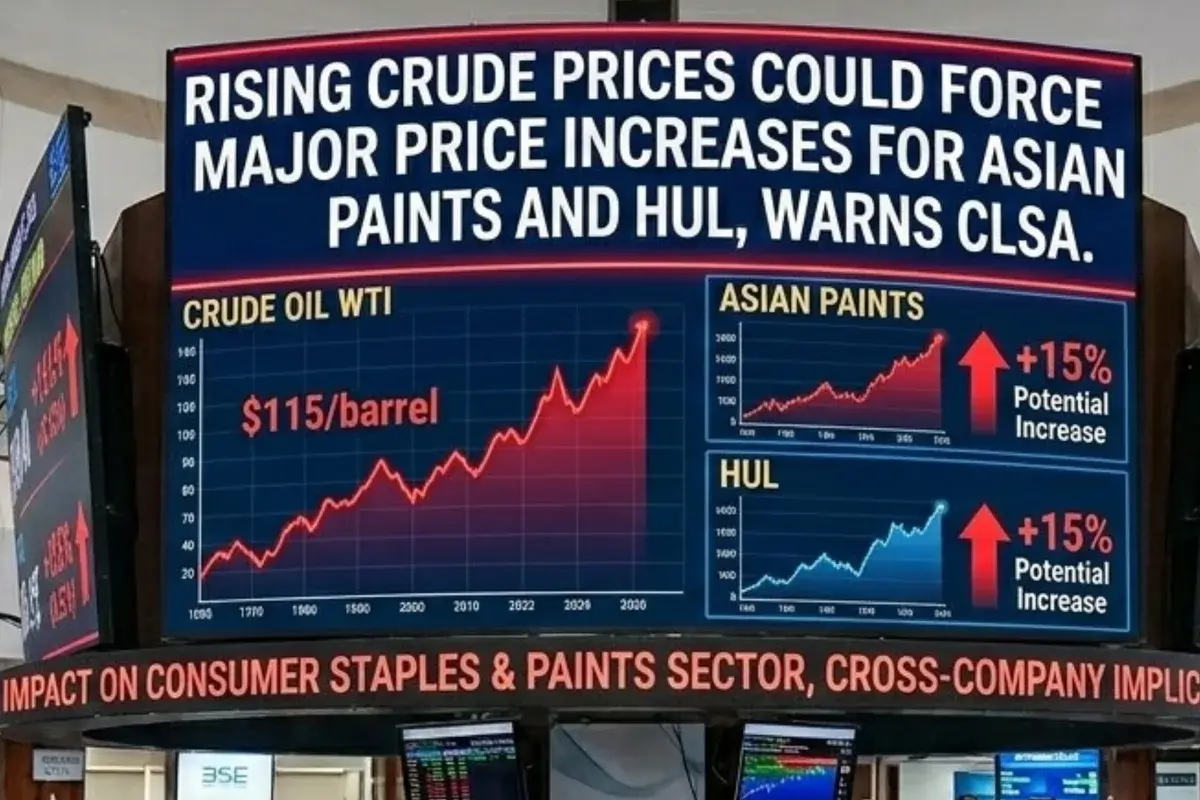
Surging crude oil prices could force major price increases for Indian giants Asian Paints and HUL, warns CLSA.
Gold prices on MCX soar to ₹1.64 lakh in March 2026, driven by intense US-Iran tensions. FinScann analyzes safe-haven demand and future outlook for...
Silver prices soar over 3% in March 2026 as Middle East tensions escalate and a weaker US dollar fuels safe-haven demand.