Loading market data...
BSE and NSE conduct crucial mock trading sessions today to test systems for market changes. FinScann offers essential details, impact analysis, and key takeaways for investors.

India's leading stock exchanges, the BSE (Bombay Stock Exchange) and the NSE (National Stock Exchange), are scheduled to conduct comprehensive mock trading sessions today, March 14, 2026, for various segments. These critical simulations are designed to rigorously test their trading and disaster recovery systems, particularly in preparation for potential system upgrades, new product launches, or to validate the robustness of their infrastructure against unforeseen events. The proactive measure underscores the exchanges' commitment to maintaining seamless and resilient market operations for millions of investors across India, impacting segments from equities to derivatives.
The Catalyst
The decision by BSE and NSE to hold today's mock trading sessions stems from their continuous efforts to enhance system stability and prepare for anticipated market changes or technological advancements. These sessions are crucial for testing new software versions, network infrastructure changes, or the efficacy of disaster recovery protocols. For instance, the National Stock Exchange often conducts such drills to test its trading system's resilience for equity, equity derivatives, currency derivatives, and commodity derivatives segments. Similarly, the Bombay Stock Exchange utilizes these sessions to ensure all systems, including those for equities, equity derivatives, and debt segments, are functioning optimally, providing a simulated environment for brokers and market participants to test their own systems and connectivity. This proactive approach helps mitigate risks associated with live market operations and builds confidence among market participants.
Financial Forensics
While these are mock sessions and do not involve actual financial transactions, their "financial forensics" lie in the validation of system capabilities and transaction processing efficiency. The exchanges meticulously monitor parameters such as order placement latency, trade execution speeds, data dissemination accuracy, and overall system load handling capacity. Brokers are mandated to participate, allowing them to test their trading terminals, back-office systems, and risk management frameworks against the simulated market conditions. This ensures that when actual market changes or new features go live, all participants are prepared.
Key Details of Today's Mock Trading Sessions (March 14, 2026):
| Exchange | Segment(s) Covered | Mock Trading Session Time (IST) | Purpose Highlight |
|---|---|---|---|
| NSE | Equity, Equity Derivatives, Currency Derivatives, Commodity Derivatives | 10:00 AM - 1:00 PM | Testing System Resilience & DR |
| BSE | Equity, Equity Derivatives, Debt, Mutual Funds | 10:15 AM - 1:15 PM | Software Upgrades & Connectivity |
Source: FinScann analysis based on exchange circulars
These sessions are vital for ensuring that new functionalities or system architecture changes integrate smoothly without disrupting the ₹400 lakh crore Indian stock market. The successful completion of these drills helps prevent potential technical glitches that could lead to significant financial losses or operational hurdles during live trading hours.
Market Impact
The direct impact of mock trading sessions on live market performance is typically non-existent, as no real trades are executed or settled. However, their indirect impact is profoundly positive. By ensuring the robustness and reliability of exchange systems, these sessions contribute significantly to market confidence and stability. A well-tested infrastructure reduces the risk of trading halts or data discrepancies, which are critical for maintaining investor trust and encouraging continued participation in the Indian stock market. This system reliability is a cornerstone for the smooth functioning of indices like the Nifty 50 and Sensex. Market participants, especially large institutional investors and high-frequency trading firms, closely watch the outcomes of these tests as an indicator of the exchanges' preparedness for future market dynamics and technological shifts.
Key Takeaways for Investors
FinScann Verdict
The BSE and NSE mock trading sessions today are a proactive and indispensable exercise in fortifying India's financial market infrastructure. While appearing as a routine technical drill, their underlying purpose is to ensure the uninterrupted, efficient, and secure operation of the Indian stock market, a critical factor for both retail and institutional investors. FinScann believes these ongoing initiatives are vital for building a resilient financial ecosystem capable of handling future complexities and sustaining investor confidence in India's growth story.
What is the primary purpose of mock trading sessions? A: The primary purpose of mock trading sessions is to test the functionality, stability, and resilience of the exchange's trading systems, disaster recovery mechanisms, and any new software or network infrastructure changes. They ensure all market participants, including brokers, are ready for live market operations.
Do trades executed during a mock trading session have any real financial implications? A: No, trades executed during a mock trading session are entirely simulated and have no real financial implications. They are not settled, and no actual money or securities change hands.
Why is it important for brokers to participate in mock trading sessions? A: Broker participation is crucial as it allows them to test their own trading terminals, risk management systems, order routing mechanisms, and back-office operations in a simulated environment, ensuring compatibility and smooth functioning with the exchange's systems.
How often do BSE and NSE conduct mock trading sessions? A: BSE and NSE conduct mock trading sessions periodically, often on weekends, especially when significant system upgrades, new product introductions, or regulatory changes are anticipated. The frequency can vary based on operational needs and regulatory mandates.
Disclaimer: For information only; not investment advice. Stock market investments carry risks. Please consult a SEBI-registered advisor before investing. FinScann assumes no liability for decisions made based on this report.

Financial journalist specializing in market analysis, stock research, and investment trends. Dedicated to providing accurate, timely insights for informed decision-making.
Credentials: Experienced financial journalist with expertise in equity markets and economic analysis
The information provided in this article is for educational and informational purposes only and should not be construed as financial, investment, or legal advice. Finscann does not provide personalized investment recommendations.
For detailed terms and conditions, please read our Disclaimer and Terms of Service.

Bajaj Finserv highlights positive trends in Indian equity markets for March 2026, driven by strong corporate earnings and resilient domestic demand,...
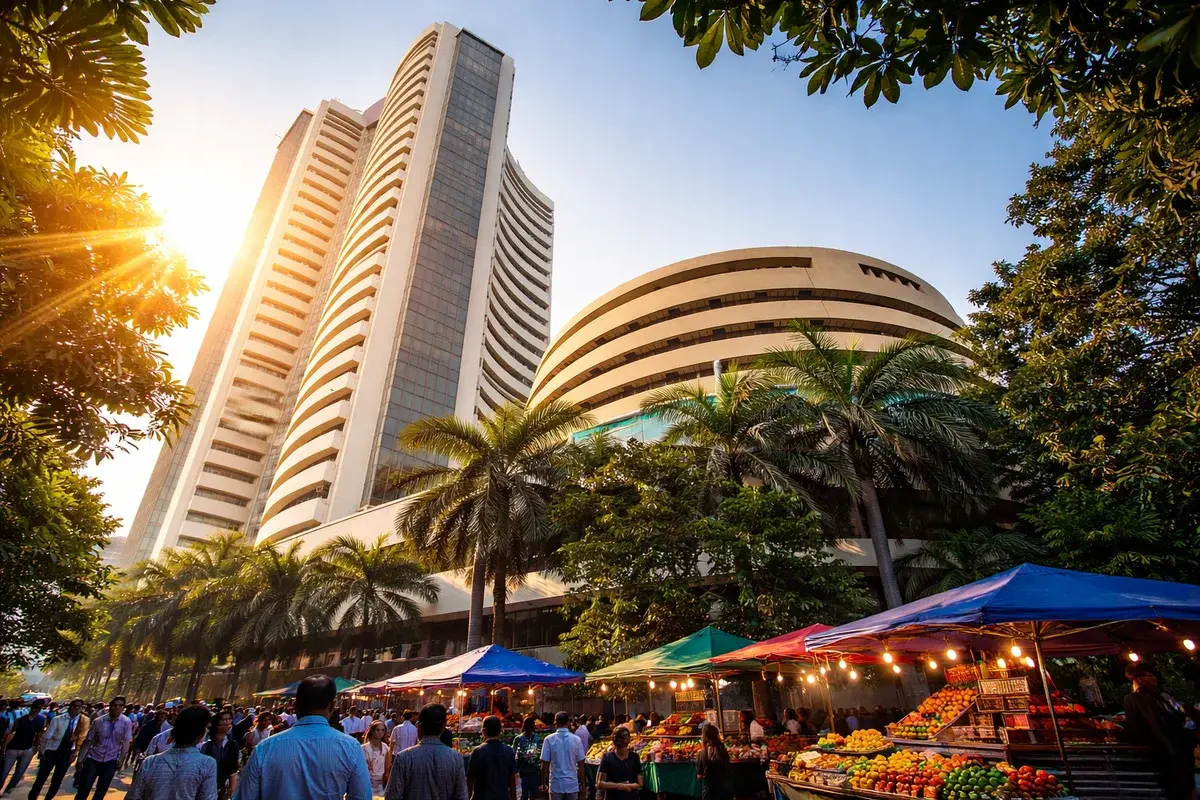
Bombay Stock Exchange will conduct a market-wide mock trading session on March 14 to test trading systems across equity, derivatives, currency, and...

Akasa Air partners with Noida International Airport to establish its first MRO facility in India, strengthening aviation infrastructure and...

India faces a major LPG shortage as global supply disruptions push prices higher. Restaurants shut, businesses struggle, and households feel the...

Indian markets fall sharply as Nifty drops 300 points and Sensex declines 900 amid rising oil prices, LPG shortages, and sector-wide selling pressure.