

global-news
India–EU Free Trade Agreement Explained: Why PM Modi’s ‘Mother of All Deals’ Could Redefine India’s Global Trade Position
1 hours ago
Reviewed and Rewrite by
Shanaya Singh



Synopsis
The Indian rupee recovered modestly on January 27 after touching record lows last week, supported by a softer US dollar and improving sentiment following the conclusion of the long-awaited India–European Union Free Trade Agreement. While the near-term outlook for the rupee remains fragile due to weak foreign capital inflows and cautious forex positioning, analysts say the trade pact could offer medium-to-long-term support by strengthening exports, investment flows, and external stability.
Indian Rupee Today: Currency Finds Breathing Space After Historic Lows
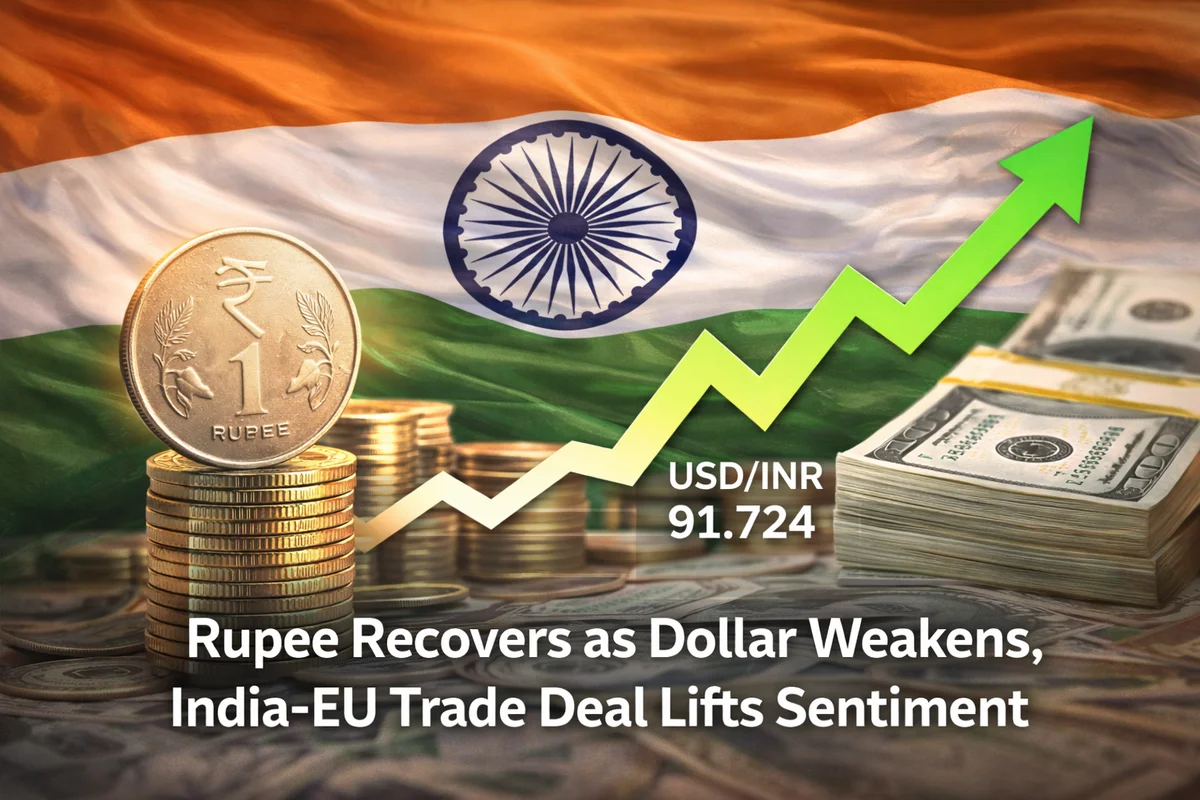
The Indian rupee edged higher in Monday’s session, snapping a brief losing streak after hitting an all-time low of 91.9650 per US dollar last week. By 12:45 p.m. IST, the rupee was trading at 91.724 per dollar, marking a gain of around 0.06%.
The recovery comes after days of sustained pressure on the rupee, driven by weak foreign portfolio inflows, persistent importer demand for dollars, and cautious exporter selling. Despite the rebound, traders say the broader trend remains volatile.
What Is Driving the Rupee’s Recovery Today?
The rupee’s rebound is the result of multiple overlapping global and domestic factors, rather than a fundamental shift.
Key factors supporting the rupee today:
Forex dealers caution that the move remains sentiment-driven, not backed by strong capital inflows or structural improvement.
Table 1: Indian Rupee Performance Snapshot
| Metric | Latest |
|---|---|
| USD/INR spot rate | 91.724 |
| Day’s change | +0.06% |
| Record low | 91.9650 |
| Dollar index trend | Near 4-month low |
| Market tone | Volatile |
Dollar Index Near Four-Month Low Offers Temporary Relief
One of the strongest supports for the rupee has been the softening US dollar.
The dollar index, which tracks the greenback against a basket of six major currencies, hovered near a four-month low, as investors reassessed:
A weaker dollar typically supports the rupee by lowering imported inflation pressure and easing global funding stress for emerging markets.
Foreign Capital Flows Remain a Major Headwind
Despite the rupee’s recovery, foreign portfolio investment flows remain weak, limiting the upside for USD/INR.
Market participants describe a challenging forex environment:
This imbalance continues to keep the rupee vulnerable to sharp intraday swings.
Table 2: Key Pressure Points for the Indian Rupee
| Factor | Impact |
|---|---|
| Weak FPI inflows | Negative |
| Importer hedging demand | Negative |
| Exporter dollar selling | Delayed |
| Dollar index softness | Positive |
| India–EU trade deal sentiment | Positive |
India–EU Trade Deal: Why Currency Markets Are Watching Closely
A significant sentiment boost for the rupee has come from the finalisation of the India–EU Free Trade Agreement, concluded after 18 years of negotiations.
The agreement provides for:
It is one of the most comprehensive trade deals India has signed in recent years.
Why the Trade Deal Matters for the Rupee
Currency strategists say trade agreements rarely trigger immediate forex rallies but shape long-term currency fundamentals.
Potential long-term benefits for the rupee include:
Over time, these factors could reduce structural depreciation pressure on the rupee.
Market Reaction: Optimism Tempered by Caution
Indian equity and bond markets reacted with measured optimism to the rupee’s recovery and the trade deal announcement.
However, investors remain cautious due to:
As a result, the rupee’s gains have been orderly rather than aggressive.
What Forex Traders Are Saying
Forex traders describe the move as a technical rebound, not a trend reversal.
Key observations from the market:
What Lies Ahead for the Indian Rupee?
The rupee’s near-term direction will depend on a mix of global and domestic triggers.
Key factors to watch:
Analysts expect continued volatility, with sharp moves possible around global data releases.
FAQs: Indian Rupee, Dollar Index, and Trade Deal
Why did the rupee recover today?
The rupee gained due to a weaker US dollar and positive sentiment from the India–EU trade deal.
Is the rupee out of danger after this rebound?
No. Weak capital inflows and cautious positioning continue to pose risks.
How does the dollar index affect the rupee?
A weaker dollar generally supports the rupee, while a stronger dollar puts pressure on it.
Will the India–EU trade deal strengthen the rupee immediately?
The impact is expected to be gradual rather than immediate.
What is the biggest risk for the rupee now?
Renewed dollar strength or sudden foreign capital outflows.
Final Take
The Indian rupee’s recovery from record lows reflects temporary relief rather than a decisive turnaround. While the softer dollar and India–EU trade agreement have improved sentiment, structural pressures from weak inflows and global uncertainty remain.
That said, the trade pact represents a positive long-term development for India’s external sector. If it leads to stronger exports and investment flows, it could help stabilise the rupee over time — even as near-term volatility persists.
Disclaimer:
This article is for informational and educational purposes only and does not constitute financial, investment, or trading advice. Currency markets are subject to high volatility and influenced by global and domestic factors. Readers are advised to consult qualified financial professionals or refer to official data and regulatory disclosures before making any investment or hedging decisions.