

commodity
Indian Gold, Silver Futures Hit Record Highs as Global Rally Accelerates
11 minutes ago
Reviewed and Rewrite by
Reetesh kumar



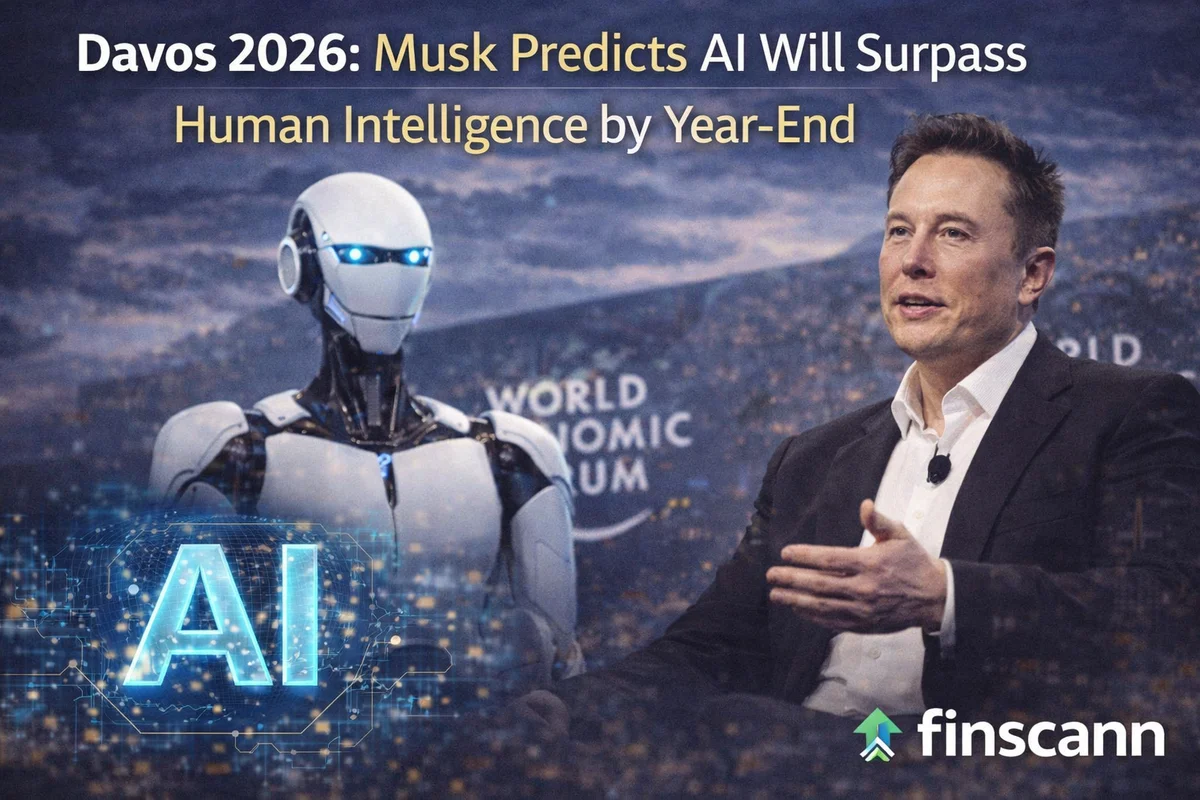
Davos 2026: Musk Predicts AI Will Surpass Human Intelligence by Year-End
In a landmark appearance at the World Economic Forum (WEF) in Davos on January 22, 2026, tech billionaire Elon Musk delivered a series of startling predictions that have sent ripples through the global tech and financial sectors. Engaging in a fireside chat with Larry Fink, CEO of BlackRock, Musk declared that artificial intelligence is advancing so rapidly that it could outsmart the most intelligent individual human by the end of 2026.
This marks Musk’s debut at the Davos summit, a forum he has historically criticized as "boring" and "elitist," signaling a significant shift in his engagement with global economic leaders.
1. The Intelligence Timeline: From Individual to Collective
Musk’s forecasts outline a dual-track progression of machine intelligence that challenges traditional socio-economic models:
2. The Convergence of AI and Robotics: Optimus for All
The core of Musk’s vision for 2026 revolves around the physical manifestation of AI: humanoid robots. During the panel, he described a future of "material abundance" where the global economy experiences unprecedented expansion.
3. The Energy Bottleneck: A Crisis of Power
Despite his optimism, Musk warned that the greatest threat to this AI-driven expansion is not hardware or software, but electricity.
4. Market and Industry Impact
Following the session, Tesla (TSLA) shares jumped over 3%, reflecting investor excitement over the commercialization of Optimus. However, the discussion also touched on the necessity of regulatory guardrails. Larry Fink and Musk both agreed that while the potential for wealth creation is vast, the transition could trigger significant labor market disruptions.
| Sector | Projected Impact |
|---|---|
| Manufacturing | Shift toward 24/7 autonomous assembly lines via Optimus. |
| Energy | Massive demand spike for renewable infrastructure (Solar/Nuclear). |
| Consumer Tech | Humanoid robots as "personal assistants/caretakers" by 2027. |
| Space Tech | New industry for orbital data processing and satellite power. |
Looking Ahead
As the world moves closer to Musk's 2026 "intelligence parity" deadline, the focus is shifting from whether AI can achieve these heights to how humanity will power and govern it. The Davos 2026 session underscored a pivot: the AI race is no longer just about algorithms—it is now a race for energy and physical robotics.
FinScann Take: Musk’s timeline is notoriously ambitious, but the institutional backing of figures like Larry Fink suggests that the "abundance economy" is being taken seriously by the world’s largest asset managers. The transition from AI as a "software tool" to AI as a "physical workforce" is the primary theme to watch in 2026.