
global-news
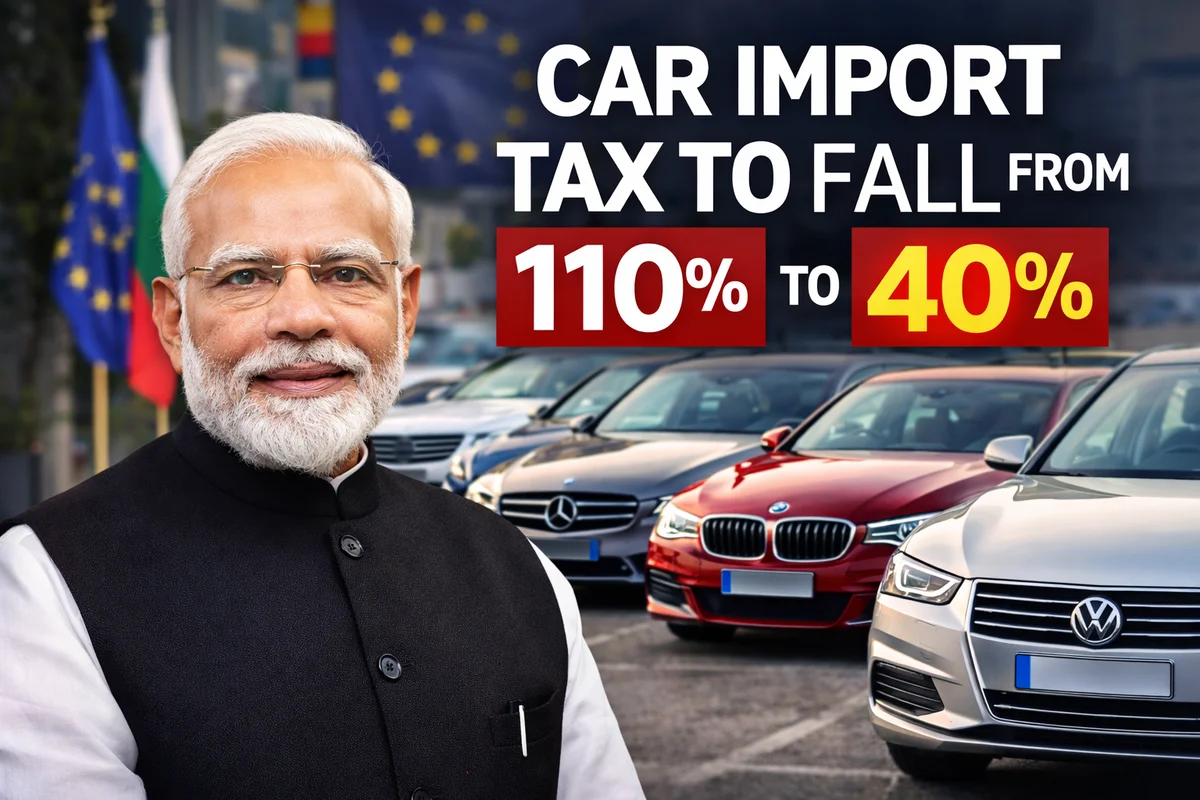
India to Slash Car Import Tariffs to 40% in Landmark EU Trade Deal, Reports Say
43 minutes ago
Reviewed and Rewrite by
Reetesh Kumar



The Indian automotive landscape is witnessing its most significant structural shift in decades. On Tuesday, January 27, 2026, as India and the European Union move to formalize what is being dubbed the "mother of all deals," the domestic stock market has reacted with sharp trepidation.
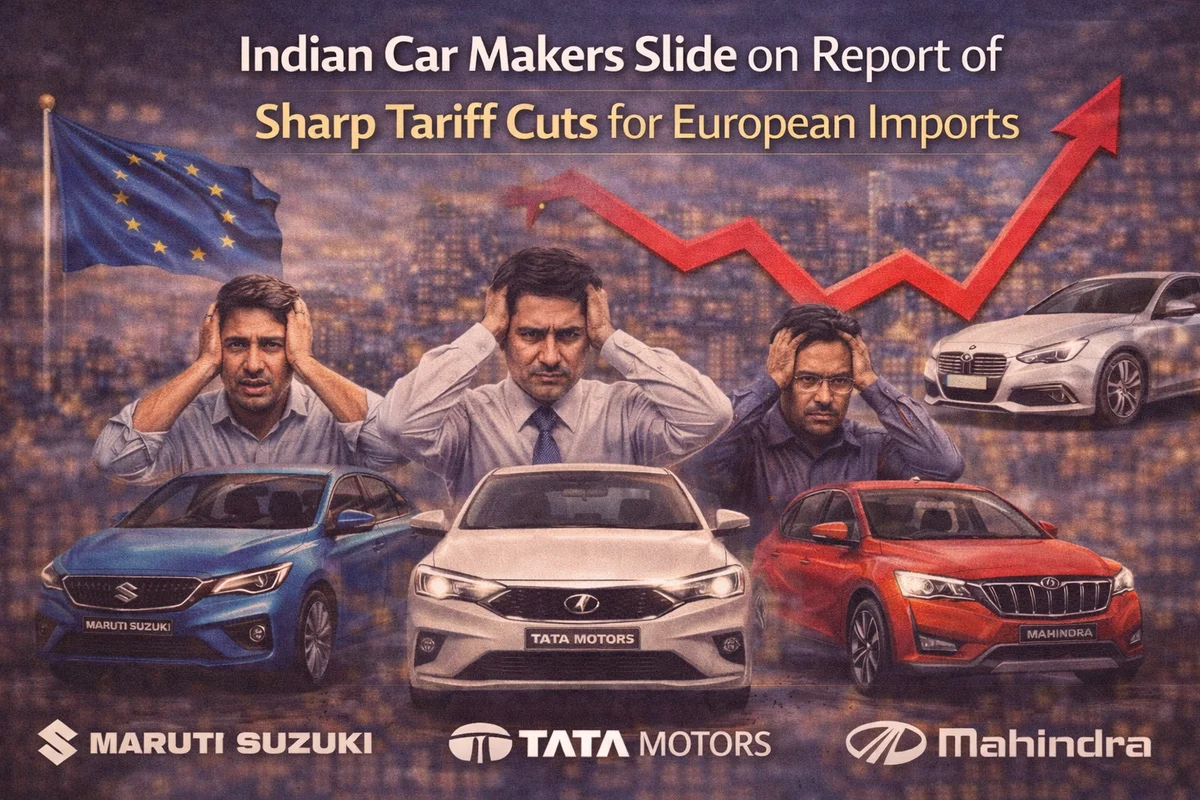
Shares of homegrown auto majors Mahindra & Mahindra (M&M) and Tata Motors tumbled up to 5% in intraday trade, as reports emerged that New Delhi is set to slash the historically high import tariffs on European cars.
1. The Great Tariff Reset: From 110% to 40%
For years, India has been one of the world's most protected automobile markets, levying duties as high as 110% on fully built imported vehicles. The new trade framework proposes a radical liberalization:
2. Why Domestic Stocks are Sliding
The market's "sell-first" reaction stems from fears of intensified competition in the premium and SUV segments—the primary profit engines for Indian manufacturers.
3. The "EV Shield": A 5-Year Grace Period
In a strategic move to protect India’s nascent electric vehicle ecosystem, the government has carved out a crucial exception:
Battery Electric Vehicles (EVs) will be excluded from these tariff cuts for the first five years. This protection ensures that the massive investments made by Tata Motors and M&M in EV platforms are not disrupted by a sudden influx of European luxury EVs. However, after this five-year window, EVs will also follow the 10% duty trajectory.
4. Winners and Losers: A New Competitive Landscape
| Segment | Primary Impact | Potential "Winners" |
|---|---|---|
| Luxury & Premium | Massive price drops expected for high-end CBUs. | BMW, Mercedes-Benz, Audi |
| Mid-Premium SUVs | Increased competition for domestic flagship models. | Volkswagen (Skoda), Renault |
| Auto Components | Positive. Lower barriers mean better tech transfer. | Bharat Forge, Minda Corp |
| Mass Market | Negligible impact due to high local manufacturing. | Maruti Suzuki, Hyundai |
FinScann Take: Strategic Realignment
While the headline "40% tariff" sounds alarming for domestic makers, the reality is more nuanced. Most European luxury players already manufacture over 90% of their sales volume locally via CKD (Completely Knocked Down) kits, which already attract lower duties.
The real impact of this FTA is psychological and long-term. It forces Indian manufacturers to globalize their standards faster. For investors, the current dip in M&M and Tata Motors may represent a "fear-driven" correction, but it also underscores the end of the high-tariff protection era.
Disclaimer
The information provided in this article is for informational purposes only and does not constitute financial, investment, or legal advice. Trading in the stock market involves significant risk. Please consult with a certified financial advisor before making any investment decisions. FinScann and its authors are not responsible for any financial losses based on the content of this article.