Loading market data...
Tata Steel has filed a writ petition in the Jharkhand High Court to quash a ₹1,132 crore GST demand, including ₹493 Cr tax and ₹638 Cr penalty. FinScann analyzes the market impact and financial implications.

Tata Steel Limited (NSE: TATASTEEL), a prominent player in the Indian steel sector, has escalated its legal battle against a significant Goods and Services Tax (GST) demand. On March 11, 2026, the steel giant filed a writ petition before the Hon'ble High Court of Jharkhand, seeking to quash an adjudication order dated December 18, 2025. This order directs the company to pay a principal tax amount of ₹493.35 crore along with a substantial penalty of ₹638.83 crore, plus applicable interest, for alleged irregular Input Tax Credit (ITC) claims spanning FY2018-19 through FY2022-23. This move by Tata Steel underscores the ongoing complexities surrounding GST interpretations and compliance within India's corporate landscape.
The Catalyst
The genesis of this legal challenge traces back to a Show Cause Notice (SCN) issued on June 27, 2025, by the Central Tax authorities in Ranchi. The notice initially proposed the disallowance of Input Tax Credit (ITC) across various GST Acts, suggesting a total recovery of ₹1,007.54 crore in GST, interest, and penalties. However, Tata Steel had already made payments amounting to ₹514.19 crore during the normal course of business, which were to be appropriated against the demand, leaving the currently disputed tax exposure at ₹493.35 crore.
The subsequent adjudication order, received on December 19, 2025, confirmed the demand for the principal tax amount and levied an additional penalty of ₹638.83 crore, bringing the total contested amount to over ₹1,132 crore. Tata Steel's management has meticulously evaluated this order and firmly believes that the adjudicating authority failed to give proper cognizance to the detailed submissions made by the company. Consequently, the company asserts it has a strong case on merits to contest and seek the quashing of this order.
Financial Forensics
While the disputed amount is significant, Tata Steel has publicly stated that this matter will have "no impact on financial, operational, or other activities of the Company." This assertion is crucial for investors, signaling that the company's robust operational performance and financial health are unlikely to be immediately destabilized by the ongoing legal process.
Looking at recent financial performance, Tata Steel demonstrated a strong Q3 FY26 (quarter ended December 2025) with a consolidated Net Profit (PAT) soaring by 723% year-on-year to ₹2,689 crore. Revenue from operations also saw a 6% year-on-year increase, reaching ₹57,002 crore. The company maintained a healthy consolidated EBITDA margin of 15%, driven by strong volumes and effective cost management. Notably, Tata Steel India achieved its best-ever quarterly crude steel production of 6.34 million tonnes (MT) and record deliveries of 6.04 MT during Q3 FY26, reflecting robust domestic demand.
Here’s a snapshot of Tata Steel's recent financial performance and the disputed GST demand:
| Financial Metric / GST Demand (Q3 FY26 vs. Prior Periods) | Value (₹ Crore) | Change (YoY) | Notes |
|---|---|---|---|
| Q3 FY26 Consolidated Net Profit (PAT) | 2,689 | +723% | |
| Q3 FY26 Revenue from Operations | 57,002 | +6% | |
| Q3 FY26 Consolidated EBITDA Margin | 15% | ||
| Disputed GST Tax Amount | 493.35 | N/A | |
| Disputed GST Penalty Amount | 638.83 | N/A | |
| Total Disputed GST Demand (Tax + Penalty) | ~1,132 | N/A | |
| GST Already Paid by Tata Steel | 514.19 | N/A | |
| Source: FinScann Analysis based on company filings and search data. |
Loading chart...
Market Impact
While individual tax disputes generally have a contained impact on large, diversified entities like Tata Steel, the ongoing litigation could introduce a degree of uncertainty. The Nifty Metal Index, of which Tata Steel is a significant constituent, has shown mixed performance recently, with 1-month returns at -3.7% but 1-year returns at +32.87% as of March 10, 2026. On March 12, 2026, Tata Steel's share price decreased by approximately 2.16%.
This development highlights the broader challenges many Indian companies face regarding GST credit claims, especially during the initial years of the tax system's implementation in 2017. Disputes surrounding Input Tax Credit on scrap purchases, particularly affecting secondary steelmakers, have been a recurring theme, suggesting systemic issues that the industry and government continue to navigate. Investors will closely monitor the outcome of this legal challenge for its potential implications on the company's future tax liabilities and broader industry precedents.
Key Takeaways
FinScann Verdict
The legal challenge by Tata Steel against the ₹1,132 crore GST demand is a material event, yet the company's robust financial performance in Q3 FY26 and confident stance suggest it is well-equipped to manage this litigation. While a short-term knee-jerk reaction in the stock market is possible, FinScann believes the long-term fundamentals of Tata Steel remain strong, supported by thriving domestic demand and strategic operational efficiencies. Investors should monitor court proceedings for potential outcomes, but for now, the company's core business trajectory appears resilient.
Q: What is the total GST demand Tata Steel is challenging? A: Tata Steel is challenging an adjudication order that demands a principal tax amount of ₹493.35 crore and a penalty of ₹638.83 crore, along with interest, totaling over ₹1,132 crore.
Q: Why is Tata Steel challenging this GST order? A: Tata Steel believes that the adjudicating authority did not properly consider the detailed submissions made by the company regarding alleged irregular Input Tax Credit (ITC) claims for the period FY2018-19 to FY2022-23. The company asserts it has a strong case on merits.
Q: How might this impact Tata Steel's share price? A: While the company has stated there will be no impact on its financial or operational activities, such large tax disputes can introduce market uncertainty. The Tata Steel share price saw a slight decline on March 12, 2026. The overall impact will depend on the duration and outcome of the legal process.
Q: What is Input Tax Credit (ITC) in GST? A: Input Tax Credit (ITC) is a mechanism under GST that allows businesses to reduce the tax they pay on their output by the tax they have already paid on their inputs (raw materials, services, etc.). Disallowance of ITC means a company cannot set off the tax paid on inputs, leading to a higher tax liability.
Q: What has been Tata Steel's recent financial performance? A: For Q3 FY26 (quarter ending December 2025), Tata Steel reported a consolidated net profit of ₹2,689 crore, a 723% increase year-on-year. Revenue from operations grew by 6% year-on-year to ₹57,002 crore, with a consolidated EBITDA margin of 15%.
Disclaimer: For information only; not investment advice. Stock market investments carry risks. Please consult a SEBI-registered advisor before investing. FinScann assumes no liability for decisions made based on this report.

Financial journalist specializing in market analysis, stock research, and investment trends. Dedicated to providing accurate, timely insights for informed decision-making.
Credentials: Experienced financial journalist with expertise in equity markets and economic analysis
The information provided in this article is for educational and informational purposes only and should not be construed as financial, investment, or legal advice. Finscann does not provide personalized investment recommendations.
For detailed terms and conditions, please read our Disclaimer and Terms of Service.
IFCI stock surges after NSE moves closer to its long-awaited IPO. Investors see hidden value in IFCI’s indirect exposure to the National Stock...

Saatvik Green Energy launches Saatvik Power Storage Solutions to build 20GW energy storage capacity and expand its renewable energy platform.
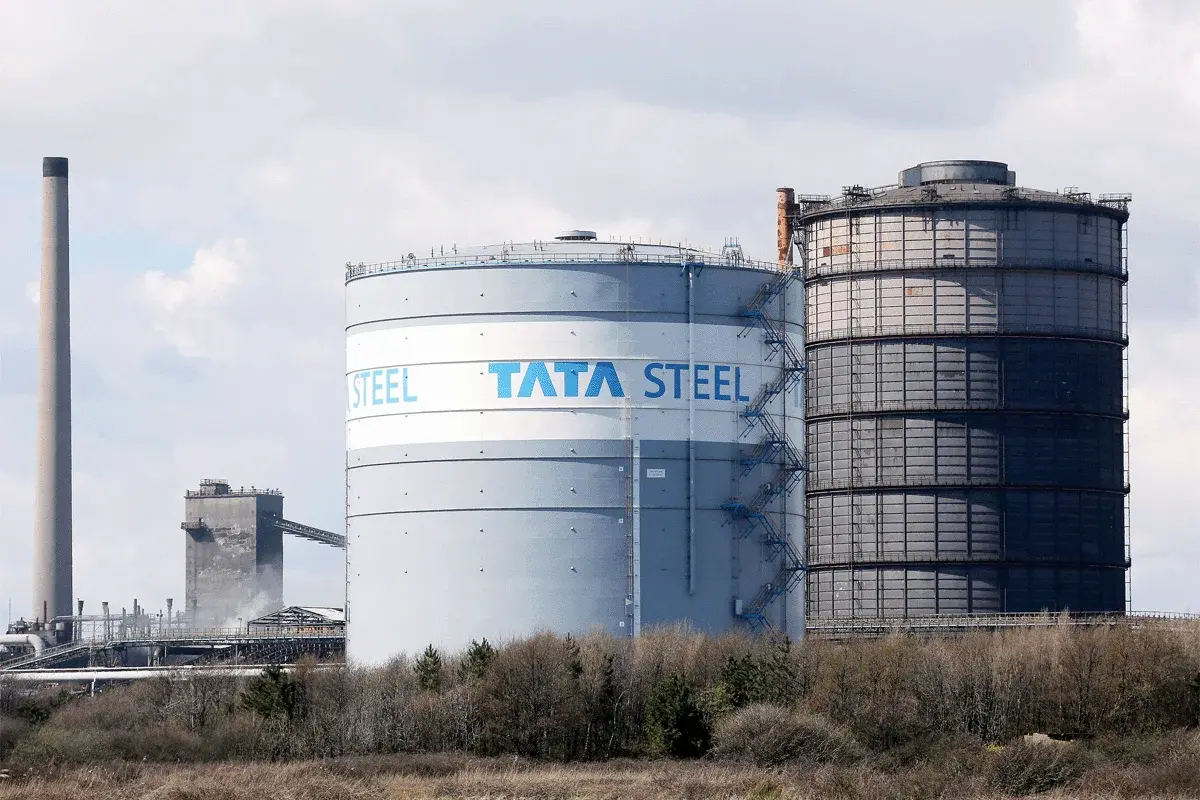
Tata Steel contests a ₹493 crore GST demand and ₹638 crore penalty in Jharkhand High Court over alleged Input Tax Credit disallowance, impacting...
Mitsubishi Heavy Industries announces capital increase in a subsidiary and changes designation of another unit as part of strategic corporate...

Jefferies and Motilal Oswal maintain Buy on Reliance Industries with ₹1,750 target as O2C margins rise amid Middle East supply disruptions.