Loading market data...
Kesar India Limited reported an extraordinary Q3 FY26 performance, with net profit surging nearly 1,669% year-on-year to ₹15.39 crore, driven by a 450% jump in revenue. The small-cap real estate developer is benefiting from strong project execution and rising demand for luxury housing in Nagpur. While the results highlight robust operational momentum, elevated valuation multiples suggest that future growth expectations are already priced into the stock.

Kesar India Limited delivered a stunning Q3 FY26 performance, with consolidated net profit soaring nearly 1,669% year-on-year to ₹15.39 crore, supported by a 450% jump in revenue. The small-cap real estate developer is benefiting from accelerated project execution, strong demand in the luxury housing segment, and strategic land acquisitions. However, elevated valuation multiples signal that future growth expectations are already priced into the stock.
The Indian real estate sector is witnessing a strong revival, and small-cap developers are increasingly capturing investor attention. Kesar India Limited emerged as a standout performer after reporting explosive Q3 FY26 results, driven by a sharp rise in project revenues and improved operating leverage.
The company, known for its luxury residential and commercial developments under the “Kesar Lands” brand, reported a 1,668.97% year-on-year surge in net profit, highlighting strong operational momentum in the Nagpur real estate market.
Revenue Surge Fuels Profit Explosion
Kesar India’s strong quarterly performance was primarily driven by a massive jump in revenue from operations.
| Financial Metric | Q3 FY26 | Q2 FY26 | Q3 FY25 |
|---|---|---|---|
| Revenue | ₹91.65 crore | ₹15.27 crore | ₹16.64 crore |
| Net Profit | ₹15.39 crore | ₹0.87 crore | ₹2.17 crore |
| Basic EPS | ₹6.16 | — | ₹0.88 |
Key growth highlights:
This sharp rise indicates:
Expert Insight: “Real estate earnings tend to be lumpy, but when project execution aligns with demand cycles, profit growth can appear exponential, as seen in Kesar India’s latest quarter.”
FAQs
Why did Kesar India’s profit jump so sharply? The surge was driven by strong revenue growth from project execution and improved operational efficiency.
Is such profit growth sustainable? Real estate earnings are cyclical and project-driven, so sustainability depends on future launches and execution pipelines.
Strong Return Ratios Reflect Efficient Capital Use
Kesar India’s profitability metrics indicate strong operational efficiency and capital productivity.
| Return Metric | Value |
|---|---|
| ROCE | 40.2% |
| ROE | 47.1% |
| Debt-to-Equity | 0.55x |
What these numbers indicate:
The company’s two-year growth trajectory also shows strong momentum:
| Growth Metric (2-Year CAGR) | Value |
|---|---|
| Revenue CAGR | 168.33% |
| Net Profit CAGR | 335.89% |
FAQs
What does a high ROE mean for investors? A high ROE indicates the company is generating strong returns on shareholders’ equity.
Is Kesar India highly leveraged? No, the company’s debt-to-equity ratio of 0.55x suggests moderate leverage.
Business Model: Localised Luxury Real Estate Strategy
Kesar India primarily focuses on luxury residential and commercial developments in the Vidarbha region, especially Nagpur.
Core business segments:
| Revenue Contribution (Q3 FY26) | Share |
|---|---|
| Indian Real Estate Operations | 99.95% |
| Overseas Consultancy & Marketing | 0.05% |
The company’s strategic land acquisition in Hingna, Nagpur, for a mixed-use high-rise project carries an estimated ₹900 crore revenue potential, which could support future growth.
Expert Insight: “Regional developers with strong local brands can achieve high margins, especially in fast-growing Tier-2 and Tier-3 cities.”
FAQs
Where does Kesar India operate mainly? The company’s primary operations are concentrated in the Nagpur region.
What type of projects does Kesar India develop? It focuses on luxury residential, commercial, and land development projects.
Sector Tailwinds: Real Estate Demand on the Rise
The Indian real estate sector is entering a new growth phase driven by urbanisation, infrastructure spending, and rising incomes.
| Sector Trend | Impact on Developers |
|---|---|
| Urban migration | Higher housing demand |
| Infrastructure expansion | Property price appreciation |
| Premium housing demand | Better margins |
| Interest rate stability | Improved affordability |
Industry outlook:
FAQs
Why is the real estate sector growing again? Urbanisation, infrastructure projects, and rising incomes are driving housing demand.
Are luxury housing projects in demand? Yes, premium and luxury housing segments are seeing strong growth across major and emerging cities.
Valuation Check: Growth vs Pricing Premium
Despite strong earnings growth, the stock is trading at premium valuation multiples.
| Valuation Metric | Kesar India | Sector Average |
|---|---|---|
| P/E Ratio | 162.92 | 88.21 |
| P/B Ratio | 19.22 | 2.48 |
What this means:
Expert Insight: “High-growth small-cap realty stocks often trade at premium multiples, but sustained execution is essential to maintain valuations.”
FAQs
Is Kesar India stock expensive? Based on current P/E and P/B ratios, the stock is trading at a premium compared to sector averages.
Should investors be cautious with small-cap real estate stocks? Yes, small-cap stocks can be volatile, and investors should focus on fundamentals and execution.
Moat Analysis: Regional Dominance and Brand Strength
Kesar India’s competitive advantage lies in:
Strategic strengths:
What Investors Should Watch Next
Key triggers:
Key risks:
Popular Trading Platforms for Indian Stock Investors
Investors looking to track real estate stocks can use:
⚠️ DISCLAIMER: We Are Not Financial Advisors This article is for informational and educational purposes only and should not be considered investment advice. Investors should conduct their own research or consult a certified financial advisor before making investment decisions.

Financial journalist specializing in market analysis, stock research, and investment trends. Dedicated to providing accurate, timely insights for informed decision-making.
Credentials: Experienced financial journalist with expertise in equity markets and economic analysis
The information provided in this article is for educational and informational purposes only and should not be construed as financial, investment, or legal advice. Finscann does not provide personalized investment recommendations.
For detailed terms and conditions, please read our Disclaimer and Terms of Service.
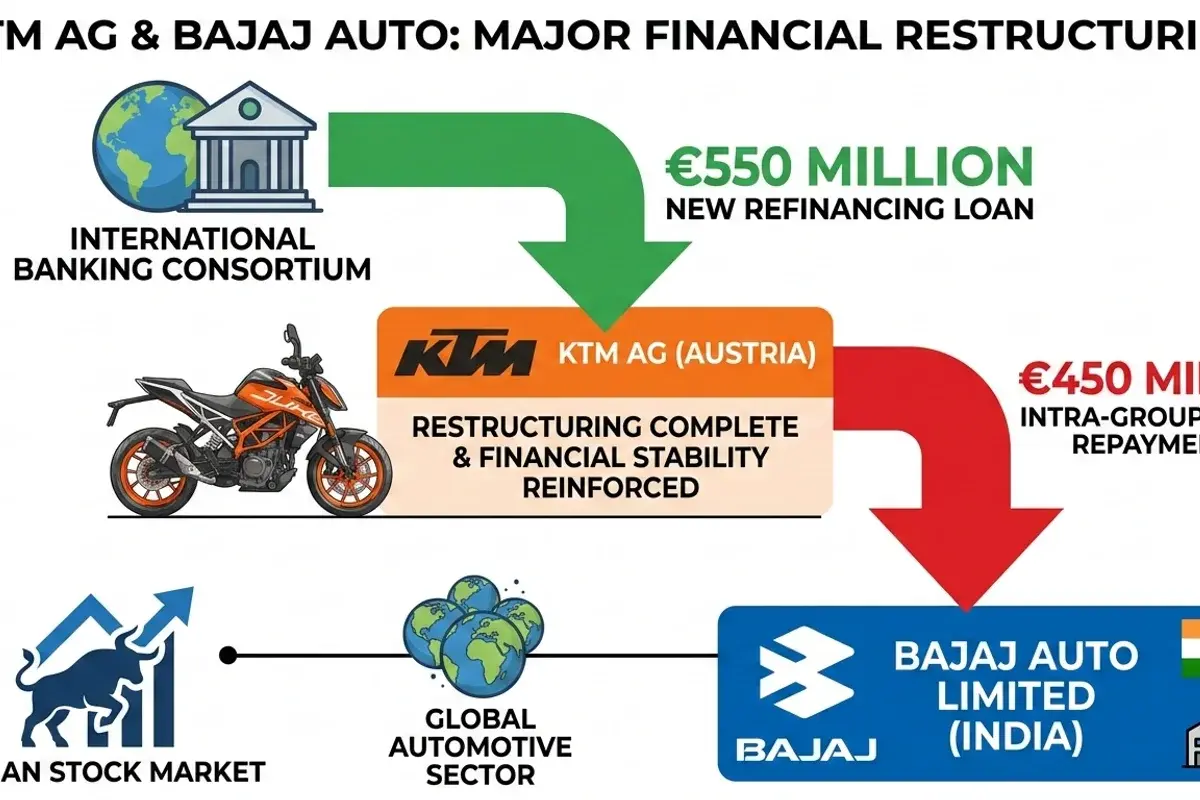
KTM AG repays €450M loan to Bajaj Auto's unit, completing restructuring. FinScann analyzes the financial impact on Bajaj Auto, Pierer Mobility, and...

Tata Elxsi launches DevStudio.ai, an ASPICE-aligned GenAI platform, poised to accelerate automotive software engineering and enhance productivity for...

Waaree Energies bags a significant 300 MW wind power project in Gujarat, marking a strategic expansion and contributing to India's ambitious...

“ABCL is entering a structurally stronger earnings phase, supported by synchronized momentum across lending, AMC, and insurance.

BSE shares surge over 4% after SEBI's critical nod for Sensex Next 30 index derivatives, bolstering its market position and revenue potential.