Loading market data...
Shadowfax reported a more than fivefold jump in Q3 FY26 profit to ₹34.9 crore, driven by strong order growth, improving margins, and rising D2C shipments. With express revenue up nearly 72% and volumes growing 61% year-on-year, the company is shifting from marketplace logistics to higher-yield same-day and direct-to-consumer deliveries. For investors and industry watchers, the results highlight the logistics sector’s transition from volume-led growth to margin-driven, tech-enabled profitability.
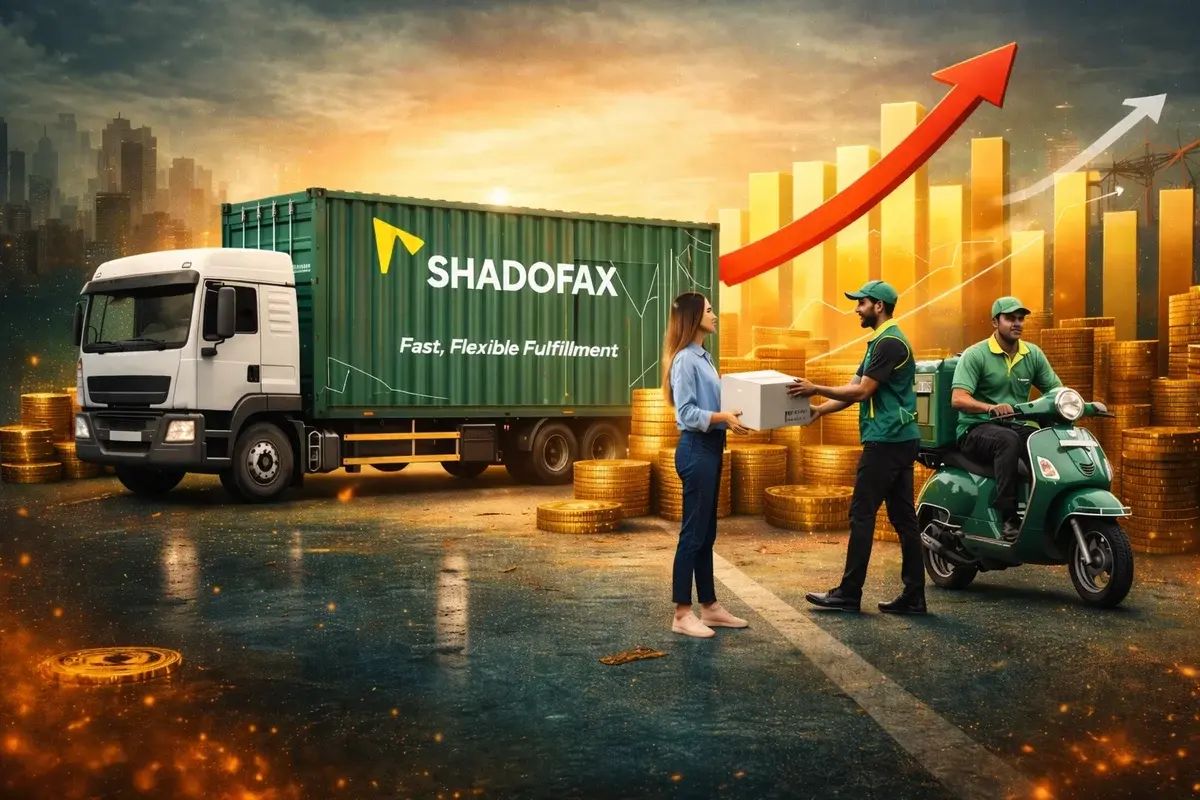
Logistics startup Shadowfax reported a more than fivefold surge in Q3 FY26 profit to ₹34.9 crore, driven by strong volume growth, operating leverage, and rising D2C shipments. With express revenue up nearly 72% YoY and order volumes rising 61%, the company is shifting focus from bulk marketplace deliveries to high-margin same-day and D2C logistics. For investors and industry watchers, Shadowfax’s strategy reflects a broader shift in India’s logistics sector—from scale-driven growth to margin-led, tech-enabled profitability.
India’s logistics and e-commerce ecosystem is undergoing a structural transformation. For nearly a decade, delivery companies focused on high-volume, low-margin marketplace logistics. Today, the growth narrative is shifting toward direct-to-consumer (D2C), quick commerce, and same-day delivery—segments that offer higher yields and stronger margins.
One of the biggest beneficiaries of this shift is Shadowfax, which has reported a sharp profit jump as its operating leverage kicks in after years of infrastructure and technology investments.
Loading chart...
Shadowfax delivered a more than fivefold jump in profit during Q3 FY26, reflecting improved margins and strong order growth across express and hyperlocal logistics segments.
| Metric | Q3 FY26 | YoY Change |
|---|---|---|
| Net profit | ₹34.9 crore | 5X+ growth |
| Orders delivered | 20.6 crore | +61% YoY |
| Express revenue | ₹878 crore | +71.9% YoY |
| Hyperlocal revenue | ₹200 crore | +42.5% YoY |
The sharp increase in profitability highlights how operating leverage is starting to work, as higher volumes spread fixed costs across more shipments.
Shadowfax’s next growth phase is focused on direct-to-consumer brands, same-day delivery, and hyperlocal commerce.
Two years ago:
Today:
| Customer Type | Yield vs Enterprise |
|---|---|
| D2C & SME clients | 20–25% higher yields |
| Large marketplaces | Lower margins |
As the company increases its D2C mix:
The company’s D2C strategy is built around three core pillars.
Through acquisitions like CriticaLog, Shadowfax is entering:
These segments require:
But they also deliver better margins and premium pricing.
Shadowfax is also expanding into:
| Segment | Current Status |
|---|---|
| Annualised volumetric business | ₹50 crore |
| Pincode coverage | ~20% |
| Future focus | White goods, appliances |
These categories offer:
Same-day and next-day delivery are no longer premium features—they are becoming standard expectations across Indian e-commerce.
Shadowfax’s Prime business is driving:
The company aims to let any brand:
This strategy aligns with the rise of India’s D2C ecosystem and quick commerce platforms tracked across industry portals like Inc42.
Unlike traditional logistics companies, Shadowfax is not relying on heavy asset ownership.
Instead, it is building a technology-led, gig-based logistics network.
This creates a self-reinforcing profitability loop.
Shadowfax expects strong growth driven by:
| Metric | Projection |
|---|---|
| Revenue growth | 25–30% annually |
| Long-term EBITDA margin | Early teens |
| Key growth drivers | D2C, volumetric, hyperlocal |
The company believes most infrastructure investments are already behind it, and the next phase will be about extracting operating leverage.
India’s e-commerce market is evolving into two major segments:
| Segment | Description |
|---|---|
| Value-driven commerce | Mass consumer marketplace orders |
| Premium D2C commerce | High-value, fast-delivery brands |
Shadowfax aims to serve both ends of the spectrum, from micro Instagram sellers to luxury brands.
Industry analysts believe the logistics sector is entering a profitability phase after years of scale-driven growth. Companies with strong technology backbones and D2C exposure, like Shadowfax, are likely to see margin expansion as higher-yield segments scale.
Shadowfax’s latest quarter reflects a major strategic shift:
Core takeaways:
The company is evolving from a marketplace logistics partner into a D2C-first, speed-driven delivery platform—a shift that mirrors the broader transformation of India’s e-commerce ecosystem.
Popular platforms for tracking logistics, startup, and tech-related stocks:
⚠️ DISCLAIMER: We Are Not Financial Advisors This article is for educational and informational purposes only. Always conduct your own research or consult a certified financial advisor before making investment decisions.

Financial journalist specializing in market analysis, stock research, and investment trends. Dedicated to providing accurate, timely insights for informed decision-making.
Credentials: Experienced financial journalist with expertise in equity markets and economic analysis
The information provided in this article is for educational and informational purposes only and should not be construed as financial, investment, or legal advice. Finscann does not provide personalized investment recommendations.
For detailed terms and conditions, please read our Disclaimer and Terms of Service.

FinScann analysis on Coforge, Infosys, and TCS after the recent ₹6 lakh crore Indian IT sector rout.

Blue Cloud Softech shares jump 4% after acquiring Global Impex Inc., strengthening its Blue Energy platform and expanding into scalable clean energy...

Akzo Nobel India, now part of JSW Paints, commits ₹65 crore from Dulux royalty savings to fuel aggressive market share expansion and innovation.
Indian markets experience a sharp correction in February 2026, with Nifty 50 at critical support levels.

Adani Power’s subsidiary Moxie Power wins a 558 MW, 5-year power supply contract from Tamil Nadu at ₹5.910 per unit.