Loading market data...
IndiGo shares fall nearly 4% after Citi lowers its price target citing geopolitical uncertainty and potential pressure on fuel prices in the aviation sector.
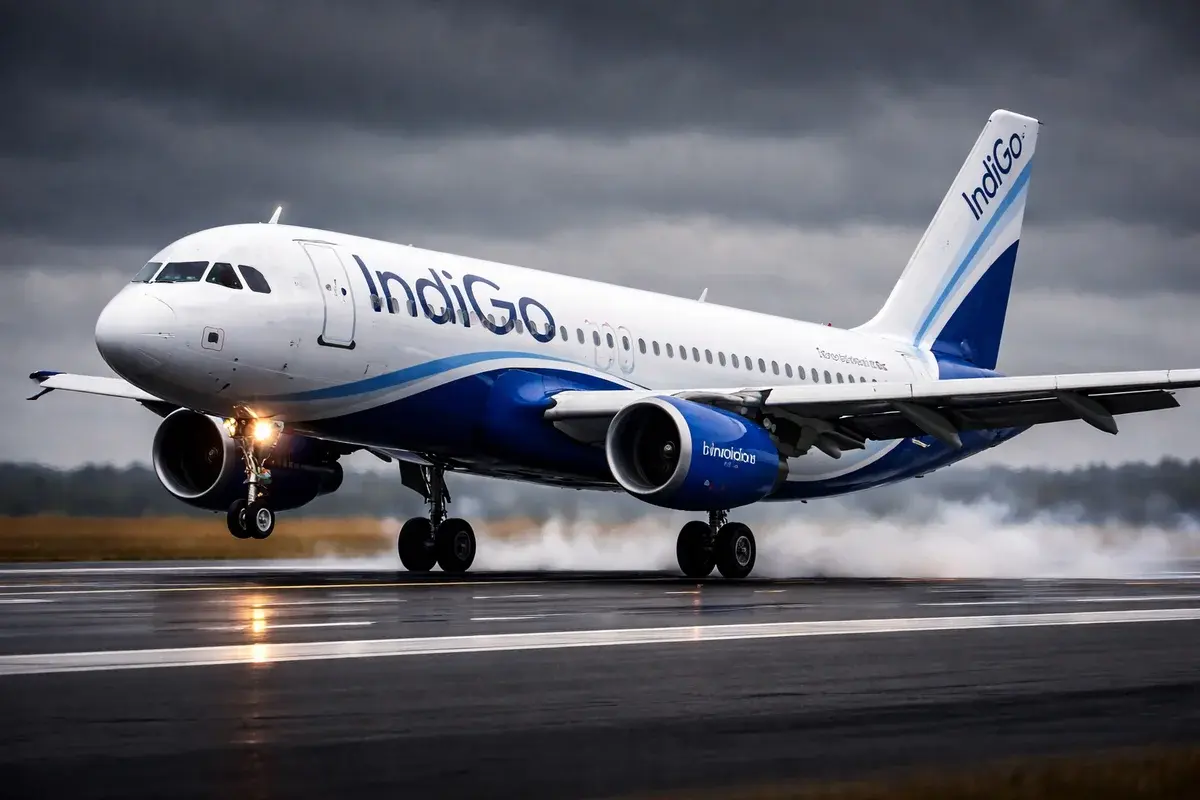
Shares of InterGlobe Aviation, the operator of India’s largest airline IndiGo, declined nearly 4% during trading after global brokerage Citigroup lowered its price target for the stock, citing rising geopolitical risks and potential pressure on global travel demand. The downgrade comes at a time when airline stocks worldwide are facing heightened volatility due to escalating tensions in the Middle East geopolitical conflict and broader macroeconomic uncertainties that could influence fuel prices and passenger demand. Market participants noted that the revised outlook from Citi triggered profit-booking in the stock despite IndiGo maintaining strong operational performance and market leadership within India’s aviation sector.
| Key Metric | Details |
|---|---|
| Company | InterGlobe Aviation (IndiGo) |
| Stock Movement | Nearly 4% decline |
| Brokerage | Citigroup |
| Reason for Downgrade | Geopolitical uncertainty |
| Sector | Aviation / Airlines |
| Market | Indian equity market |
| Key Concern | Fuel prices and travel demand |
India’s aviation sector has experienced rapid growth over the past decade, driven by rising disposable incomes, expanding middle-class travel demand, and increased connectivity across domestic and international routes. Within this landscape, IndiGo has emerged as the dominant airline operator, capturing a significant share of the country’s domestic aviation market. According to industry estimates, the airline consistently commands more than half of India’s domestic passenger traffic, positioning it as the leading low-cost carrier in the country.
The parent company, InterGlobe Aviation, is listed on Indian stock exchanges including the National Stock Exchange of India and BSE Limited and has historically attracted strong investor interest due to its operational efficiency and aggressive fleet expansion strategy. Analysts tracking the aviation sector often highlight IndiGo’s cost discipline, high aircraft utilization, and extensive route network as key factors supporting its long-term growth prospects.
However, airline stocks are inherently sensitive to macroeconomic conditions and geopolitical developments, particularly those that influence aviation turbine fuel prices and travel demand. Investors closely monitor global events that could disrupt airline operations or lead to higher operating costs, as fuel expenses typically represent one of the largest cost components for airline companies.
The recent decline in IndiGo shares followed a research note from Citigroup in which the brokerage lowered its price target for the airline. While Citi maintained a broadly positive view of IndiGo’s operational performance, analysts expressed concerns that geopolitical tensions could introduce new uncertainties for the aviation industry.
According to the brokerage, escalating conflicts in the Middle East region and broader geopolitical instability could influence global oil prices and aviation fuel costs. Airlines are particularly exposed to fluctuations in crude oil prices because aviation turbine fuel is derived from refined petroleum products. Even modest increases in oil prices can significantly affect airline profitability if carriers are unable to fully pass on higher costs to passengers.
Citi’s report suggested that while IndiGo remains fundamentally strong, the near-term risk environment for airline stocks has increased. As a result, the brokerage adjusted its valuation expectations to reflect the possibility of higher operational costs and potential volatility in travel demand.
Following the brokerage’s price target cut, shares of InterGlobe Aviation declined nearly 4% during trading sessions as investors reacted to the revised outlook. Market participants attributed the drop largely to short-term sentiment shifts rather than structural concerns about the airline’s long-term growth prospects.
Stock market analysts noted that airline equities often respond sharply to research reports from global brokerages, particularly when they highlight macroeconomic risks that could affect the broader sector. In many cases, such reactions reflect investor caution rather than fundamental changes in company performance.
Despite the decline, IndiGo shares remain among the most actively traded airline stocks in India. Investors continue to monitor developments in global energy markets and geopolitical tensions, both of which can significantly influence airline valuations.
Geopolitical tensions can have multiple effects on the aviation industry. One of the most immediate impacts comes through fluctuations in global crude oil prices. Conflicts in oil-producing regions, particularly the Middle East, often create uncertainty around supply routes and production levels, which can drive oil price volatility.
Higher oil prices directly increase aviation fuel costs, placing pressure on airline profit margins. Airlines sometimes attempt to offset these increases through fuel surcharges or ticket price adjustments, but competitive market dynamics often limit their ability to fully pass on additional costs to consumers.
Beyond fuel costs, geopolitical tensions can also affect passenger demand. Travelers may postpone or cancel trips during periods of global uncertainty, particularly for international routes. Airlines operating long-haul flights or serving regions experiencing instability may therefore experience fluctuations in booking volumes.
Despite short-term market volatility, IndiGo Airlines remains one of the most financially resilient airlines operating in India. The airline’s business model focuses on cost efficiency, high aircraft utilization, and maintaining a relatively young fleet of Airbus aircraft. These factors have historically allowed the company to maintain strong operating margins even during challenging market conditions.
IndiGo has also pursued aggressive fleet expansion plans in recent years, placing large aircraft orders to support its growing network. The airline continues to expand both domestic and international routes, targeting increased connectivity across Asia, the Middle East, and Europe.
Industry analysts tracking the Indian aviation sector suggest that IndiGo’s scale and operational efficiency give it a competitive advantage over smaller airline operators. Its dominant market share in domestic aviation also provides pricing power in certain routes where competition remains limited.
The global aviation industry has been undergoing significant transformation following the pandemic-driven disruption of international travel. Passenger demand has gradually recovered across many markets, with airlines reporting strong bookings for both leisure and business travel.
However, the sector continues to face several structural challenges, including rising fuel costs, aircraft supply chain constraints, and geopolitical uncertainties. Airlines must balance fleet expansion plans with cost management strategies while navigating evolving regulatory and economic conditions.
India’s aviation market remains one of the fastest-growing in the world, supported by expanding airport infrastructure and government initiatives such as the UDAN regional connectivity scheme aimed at improving regional connectivity. As air travel demand continues to rise, airlines operating in the country are expected to increase capacity and introduce new routes to meet growing passenger volumes.
While Citi’s price target reduction reflects short-term concerns about geopolitical risks, analysts generally remain optimistic about the long-term prospects of India’s aviation industry. IndiGo’s strong market position, cost-efficient operations, and expansion strategy continue to support its growth outlook.
Investors will likely remain focused on global oil price trends, geopolitical developments, and passenger demand indicators when evaluating airline stocks in the coming months. Any sustained increase in fuel prices or escalation in geopolitical tensions could introduce additional volatility into the aviation sector.
For IndiGo, maintaining operational efficiency and managing fuel costs will remain critical factors influencing its financial performance. As the airline continues to expand its network and fleet, market participants will closely monitor how it navigates evolving industry dynamics and macroeconomic risks.

Financial journalist specializing in market analysis, stock research, and investment trends. Dedicated to providing accurate, timely insights for informed decision-making.
Credentials: Experienced financial journalist with expertise in equity markets and economic analysis
The information provided in this article is for educational and informational purposes only and should not be construed as financial, investment, or legal advice. Finscann does not provide personalized investment recommendations.
For detailed terms and conditions, please read our Disclaimer and Terms of Service.
IFCI stock surges after NSE moves closer to its long-awaited IPO. Investors see hidden value in IFCI’s indirect exposure to the National Stock...

Saatvik Green Energy launches Saatvik Power Storage Solutions to build 20GW energy storage capacity and expand its renewable energy platform.
Tata Steel contests a ₹493 crore GST demand and ₹638 crore penalty in Jharkhand High Court over alleged Input Tax Credit disallowance, impacting...
Mitsubishi Heavy Industries announces capital increase in a subsidiary and changes designation of another unit as part of strategic corporate...

Jefferies and Motilal Oswal maintain Buy on Reliance Industries with ₹1,750 target as O2C margins rise amid Middle East supply disruptions.