Loading market data...
Financial bids for the strategic privatisation of IDBI Bank have been received, moving the long-awaited sale of a 60.72% stake by the Government of India and LIC into its final evaluation phase. With major domestic and international bidders in contention, the deal is seen as a key test of India’s banking disinvestment strategy and could reshape competition, efficiency, and investor sentiment in the sector.
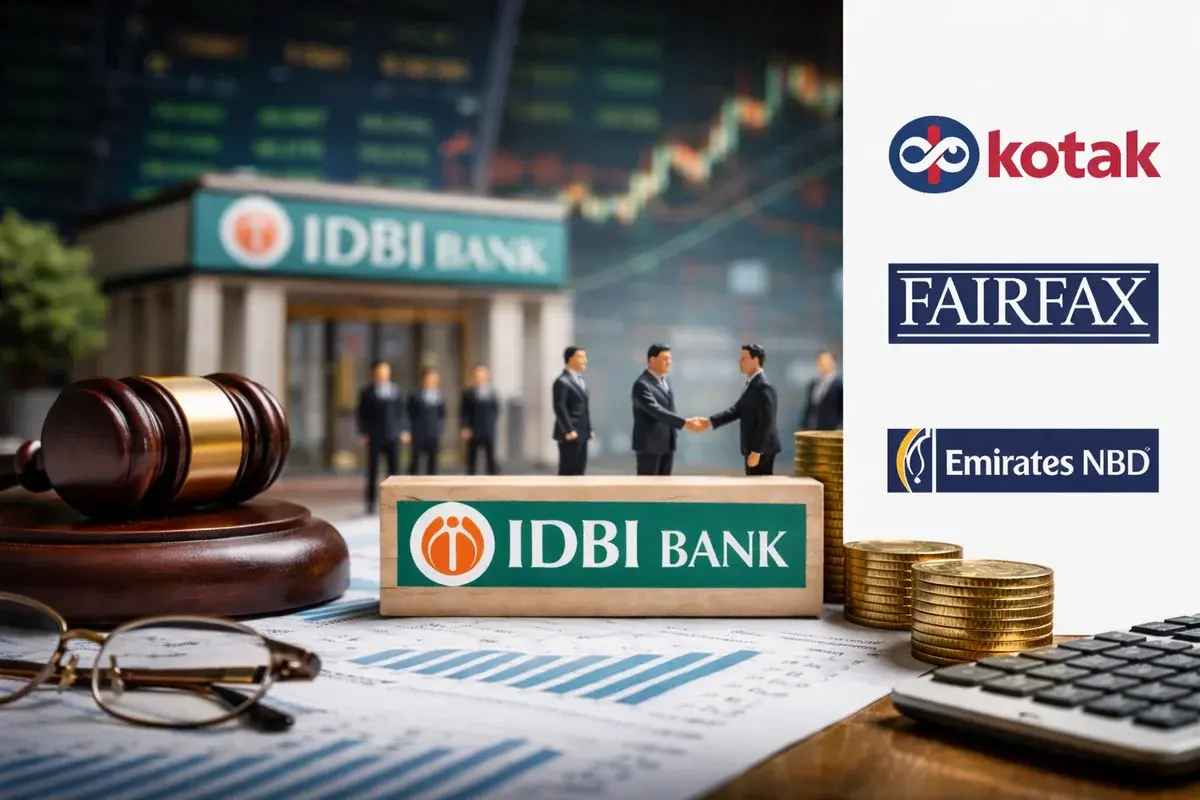
The government has received financial bids for the privatisation of IDBI Bank, marking a crucial milestone in the sale of a 60.72% controlling stake jointly held by the Government of India and LIC. With major domestic and global bidders in the race, the process now enters the final evaluation stage. The deal is more than a bank sale—it represents a structural shift in India’s disinvestment strategy and could set the tone for future public sector reforms, investor sentiment, and banking sector valuations.
India’s long-awaited plan to privatise IDBI Bank has reached a defining moment. After years of capital infusion, asset clean-up, and strategic restructuring, the lender is finally at the doorstep of private ownership. For policymakers, this is a crucial test of India’s ability to execute large-scale disinvestment. For investors, it could become a valuation trigger across the PSU banking space.
The Strategic Deal: What’s Being Sold
The government and LIC are together divesting a 60.72% stake, including the transfer of management control to the winning bidder. This is not a passive stake sale—it is a full strategic disinvestment.
Key transaction details:
This makes the deal one of the most significant banking privatisation attempts in India’s modern financial history.
The Bidders: Who Wants IDBI Bank
The shortlisted bidders reportedly include:
Each bidder represents a different strategic thesis:
The presence of both domestic and global bidders indicates strong investor appetite despite the complexities of a PSU bank transition.
Why IDBI Bank Matters in the Bigger Reform Story
IDBI Bank is not just another bank on the privatisation list. It is a symbolic and strategic asset.
Historically, the bank faced:
However, in recent years:
This transformation has made IDBI Bank a test case for PSU turnaround followed by privatisation.
Valuation Metrics Investors Will Watch
The final bid value will depend on several core banking metrics:
Key financial indicators:
These factors will determine whether the bank commands a PSU discount or receives a private-sector-style re-rating after the transaction.
Comparison: IDBI Bank Before vs After Privatisation
| Metric | Before Privatisation | After Privatisation (Expected) |
|---|---|---|
| Ownership | Govt + LIC | Private strategic owner |
| Management control | Public sector | Private management |
| Efficiency focus | Moderate | High |
| Capital allocation | Policy-driven | Market-driven |
| Investor perception | PSU discount | Potential re-rating |
Impact on the Banking Sector
If executed successfully, the deal could trigger a ripple effect across India’s financial system.
Potential sector-wide implications:
The transaction may also accelerate:
Investor Perspective: Opportunities and Risks
For equity markets, the privatisation offers both upside and uncertainty.
Positive triggers:
Key risks:
Timeline: What Happens Next
With financial bids now submitted, the process enters its final phase.
Expected sequence:
The timeline will depend on:
Expert Insight
“The IDBI Bank sale is more than a disinvestment. It is a signal to global capital that India is willing to execute structural reforms in the banking sector. A successful transaction could unlock a re-rating across PSU financial stocks.”
FAQs
Why is the government privatising IDBI Bank?
To reduce direct ownership in the banking sector, improve efficiency, and unlock value through strategic disinvestment.
How much stake is being sold?
A combined 60.72% stake held by the government and LIC.
Who are the major bidders?
Kotak Mahindra Bank, Fairfax India, and Emirates NBD.
Will customers be affected?
Short term, operations will remain unchanged. Long term, customers may benefit from improved services and technology.
Final Takeaway
The arrival of financial bids marks a decisive step in the IDBI Bank privatisation journey. If the deal closes smoothly, it could become a benchmark transaction for India’s banking reforms, reshape investor sentiment toward PSU lenders, and accelerate the government’s disinvestment agenda.
⚠️ DISCLAIMER: We Are Not Financial Advisors This article is for informational purposes only and does not constitute investment advice. Readers should consult certified financial advisors before making investment decisions.

Financial journalist specializing in market analysis, stock research, and investment trends. Dedicated to providing accurate, timely insights for informed decision-making.
Credentials: Experienced financial journalist with expertise in equity markets and economic analysis
The information provided in this article is for educational and informational purposes only and should not be construed as financial, investment, or legal advice. Finscann does not provide personalized investment recommendations.
For detailed terms and conditions, please read our Disclaimer and Terms of Service.
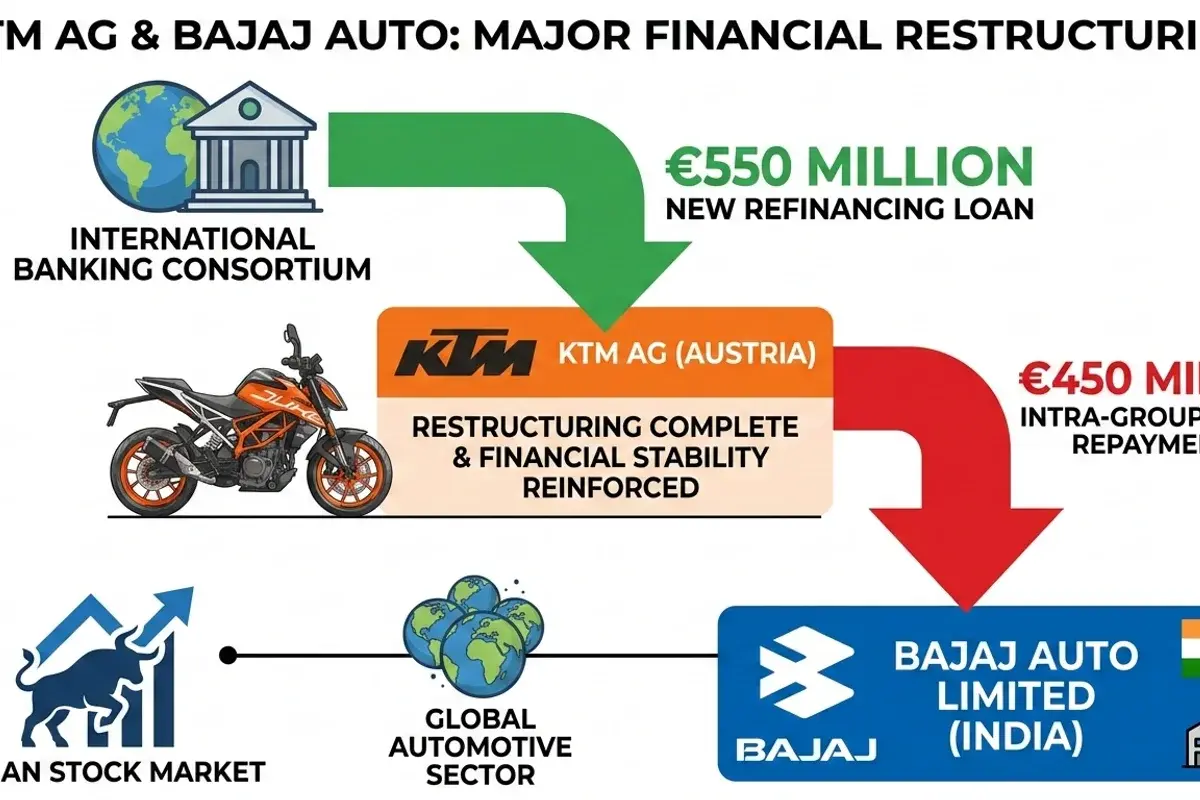
KTM AG repays €450M loan to Bajaj Auto's unit, completing restructuring. FinScann analyzes the financial impact on Bajaj Auto, Pierer Mobility, and...

Tata Elxsi launches DevStudio.ai, an ASPICE-aligned GenAI platform, poised to accelerate automotive software engineering and enhance productivity for...

Waaree Energies bags a significant 300 MW wind power project in Gujarat, marking a strategic expansion and contributing to India's ambitious...

“ABCL is entering a structurally stronger earnings phase, supported by synchronized momentum across lending, AMC, and insurance.

BSE shares surge over 4% after SEBI's critical nod for Sensex Next 30 index derivatives, bolstering its market position and revenue potential.