Loading market data...
HAL shares fell 5% on Feb 4, 2026, after the company was disqualified from the AMCA stealth fighter program due to technical and order-book criteria. The project is now a contest between Tata, L&T-BEL, and Bharat Forge.

In a dramatic shift for India’s defense landscape, shares of Hindustan Aeronautics Limited (HAL) plummeted over 5% in early trading on Wednesday, February 4, 2026. The sell-off followed a series of bombshell reports confirming that the state-run aerospace giant has been disqualified from the race to develop India’s most ambitious military project: the Advanced Medium Combat Aircraft (AMCA).
The news marks the first time in history that HAL will not be the lead integrator for a major indigenous fighter jet program, signaling the end of an era for the public sector undertaking (PSU).
1. The AMCA "Knockout": Why HAL is Out
The Aeronautical Development Agency (ADA) had issued an Expression of Interest (EoI) for the ₹15,000 crore AMCA prototype program, looking for a Development-cum-Production Partner (DcPP).
Recent reports indicate that HAL was eliminated during the technical evaluation phase due to a specific "order book" clause:
2. The New Contenders: Private Giants Take Flight
With HAL out, the project is now a high-stakes battle between three private-sector finalists. The Ministry of Defence is expected to award the contract to the lowest bidder (L1) within the next three months.
| Shortlisted Company/Consortium | Strategic Advantage |
|---|---|
| Tata Advanced Systems (TASL) | Leveraging deep global aerospace supply chain ties. |
| L&T & Bharat Electronics (BEL) | A formidable JV combining heavy engineering with advanced avionics. |
| Bharat Forge (Kalyani Group) | Specialized expertise in high-end metallurgy and jet engine components. |
3. Market Reaction: A Technical Breakdown
The market's response was swift and brutal. HAL’s stock broke below its 200-day Exponential Moving Average (DEMA), a key technical support level.
Loading chart...
4. Strategic Pivot: HAL’s "Civilian" Future?
While losing the AMCA project is a blow to HAL's military prestige, the company is already pivoting to maintain its relevance:
The Finscann Verdict: A "Structural Shift" to Private Defense
The exclusion of HAL from the AMCA prototype phase is a clear signal from the Ministry of Defence: the era of PSU monopolies is over. The government is aggressively fostering a private-sector aerospace ecosystem.
For investors, the focus shifts from the "monopoly play" of HAL to the "growth plays" of Tata, L&T, and Bharat Forge. HAL remains a cash-rich giant with a decade-long order book, but its "innovation premium" is currently under trial.
Disclaimer: Equity investments are subject to market risks. This article is for informational purposes only. Consult a SEBI-registered advisor before making investment decisions.

Financial journalist specializing in market analysis, stock research, and investment trends. Dedicated to providing accurate, timely insights for informed decision-making.
Credentials: Experienced financial journalist with expertise in equity markets and economic analysis
The information provided in this article is for educational and informational purposes only and should not be construed as financial, investment, or legal advice. Finscann does not provide personalized investment recommendations.
For detailed terms and conditions, please read our Disclaimer and Terms of Service.
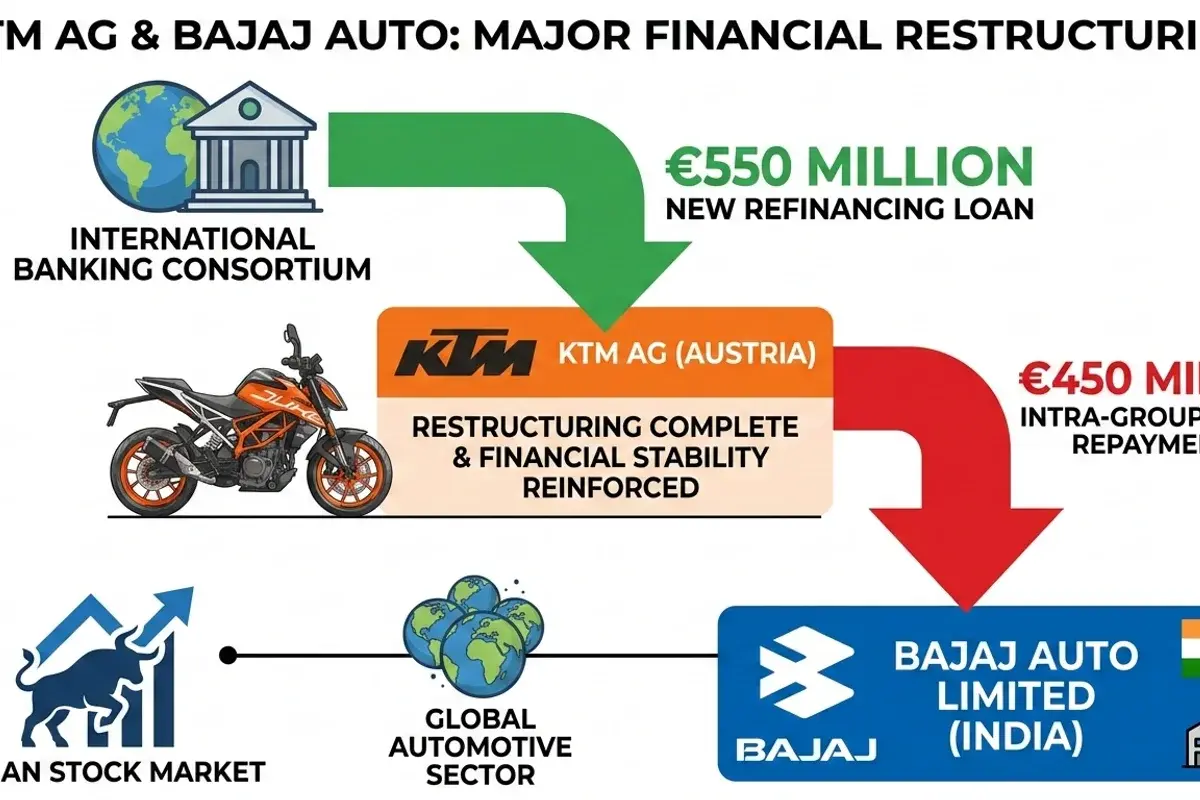
KTM AG repays €450M loan to Bajaj Auto's unit, completing restructuring. FinScann analyzes the financial impact on Bajaj Auto, Pierer Mobility, and...

Tata Elxsi launches DevStudio.ai, an ASPICE-aligned GenAI platform, poised to accelerate automotive software engineering and enhance productivity for...

Waaree Energies bags a significant 300 MW wind power project in Gujarat, marking a strategic expansion and contributing to India's ambitious...
“ABCL is entering a structurally stronger earnings phase, supported by synchronized momentum across lending, AMC, and insurance.

BSE shares surge over 4% after SEBI's critical nod for Sensex Next 30 index derivatives, bolstering its market position and revenue potential.