Loading market data...
Adani Ports partners with NMDC and Vale to develop an iron ore blending SEZ at Gangavaram Port, targeting 75 million tonnes capacity and enhancing India’s mineral export value chain.
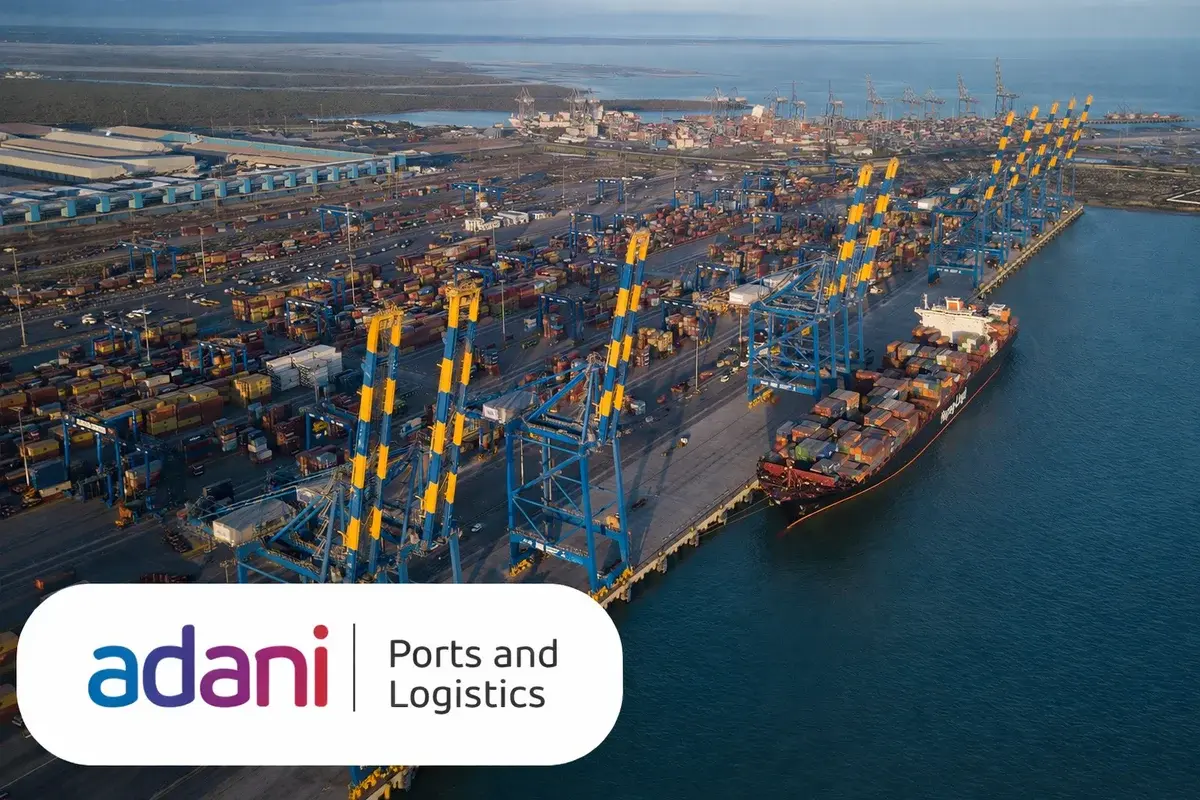
Adani Ports and Special Economic Zone (APSEZ) has signed a strategic MoU with NMDC and Vale to build an integrated iron ore blending facility and SEZ ecosystem at Gangavaram Port, aiming to lift capacity to 75 MTPA. The move strengthens India’s East Coast export value chain, enhances mineral processing competitiveness, and signals long-term infrastructure-led alpha generation for investors tracking logistics and commodity cycles.
India’s infrastructure narrative is entering a decisive phase where logistics integration, port-led industrialization, and mineral value-chain optimization are converging. Against this backdrop, Adani Ports and Special Economic Zone Limited (APSEZ) — India’s largest commercial port operator — has partnered with NMDC Limited and global mining giant Vale SA to establish a dedicated iron ore blending and Special Economic Zone (SEZ) ecosystem at Gangavaram Port.
The agreement, signed during the India-Brazil Business Forum Summit in New Delhi amid Brazilian President Luiz Inácio Lula da Silva’s official visit, underscores a deeper strategic alignment between Indian infrastructure capital and global commodity supply chains.
Loading chart...
Strategic Blueprint: Why This MoU Matters
The collaboration aims to:
• Develop and operationalize an SEZ-based iron ore blending facility • Improve export-grade ore customization • Enhance East Coast logistics efficiency • Position Gangavaram as a premium mineral export hub
Blending is critical in the iron ore trade. Steel producers require precise Fe content, impurity levels, and grade optimization. An integrated blending ecosystem allows:
• Price realization enhancement • Reduced rejection rates • Greater export competitiveness • Improved working capital cycles
By integrating mining (NMDC), global trade expertise (Vale), and port infrastructure (APSEZ), the project creates a vertically aligned value chain.
Adani Ports: Company Snapshot
| Metric | Details |
|---|---|
| Founded | 1998 |
| Sector | Ports & Logistics Infrastructure |
| Revenue Model | Port handling charges, logistics, SEZ services |
| Market Position | India’s largest private port operator |
| Key Financial Metrics | Strong cargo growth, improving EBITDA margins |
| Competitive Edge | Integrated multi-port network, hinterland connectivity |
NMDC: Company Snapshot
| Metric | Details |
|---|---|
| Founded | 1958 |
| Sector | Iron Ore Mining (PSU) |
| Revenue Model | Iron ore production & sale |
| Market Position | India’s largest iron ore producer |
| Key Financial Metrics | High operating margins, cash-rich balance sheet |
| Competitive Edge | Low-cost mining, dominant domestic reserves |
Vale SA: Company Snapshot
| Metric | Details |
|---|---|
| Founded | 1942 |
| Sector | Global Mining |
| Revenue Model | Iron ore exports, global commodity trade |
| Market Position | One of the world’s largest iron ore exporters |
| Key Financial Metrics | Commodity-cycle linked revenue model |
| Competitive Edge | Scale, global distribution network |
Financial & Capacity Implications
Gangavaram Port’s planned scale-up to 75 million tonnes per annum (MTPA) marks a structural expansion in East Coast export capability.
From a financial standpoint:
• Higher cargo throughput improves operating leverage • EBITDA margins typically expand with volume scale in port businesses • Blending services add value-added revenue streams • SEZ status improves tax efficiency and capital discipline
Strategic Positioning in the Iron Ore Value Chain
This MoU transforms Gangavaram from a handling port to a processing-linked export node.
Key strategic advantages:
• Integrated mining-to-port-to-export chain • Reduced supply chain friction • Competitive edge versus standalone ports • Improved capital efficiency
Iron ore demand remains structurally tied to global steel production. As emerging markets invest in infrastructure, the mineral trade remains a cyclical yet essential pillar of global commerce.
Growth Drivers
• Rising global steel demand • East Coast export corridor expansion • Infrastructure-led capital expenditure cycle • SEZ policy support • Blending-driven pricing power
Risk Factors
• Commodity price volatility • Global steel demand slowdown • Regulatory changes in mining exports • Logistics bottlenecks • Environmental compliance risks
Industry Heatmap: Iron Ore & Port Infrastructure
| Segment | Current Momentum | Outlook | Capital Flow Sentiment |
|---|---|---|---|
| Iron Ore Mining | Stable | Cyclical Upside | Selective |
| Port Infrastructure | Strong | Structural Growth | Positive |
| Mineral Processing | Improving | Expansion Phase | Strategic |
| SEZ-led Exports | Moderate | Policy-Driven Boost | Optimistic |
Comparative Strategic Positioning
| Company | Revenue Scale | EBITDA Profile | Valuation Narrative | Strategic Role |
|---|---|---|---|---|
| APSEZ | Large-cap Infra | High operating leverage | Infrastructure premium | Port & SEZ operator |
| NMDC | PSU mining major | Strong margins | Dividend-driven appeal | Ore producer |
| Vale | Global mining giant | Commodity-linked | Global exposure | Export integrator |
Expert Insight
“Infrastructure-linked mineral integration creates durable cash flows. Ports that move up the value chain into processing ecosystems typically command stronger EBITDA margins and lower earnings volatility,” notes a Mumbai-based infrastructure fund manager.
Market Context & Capital Discipline
India’s export competitiveness increasingly depends on logistical efficiency. East Coast ports are becoming critical gateways for mineral trade to Southeast Asia and China.
In a climate where investors are evaluating dividend stocks, PSU dividend stocks, and infrastructure blue-chip stocks for passive income stocks exposure, such capacity-led expansion strengthens long-term visibility.
The MoU also reflects disciplined capital allocation — aligning upstream mining production with downstream export infrastructure.
Investor Takeaway
Long-term investors should monitor:
• Cargo volume growth trajectory • EBITDA margin expansion • SEZ policy benefits realization • Global iron ore demand trends
Short-term traders may track:
• Announcement-driven price momentum • Commodity price fluctuations • Institutional accumulation patterns
Valuation comfort will depend on:
• Earnings visibility • Debt management • Cash flow sustainability
Where Investors Can Track These Stocks
Indian investors can track APSEZ and NMDC via:
• Zerodha • Groww • Upstox • Angel One
Global investors tracking Vale can use:
• Fidelity • Charles Schwab • Interactive Brokers • Robinhood
FAQs
Q: Why is iron ore blending strategically important?
Blending improves grade consistency, enhances pricing power, and reduces export rejection risk.
Q: How does SEZ status benefit port operations?
SEZs offer tax incentives, streamlined compliance, and operational flexibility, improving capital efficiency.
Q: Will this impact dividend payouts?
If margins and volumes improve sustainably, companies like NMDC — often tracked among high dividend yield PSU dividend stocks — could maintain attractive payout profiles.
Q: Is Gangavaram becoming a strategic export hub?
Yes. The planned 75 MTPA capacity positions it as a major East Coast mineral export gateway.
Final Outlook
The APSEZ–NMDC–Vale collaboration marks a structural shift from pure logistics to value-chain integration. In a commodity world increasingly shaped by efficiency, precision, and capital discipline, infrastructure-backed blending ecosystems may define the next phase of India’s mineral export competitiveness.
⚠️ DISCLAIMER: We Are Not Financial Advisors

Financial journalist specializing in market analysis, stock research, and investment trends. Dedicated to providing accurate, timely insights for informed decision-making.
Credentials: Experienced financial journalist with expertise in equity markets and economic analysis
The information provided in this article is for educational and informational purposes only and should not be construed as financial, investment, or legal advice. Finscann does not provide personalized investment recommendations.
For detailed terms and conditions, please read our Disclaimer and Terms of Service.
NTPC and MAHAGENCO complete the acquisition of Sinnar Thermal Power’s 1,350 MW coal plant under CIRP.
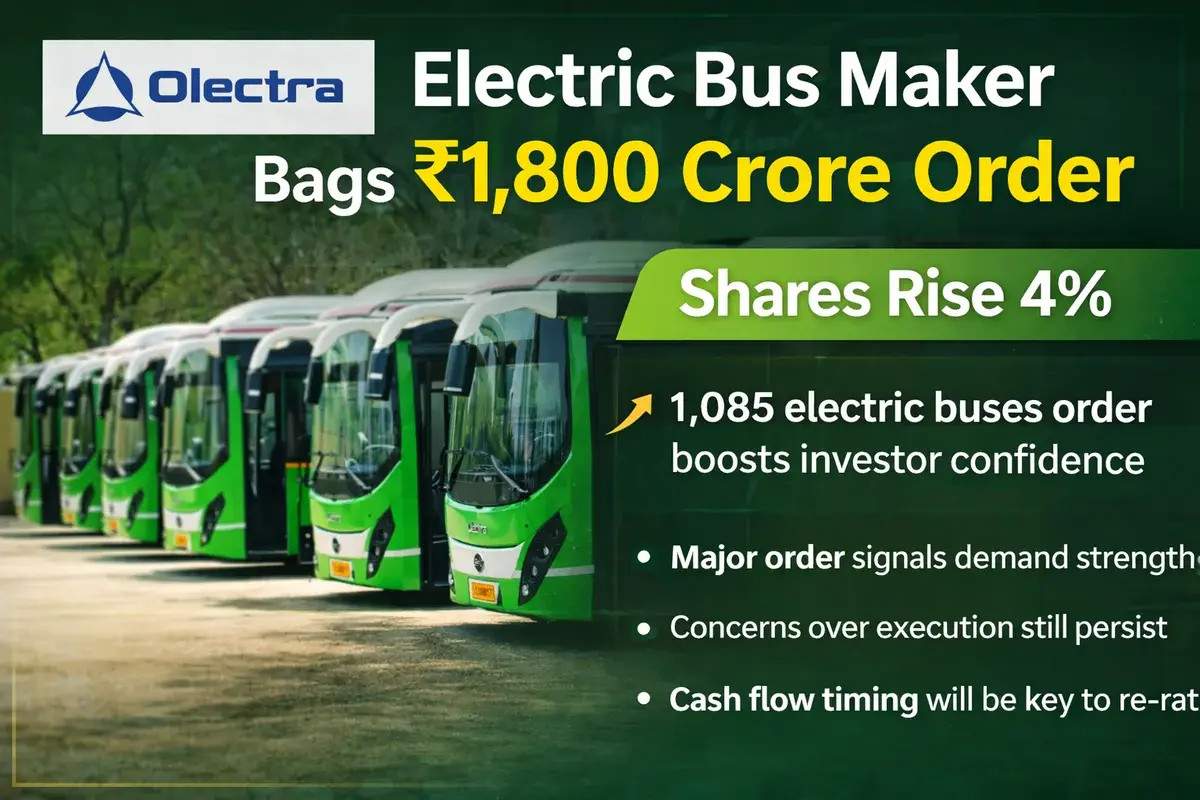
Olectra Greentech shares jump 4% after securing a ₹1,800 crore order for 1,085 electric buses.

Hindustan Aeronautics Ltd. Update Hindustan Aeronautics Ltd. (HAL) shares opened higher, breaking a two-day losing streak, as CLSA maintains an...
A ₹1,000-crore small-cap is transitioning from cables to advanced railway signalling under India’s Kavach rollout.

Metal stocks rally as Nifty Metal jumps 7.6% in February. Tata Steel, Adani Enterprises, Jindal Steel, and Lloyds Metals gain up to 13% amid weak...