Loading market data...
The United States is set to reduce tariffs on Indian goods to 18%, marking a major shift in US-India trade relations. The move is expected to enhance export competitiveness across sectors such as pharmaceuticals, textiles, engineering, specialty chemicals, and IT services. Lower tariff barriers could improve EBITDA margins, strengthen cash flows, and attract foreign investment into export-driven companies. With global supply chains realigning and energy diversification discussions ongoing, this development positions India for stronger trade growth, improved manufacturing output, and long-term economic expansion.
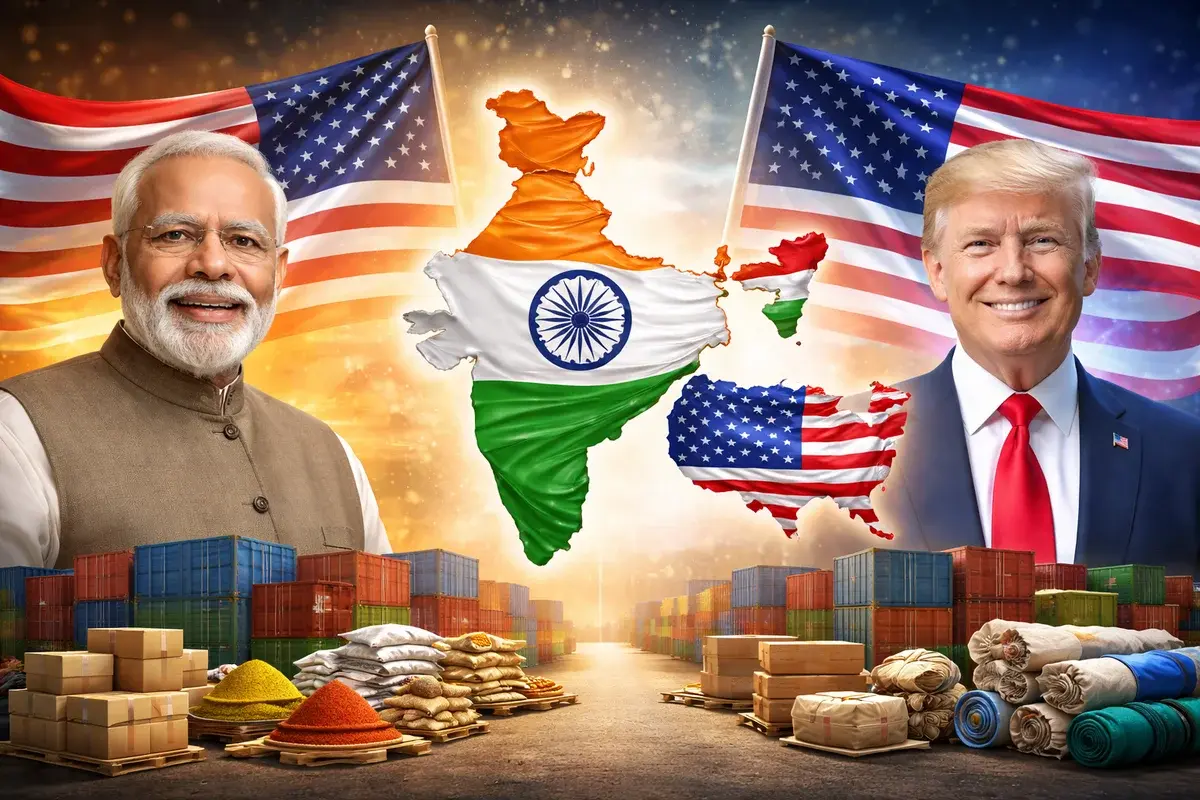
The United States is preparing to reduce tariffs on Indian goods to 18%, marking a significant reset in bilateral trade policy. The move follows high-level discussions between US President Donald Trump and Indian Prime Minister Narendra Modi. The tariff reduction could enhance India’s export competitiveness, strengthen supply chain resilience, and improve long-term economic alignment between the two nations. Export-focused sectors may see renewed investor interest as trade normalization unfolds.
Reducing tariffs from 25% to 18% improves India’s pricing advantage in one of its largest export markets — the United States.
| Factor | Impact on India |
|---|---|
| Lower Import Duties | Improved export margins |
| Reduced Trade Friction | Higher shipment volumes |
| Policy Stability | Better long-term planning |
| Bilateral Cooperation | Stronger supply chain alignment |
A 7% tariff reduction can significantly enhance competitiveness in price-sensitive sectors such as textiles, engineering goods, and specialty chemicals.
Lower tariffs can make Indian textiles more competitive versus Vietnam and Bangladesh in the US market.
Key Drivers:
India is one of the largest suppliers of generics to the US.
Tariff relief may support:
Export-oriented engineering firms may benefit from:
Although services are less tariff-sensitive, stronger bilateral alignment enhances:
| Macro Metric | Expected Direction |
|---|---|
| Export Growth | Upward |
| Trade Deficit | Narrowing potential |
| Manufacturing Output | Strengthening |
| FDI Inflows | Positive bias |
| Rupee Stability | Supportive |
Export growth has a multiplier effect on:
Here’s a curated export-focused stock list that could benefit from improved US trade access:
Investors should focus on:
| Metric | Why It Matters |
|---|---|
| EBITDA Margins | Pricing power sustainability |
| Export Revenue % | US exposure sensitivity |
| ROCE | Capital efficiency |
| Free Cash Flow | Expansion capacity |
| Debt-to-Equity | Balance sheet resilience |
Companies with strong export dependency and healthy cash flow could outperform if tariff benefits sustain.
The tariff cut aligns with broader energy discussions, as India explores diversified oil sourcing amid global geopolitical shifts.
Trade normalization and energy strategy coordination reflect:
The reduction in US tariffs to 18% represents a meaningful strategic pivot in US-India economic relations.
If sustained, it could:
Export-driven sectors now move to the center of market attention.
⚠️ DISCLAIMER: We Are Not Financial Advisors

Financial journalist specializing in market analysis, stock research, and investment trends. Dedicated to providing accurate, timely insights for informed decision-making.
Credentials: Experienced financial journalist with expertise in equity markets and economic analysis
The information provided in this article is for educational and informational purposes only and should not be construed as financial, investment, or legal advice. Finscann does not provide personalized investment recommendations.
For detailed terms and conditions, please read our Disclaimer and Terms of Service.

Apple's gearing up for a significant shift in its laptop lineup with the anticipated launch of its first touch-enabled MacBook Pro series, expected...

RBI’s February 2026 draft norms impose 100% refund liability, ban kickbacks, and tighten suitability rules to curb ULIP mis-selling.

Discover why Indian markets are surging, with Sensex gaining 500 points, even as the IT sector faces headwinds.
Indian IT majors Infosys and TCS lead a strong rebound, jumping up to 5% in February 2026 after a five-day rout fueled by AI disruption fears.

Stock market preview for February 25, 2026: Key stocks to watch including TechSolutions India, Bharat Bank, and GreenEnergy Manufacturers.