Loading market data...
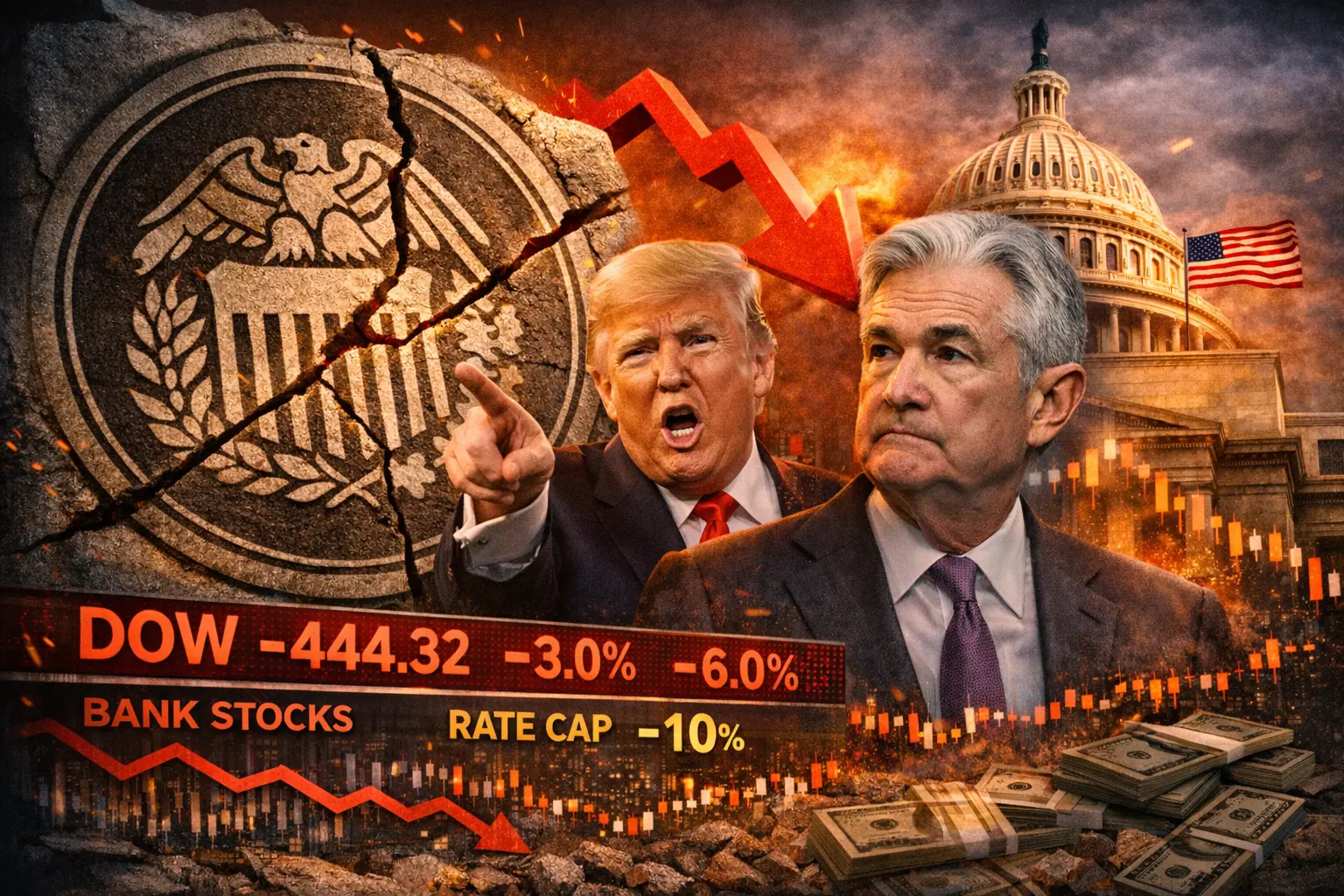
When the Fed’s Firewall Cracks: US Stock Markets Reprice Political Risk Overnight
Synopsis US stock markets fell sharply after reports of a criminal investigation involving Jerome Powell, triggering renewed concerns over the independence of the Federal Reserve. The Dow Jones Industrial Average plunged 444 points, while bank stocks witnessed heavy selling amid fears of political interference in monetary policy and proposed credit card interest rate caps. The key takeaway for investors: rising policy uncertainty is now driving market volatility, sector rotation, and valuation resets—particularly in US financial stocks.
US equity markets entered the week on a cautious note as political risk resurfaced as a dominant macro variable. The sell-off reflected not just headline anxiety but a deeper reassessment of institutional stability, as investors weighed the implications of potential pressure on the Federal Reserve’s policy independence. This marks a broader shift from earnings-driven optimism to governance-driven risk pricing, a transition that historically leads to heightened volatility and defensive positioning.
1. Market Reaction: Why US Indices Fell Despite Stable Earnings Outlook The Dow Jones Industrial Average declined nearly 0.9%, shedding 444 points in intraday trade, as investors reacted to uncertainty surrounding the Federal Reserve leadership. In contrast, the S&P 500 slipped a modest 0.3%, while the Nasdaq Composite remained largely flat, supported by selective buying in technology stocks.
This divergence across US indices highlights a classic risk-off pattern, where economically sensitive sectors underperform while growth and defensives offer relative stability. Markets tend to treat central bank independence as a foundational pillar of financial stability, and any perceived erosion of that credibility is quickly reflected in equity valuations and bond yields.
2. Banking Stocks Slide: Margin Pressure and Policy Risk Collide US banking stocks bore the brunt of the sell-off as policy uncertainty compounded existing concerns around profitability. Citigroup shares fell 3%, JPMorgan Chase and Bank of America declined over 1% each, while Capital One Financial plunged nearly 6%.
Adding to investor anxiety was President Donald Trump’s proposal to temporarily cap credit card interest rates at 10%, a move critics say could disrupt consumer lending economics. For banks, such a cap directly threatens Net Interest Margins (NIMs), slows credit growth, and reduces overall product velocity across retail loan portfolios.
Bank Stock Performance Snapshot:
The broader concern is that prolonged regulatory intervention could tighten lending standards, reduce credit availability, and dampen consumer spending—amplifying downside risks for the US economy.
3. Political Interference Risk: How Markets Price Central Bank Independence Financial markets are highly sensitive to any signals that suggest political pressure on monetary authorities. Even without immediate policy changes, the perception of interference introduces what analysts describe as a “policy risk premium”, leading to P/E multiple compression, higher volatility, and cautious capital allocation.
Expert Insight “Markets react less to policy outcomes and more to credibility signals. Any uncertainty around central bank independence weakens investor confidence and increases volatility across asset classes,” said a senior global macro strategist at a leading investment firm."
Historically, periods of perceived Federal Reserve vulnerability have coincided with elevated market volatility and reduced risk appetite, particularly in rate-sensitive sectors such as financials, real estate, and utilities.
4. Macro Impact: From Market Volatility to Real-Economy Effects If political uncertainty continues, the macroeconomic transmission channels are well established. Higher market volatility tightens financial conditions, raises corporate borrowing costs, and compresses EBITDA margins, especially for leveraged companies. Banks face sustained NIM pressure, while consumers may encounter reduced access to credit.
Such dynamics can create a feedback loop where weaker sentiment reinforces slower economic activity, further weighing on equity markets and delaying any sustained recovery in risk assets.
5. What Investors Are Watching Next: Key Triggers and Market Signals Investors are now closely tracking official statements from the Federal Reserve, developments surrounding the investigation, and progress on proposed credit card rate caps. Any reassurance around policy continuity and institutional independence could help stabilise markets, while prolonged ambiguity may extend volatility.
Key Metrics to Monitor:
⚠️ DISCLAIMER: We Are Not Financial Advisors This article is for informational and educational purposes only and does not constitute investment advice or a recommendation to buy or sell any securities. Readers are advised to consult certified financial professionals before making investment decisions.

Financial journalist specializing in market analysis, stock research, and investment trends. Dedicated to providing accurate, timely insights for informed decision-making.
Credentials: Experienced financial journalist with expertise in equity markets and economic analysis
The information provided in this article is for educational and informational purposes only and should not be construed as financial, investment, or legal advice. Finscann does not provide personalized investment recommendations.
For detailed terms and conditions, please read our Disclaimer and Terms of Service.
No additional articles in this category yet.