Loading market data...
Overview
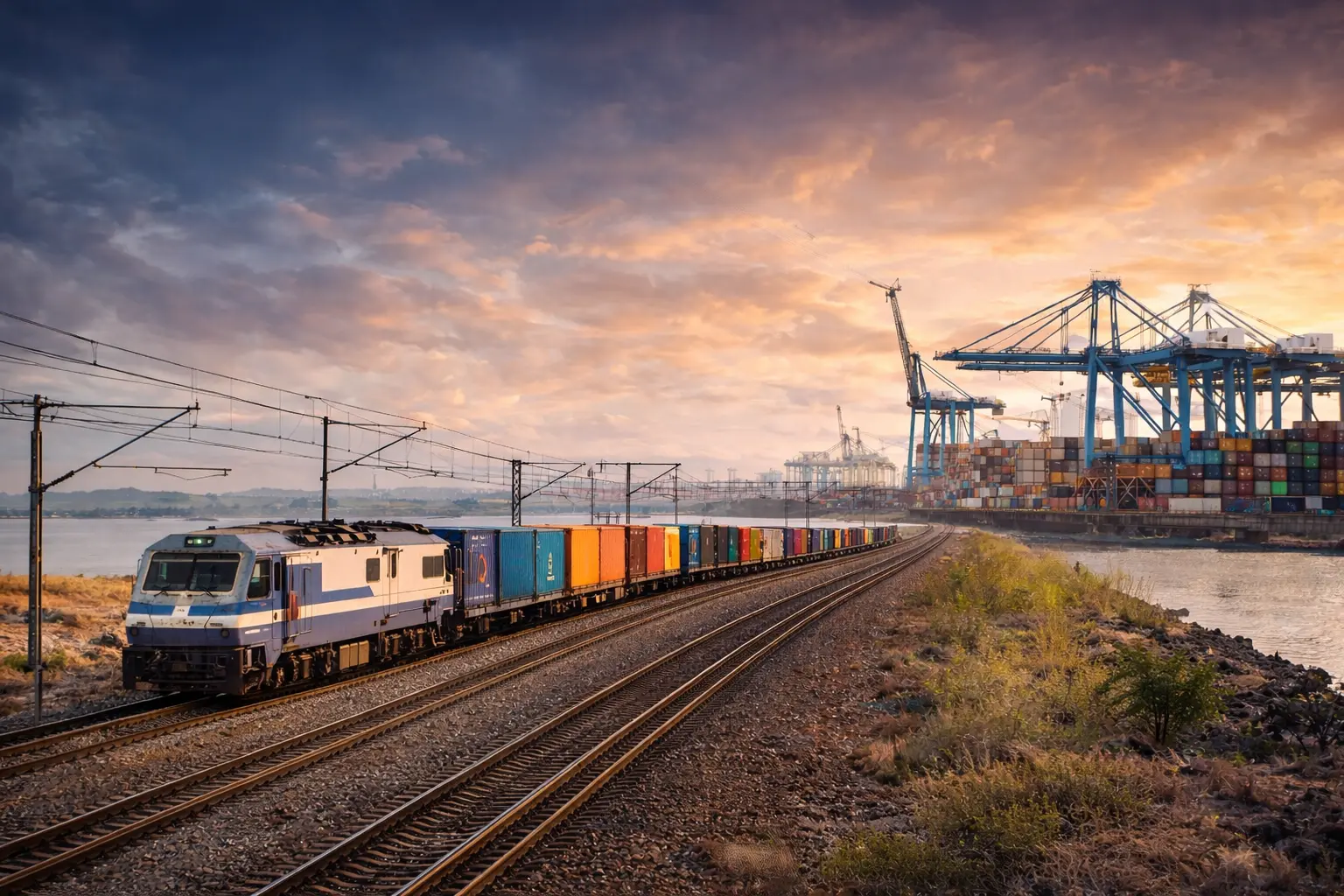
India’s logistics infrastructure is set to receive a major boost, with the Dedicated Freight Corridor Corporation of India Limited (DFCCIL) aiming to complete the Western Dedicated Freight Corridor (WDFC) by the end of the 2025–26 financial year. Officials have confirmed that the crucial last-mile connectivity to Mumbai’s Jawaharlal Nehru Port (JNPT) is nearing completion, with full operations expected before March 31, 2026.
The project is seen as a key step in improving freight movement efficiency between ports and industrial hubs.
Status of the Western and Eastern Freight Corridors
The WDFC, which connects Jawaharlal Nehru Port to Dadri, spans a total length of 1,506 kilometres. As of December 2025, around 1,404 kilometres of the corridor have already been commissioned, bringing the project close to completion.
On the eastern side, the Eastern Dedicated Freight Corridor (EDFC)—running from Ludhiana to Sonnagar—has been fully commissioned. The corridor covers 1,337 kilometres and is already operational, supporting faster freight movement across northern and eastern India.
Q: What remains to be completed on the WDFC?
A: The final 102-kilometre stretch connecting JNPT to Vaitarna is the key pending section.
Focus on the JNPT–Vaitarna Section
Recent coordination meetings have highlighted the importance of the 102-kilometre JNPT–Vaitarna section, which is critical for completing the WDFC. This stretch provides direct rail connectivity between India’s largest container port and the dedicated freight network.
Once completed, the corridor will enable seamless movement of goods from JNPT to northern India without interference from passenger train traffic.
Business Impact on Logistics and Trade
The completion of the WDFC is expected to significantly improve logistics efficiency in India. Faster freight movement, reduced transit times, and lower logistics costs could benefit exporters, importers, and manufacturers.
Better port connectivity is also likely to ease congestion on existing rail and road networks, helping businesses improve supply-chain reliability.
Q: How will this corridor help businesses?
A: It can reduce transportation time and costs, improving overall trade efficiency.
Market Context:
Investors and logistics companies are closely tracking the progress of the freight corridors. Improved rail infrastructure often leads to better operational efficiency for logistics firms and could positively influence companies dependent on bulk freight transport.
The completion of both the WDFC and EDFC is seen as a long-term positive for India’s infrastructure-led growth story.
Industry Context:
Dedicated freight corridors are a core part of India’s plan to modernise its transportation infrastructure. With freight traffic expected to rise sharply over the coming years, these corridors aim to reduce congestion on existing rail lines and improve reliability.
The projects also align with the government’s broader push to strengthen industrial corridors and port-led development.
Looking Ahead:
As DFCCIL moves closer to completing the WDFC, attention will shift to how quickly full commercial operations begin. Stakeholders will be watching the impact on freight rates, transit times, and logistics operations across western and northern India.
If completed on schedule, the corridor could mark a major milestone in India’s efforts to build a faster, more efficient freight transportation network.

Financial journalist specializing in market analysis, stock research, and investment trends. Dedicated to providing accurate, timely insights for informed decision-making.
Credentials: Experienced financial journalist with expertise in equity markets and economic analysis
The information provided in this article is for educational and informational purposes only and should not be construed as financial, investment, or legal advice. Finscann does not provide personalized investment recommendations.
For detailed terms and conditions, please read our Disclaimer and Terms of Service.
No additional articles in this category yet.