Loading market data...
Overview
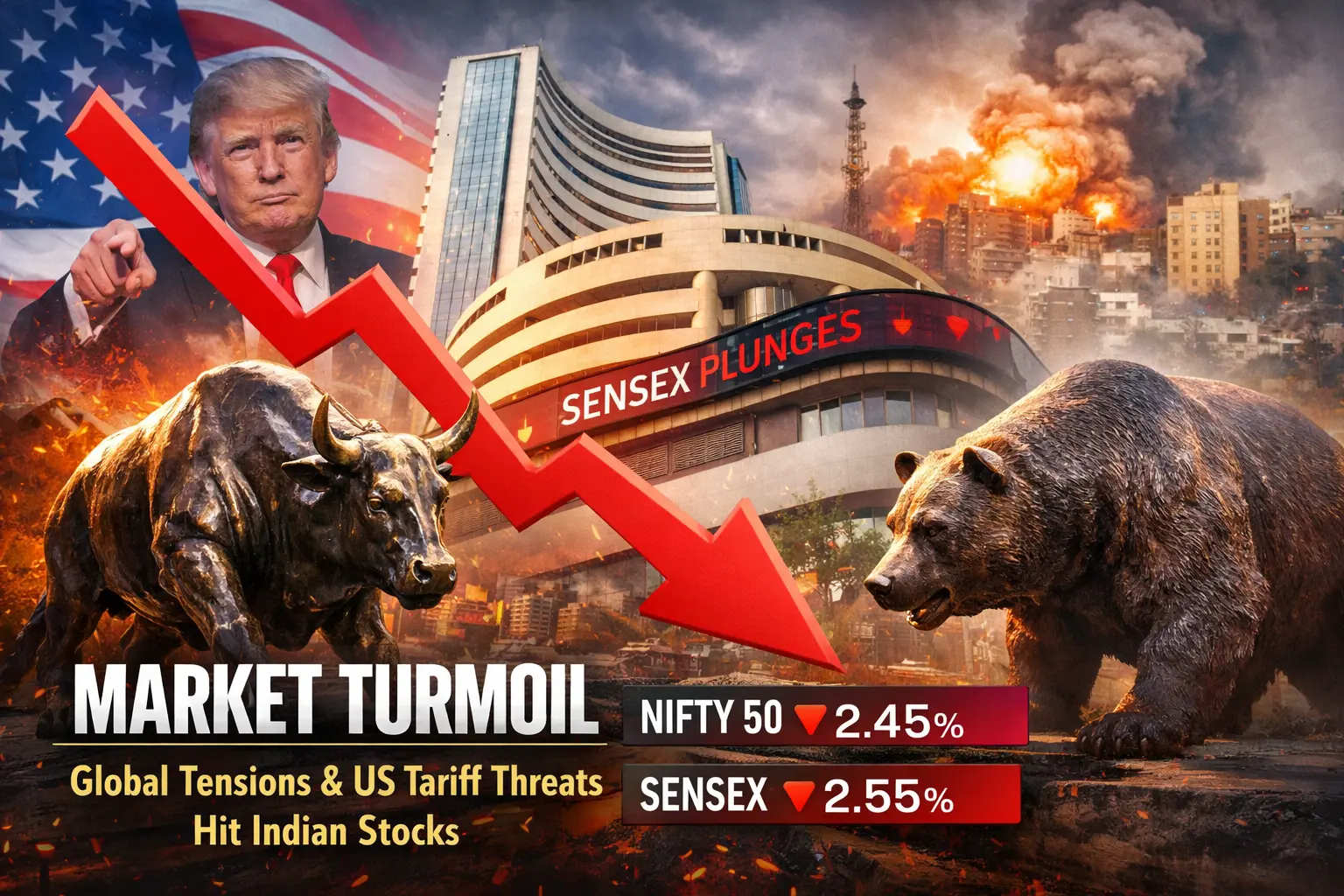
Indian stock markets have gone through a tough phase recently. The Nifty 50 fell by 2.45% and the Sensex dropped 2.55% last week, marking the biggest weekly fall since mid-September. Rising 'global geopolitical tensions' and fresh tariff threats from US President Donald Trump on Indian imports have shaken investor confidence.
With uncertainty dominating global markets, investors are questioning whether the Indian stock market recovery is possible in the near term.
What Triggered the Recent Market Fall?
Several factors came together to push markets lower. The biggest concern was aggressive selling by foreign investors. Foreign Portfolio Investors (FPIs sold ₹11,800 crore worth of Indian shares in just the first seven trading sessions of 2026.
Experts believe FPIs are reducing exposure due to global risks, higher interest rates, and uncertainty around trade policies affecting emerging markets like India.
Q: Why are FPIs selling Indian stocks?
A: FPIs tend to exit riskier markets during global uncertainty to protect capital and reduce exposure.
Impact of US Tariff Threats on India
Another major worry is renewed tariff threats from the US. According to Ponmudi R, CEO of Enrich Money, these threats—especially against countries buying Russian oil—have increased investor fear.
Export-oriented sectors are under pressure, as tariffs can hurt company earnings and slow growth. This has negatively affected overall 'share market sentiment'.
Q: Can US tariffs directly impact Indian companies?
A: Yes. Higher tariffs can reduce exports, increase costs, and hurt profit margins.
Markets Were Already in a Correction Zone
The recent fall did not come out of nowhere. Since late 2025, Indian benchmark indices have already seen corrections of 5–8%. Weak global demand, geopolitical tensions, and trade uncertainty have kept markets under pressure.
Export-driven sectors have been hit the hardest, while investors remain cautious across the board.
Q: Is a correction bad for long-term investors?
A: Not necessarily. Corrections often create better entry opportunities for long-term investors.
Earnings Season Adds to Market Caution
Investors are also being careful ahead of the December quarter earnings. Companies will report results at a time when global uncertainty remains high. Any weak earnings could further impact 'Indian equity markets'. Because of this, many investors are waiting for clearer signals before making new investments.
Q: Why are quarterly results important now?
A: Earnings will show how companies are handling global risks and cost pressures.
Can Indian Markets Recover from Here?
Despite near-term challenges, recovery is still possible. India’s long-term growth story remains strong, supported by domestic consumption, infrastructure spending, and policy stability. If global tensions ease, FPIs may return, and positive earnings could help rebuild confidence in the 'Indian stock market outlook'.
Q: What signs can indicate a market recovery?
A: Reduced FPI selling, stable global cues, and strong corporate earnings.
What Should Investors Do Now?
Market experts advise investors to stay calm and avoid panic selling. Short-term volatility may continue, but long-term investors should focus on fundamentals rather than daily market movements. Diversification and disciplined investing can help manage risk during uncertain times.
Looking Ahead:

Financial journalist specializing in market analysis, stock research, and investment trends. Dedicated to providing accurate, timely insights for informed decision-making.
Credentials: Experienced financial journalist with expertise in equity markets and economic analysis
The information provided in this article is for educational and informational purposes only and should not be construed as financial, investment, or legal advice. Finscann does not provide personalized investment recommendations.
For detailed terms and conditions, please read our Disclaimer and Terms of Service.
No additional articles in this category yet.