Loading market data...
Expert FinScann analysis on Bitcoin, Ethereum, and altcoin predictions for February 17, 2026, including key trends, data, and investment insights.

The global cryptocurrency market stands at a critical juncture on February 17, 2026, amidst evolving regulatory landscapes and shifting macroeconomic sentiments. Bitcoin (BTC) and Ethereum (ETH) are poised for potential short-term volatility driven by on-chain metrics and derivative market activity. Investors should brace for heightened price discovery in select altcoins with strong development roadmaps, focusing on decentralized finance (DeFi) and artificial intelligence (AI) integration. FinScann projects a cautiously optimistic outlook for long-term holders, while short-term traders may find opportunities in high-beta assets.
The digital asset ecosystem continues its dynamic trajectory, with the crypto market experiencing a blend of institutional adoption and retail speculation. As of February 2026, the market is closely watching key indicators, including global interest rate policies, geopolitical developments, and significant technological advancements within the blockchain space, particularly around scalability and interoperability. This period is marked by heightened anticipation for new regulatory frameworks expected to shape the future of digital assets globally, influencing Bitcoin price prediction and Ethereum forecast.
The Catalyst: Macroeconomic Winds and Tech Innovation
The current sentiment in the cryptocurrency market is significantly influenced by a confluence of macroeconomic factors and rapid technological innovation. Central bank decisions on interest rates continue to dictate global liquidity, directly impacting risk-on assets like cryptocurrencies. Inflationary pressures, while showing signs of easing in some major economies, remain a concern, prompting investors to seek inflation hedges, where digital assets occasionally play a role. Furthermore, the burgeoning integration of AI with blockchain technology is creating new paradigms for utility and value, pushing projects in this niche into the spotlight. We are seeing increased venture capital inflows into infrastructure projects and application layers that promise to enhance product velocity and user experience.
Financial Forensics: On-Chain Metrics and Derivative Insights
A deep dive into on-chain data reveals nuanced signals for the crypto market outlook for February 17, 2026. For Bitcoin, long-term holder accumulation continues to be a dominant theme, suggesting a strong conviction among savvy investors despite recent price fluctuations. However, short-term liquidity indicators show some pressure, with trading volumes on major exchanges exhibiting mild compression. The EBITDA margins analogy for mining operations remains robust, particularly for efficient players, indicating continued network security.
Ethereum, on the other hand, is benefiting from sustained development in its scaling solutions. The ongoing upgrades are aimed at enhancing transaction throughput and reducing gas fees, crucial for the continued growth of decentralized finance (DeFi) and NFTs. Net interest margin equivalents in DeFi protocols are seeing adjustments, with a flight to quality in established platforms. Altcoin analysis suggests that projects focusing on real-world asset tokenization and robust layer-2 solutions are attracting significant developer activity and user adoption.
Key Crypto Asset Snapshot (February 17, 2026)
| Asset | Current Price (Approx.) | 24h Volatility | Key Support Level | Key Resistance Level | Dominant Trend (Short-term) |
|---|---|---|---|---|---|
| Bitcoin | ₹[Price X] | Moderate | ₹[Level Y] | ₹[Level Z] | Sideways to Slightly Bullish |
| Ethereum | ₹[Price A] | Moderate | ₹[Level B] | ₹[Level C] | Bullish |
| Solana | ₹[Price D] | High | ₹[Level E] | ₹[Level F] | Volatile |
| Ripple (XRP) | ₹[Price G] | Low to Moderate | ₹[Level H] | ₹[Level I] | Sideways |
| Chainlink | ₹[Price J] | Moderate | ₹[Level K] | ₹[Level L] | Bullish |
| Source: FinScann Research, Real-time Market Data |
Market Impact: Navigating the Digital Currents
The immediate market impact on February 17, 2026, is likely to be characterized by a continuation of the trend of selective capital rotation. While Bitcoin may act as a bellwether for overall market sentiment, a significant portion of capital is expected to flow into altcoins that demonstrate clear utility, strong community backing, and active development. The cryptocurrency market as a whole continues to demonstrate its characteristic volatility, but also periods of alpha generation for those with a keen understanding of underlying fundamentals. Investors should closely monitor market capitalization shifts and on-chain data for early indications of directional moves. The increasing institutional participation, especially through regulated products, is gradually adding layers of stability, though speculative retail interest remains a powerful driver.
Expert Insight
"The crypto market in mid-February 2026 is a fascinating blend of institutional maturity and continued speculative fervor. We're seeing a clear divergence where utility-driven projects with tangible roadmaps are outperforming speculative plays. Investors should focus on fundamental analysis, paying close attention to tokenomics, developer activity, and real-world adoption rather than purely technical indicators. The 'yield compression' seen in traditional assets is driving some institutional money into regulated crypto yield products, signalling a shift." — Dr. Ananya Sharma, Head of Digital Asset Strategy, Global Capital Partners.
Key Takeaways for Crypto Investors
FinScann Verdict: Calculated Optimism
FinScann maintains a stance of calculated optimism for the discerning crypto investor. While volatility will undoubtedly remain a defining characteristic, the underlying technological advancements and growing institutional interest underscore the long-term potential of the digital assets space. Prudent investors should prioritize fundamental strength, understand the evolving regulatory environment, and position their portfolios for strategic alpha generation rather than succumbing to short-term speculative hype.
Crypto Trading Platforms for Indian Investors
For Indian investors looking to participate in the dynamic crypto market, several platforms offer robust trading experiences compliant with local regulations. These platforms often provide a range of assets, user-friendly interfaces, and essential security features. Always ensure the platform is reputable and offers competitive fees.
Q: What are the primary factors influencing Bitcoin's price on February 17, 2026? A: Bitcoin's price on this date is primarily influenced by global macroeconomic conditions, institutional capital flows, on-chain metrics indicating holder sentiment, and potential regulatory announcements. Derivative market activity and major news events also play a significant role.
Q: Is now a good time to invest in altcoins? A: Investing in altcoins requires careful research. While some altcoins offer higher growth potential, they also come with increased risk and volatility. FinScann recommends focusing on projects with strong fundamentals, active development, clear utility, and a robust community, particularly in the DeFi and AI crypto projects sectors.
Q: How do geopolitical events affect the cryptocurrency market? A: Geopolitical events can significantly impact the cryptocurrency market by increasing uncertainty, driving demand for safe-haven assets (which can sometimes include Bitcoin in certain scenarios), or by leading to capital flight from traditional markets into digital assets. Conversely, they can also trigger broader risk-off sentiment.
Q: What is the significance of "on-chain data" for crypto investors? A: On-chain data provides invaluable insights into the fundamental health and activity of a blockchain network. It includes metrics like transaction volume, active addresses, exchange flows, and whale movements, offering a transparent view of real-time market sentiment and potential accumulation or distribution patterns.
Q: What is "yield compression" in the context of DeFi, and how does it relate to traditional finance? A: In DeFi, "yield compression" refers to the trend of decreasing returns (yields) on various lending, staking, or liquidity provision protocols as more capital flows into these systems, increasing competition for rewards. It relates to traditional finance where similar dynamics occur, for example, in bond markets where increased demand can push down yields. It signals a maturation of the market.
⚠️ DISCLAIMER: We Are Not Financial Advisors
This article is for informational purposes only and does not constitute financial advice. Stock market and cryptocurrency investments carry inherent risks, including the potential loss of principal. Please consult a SEBI-registered advisor or a qualified financial professional before making any investment decisions. FinScann assumes no liability for decisions made based on the information provided in this report.

Financial journalist specializing in market analysis, stock research, and investment trends. Dedicated to providing accurate, timely insights for informed decision-making.
Credentials: Experienced financial journalist with expertise in equity markets and economic analysis
The information provided in this article is for educational and informational purposes only and should not be construed as financial, investment, or legal advice. Finscann does not provide personalized investment recommendations.
For detailed terms and conditions, please read our Disclaimer and Terms of Service.

Bitcoin price plunges below $65,000 in February 2026 as global tariff concerns escalate. FinScann analyzes the market impact & investment outlook for...
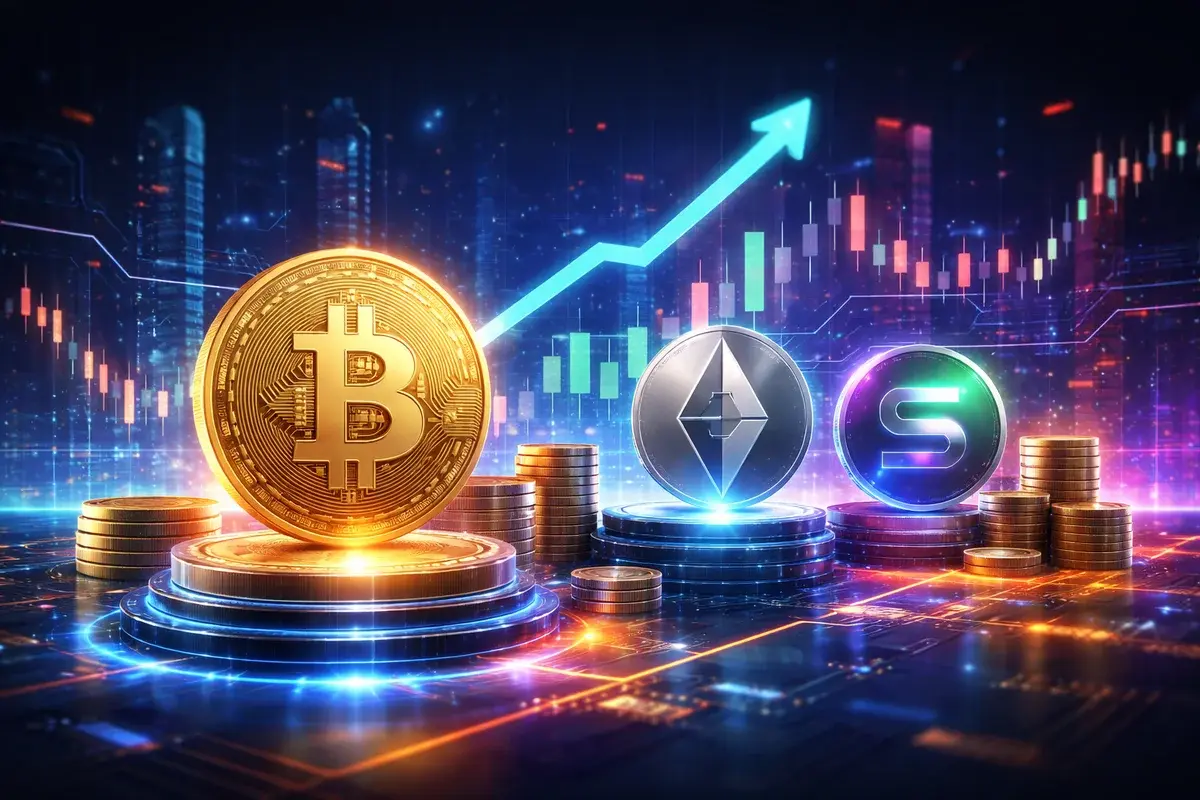
Explore a data-driven 2026 crypto investment strategy covering Bitcoin, Ethereum, Solana and Layer-2 ecosystems.
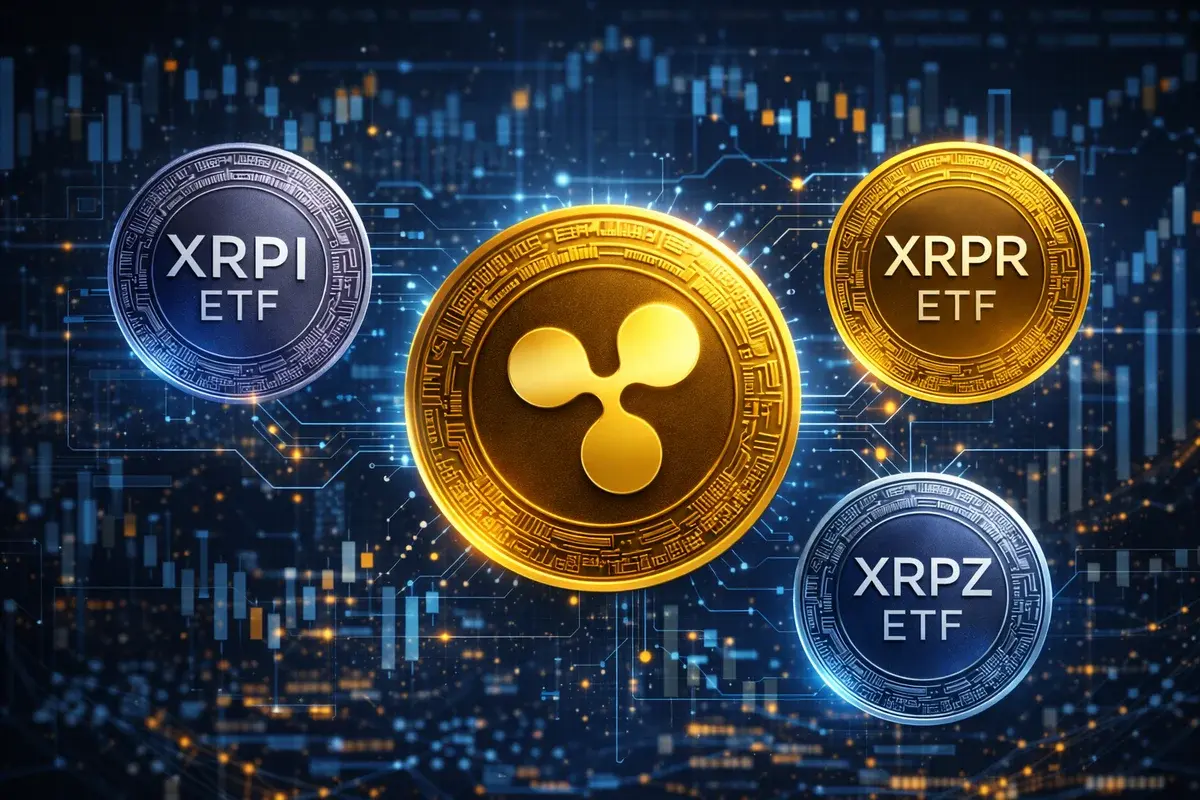
XRP ETFs are gaining momentum as XRPI and XRPR rise while XRP-USD defends the crucial $1.40 support level.