Loading market data...
Bengaluru based Pulse secures $4 million in seed funding led by 3one4 Capital to build a full stack medical equipment manufacturing brand. The startup plans to invest in R&D, regulatory approvals, and distribution expansion as India’s medtech manufacturing sector accelerates.
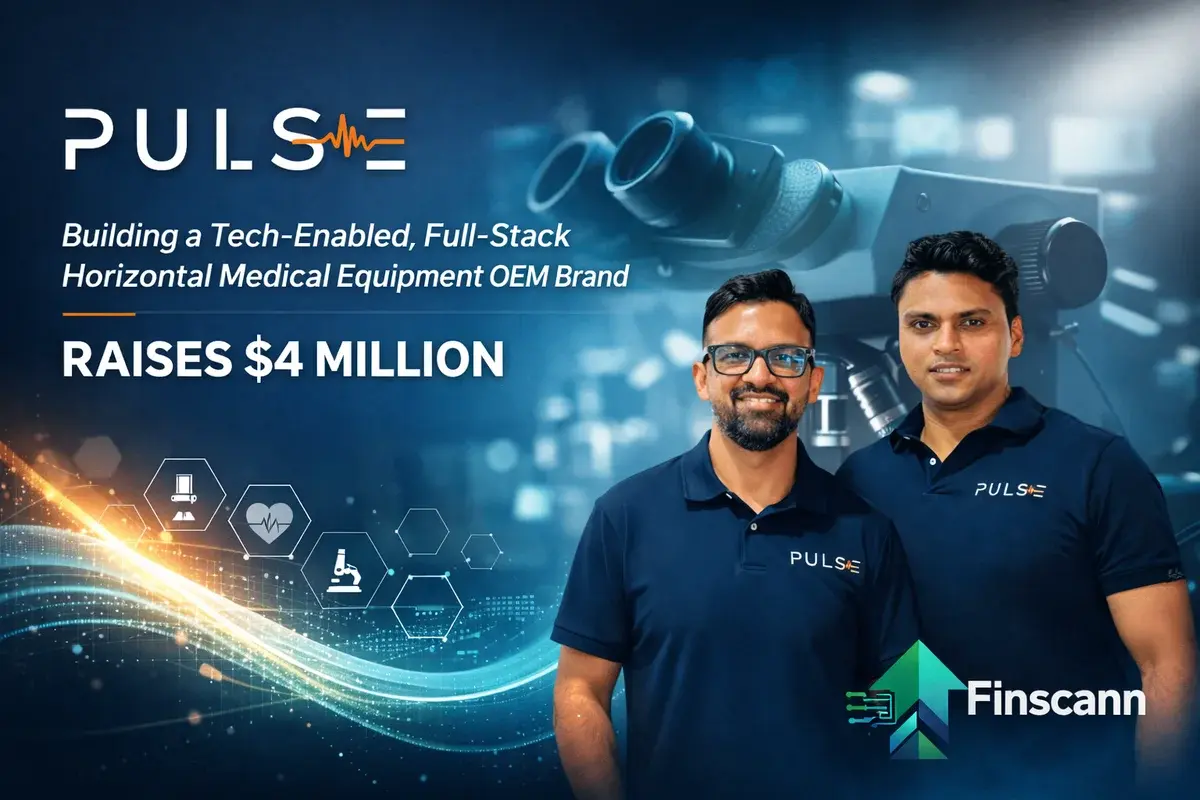
Pulse has secured $4 million (₹36.38 crore) in seed funding led by 3one4 Capital to build a full stack, asset light medical equipment manufacturing brand. With capital earmarked for R&D, regulatory approvals, and distribution expansion, the Bengaluru startup is positioning itself as a Zetwerk style orchestrator in India’s fast evolving medical devices market. The opportunity lies in import substitution and export scale. The execution risk lies in compliance intensity, margin discipline, and working capital management.
India’s medical equipment ecosystem is entering a structural growth phase. The country still imports a significant portion of high end medical devices, exposing hospitals and distributors to global pricing cycles and supply chain disruptions. Policy tailwinds under Make in India and the Production Linked Incentive scheme are now nudging capital toward domestic manufacturing platforms.
Against this backdrop, Bengaluru based Pulse has raised $4 million in seed funding to build a full stack, compliance first medical equipment brand. The round was led by 3one4 Capital with participation from Incubate Fund Asia, Stride Ventures, and angel investors including founders of BlackBuck and Agrizy.
The ambition is bold. Build a Zetwerk style platform for medical devices that designs products, partners with MSMEs for manufacturing, ensures regulatory compliance, and distributes both in India and export markets.
At a time when venture capital trends are shifting toward capital efficiency and EBITDA visibility, Pulse is attempting to combine manufacturing depth with asset light agility.
| Metric | Details |
|---|---|
| Founded | 2025 |
| Headquarters | Bengaluru, India |
| Sector | Medical Equipment Manufacturing |
| Revenue Model | Design led, asset light manufacturing plus distribution margins |
| Market Position | Early stage full stack medtech platform |
| Competitive Edge | Compliance orchestration plus MSME partnerships |
| Funding Stage | Seed, $4 Mn raised |
Medical equipment manufacturing is fundamentally different from SaaS or marketplace startups. It is regulatory intensive, capital sensitive, and margin structured.
Pulse is not building factories at scale. Instead, it is designing products internally and partnering with MSMEs for production. This allows:
• Lower capex intensity
• Faster scalability across categories
• Reduced fixed cost burden
• Improved capital discipline
However, the real moat will not be manufacturing alone. It will be regulatory orchestration. Medical devices in India require compliance under the Medical Devices Rules. Export ambitions require CE and potentially FDA certifications. Time to approval directly impacts revenue ramp up and cash runway.
This is where Pulse aims to differentiate itself.
“Institutional investors are increasingly prioritizing EBITDA visibility and sustainable cash flow generation over top line growth,” says a Mumbai based fund manager tracking early stage manufacturing platforms.
In other words, growth without margin structure will not command premium valuations in this cycle.
The newly raised capital will be deployed toward:
• Establishing an R&D hub
• Accelerating product development cycles
• Securing regulatory approvals
• Expanding domestic distribution
• Entering select export markets
This is not a land grab strategy. It is a calibrated build out focused on compliance and distribution density.
In medtech, distribution strength determines revenue durability. Hospitals and diagnostic chains prefer reliable suppliers with quality assurance and predictable supply cycles. Once integrated, switching costs can be meaningful.
India’s medical devices market is estimated at over $11 billion and growing at double digit rates. Yet domestic manufacturing penetration remains below optimal levels.
| Segment | Current Momentum | Outlook | Capital Flow Sentiment |
|---|---|---|---|
| Diagnostic Equipment | Strong | Expanding | Positive |
| Critical Care Devices | Rising | High Growth | Bullish |
| Surgical Instruments | Stable | Moderate | Selective |
| Export Focused Manufacturing | Emerging | Strong | Increasing |
Capital is flowing into segments with clear import substitution potential and scalable export pipelines.
Unlike dividend stocks or blue chip stocks that generate passive income through high dividend yield structures and ex date visibility, early stage medtech plays are long duration bets. Alpha generation here depends on execution strength, not yield distribution.
While Pulse is at a seed stage and detailed financial metrics are not public, investors tracking the sector should evaluate:
• Revenue growth trajectory post certification
• Gross margin stability
• EBITDA margins once scale kicks in
• Working capital cycle efficiency
• Debt levels and capital structure discipline
• Cash runway and burn rate
• Unit economics by product category
Manufacturing platforms can quickly face yield compression if pricing power is weak. The focus must remain on disciplined scaling.
• Import substitution momentum in medical devices
• Rising hospital infrastructure expansion across Tier II and Tier III cities
• Policy support for domestic manufacturing
• Export demand from Africa, Southeast Asia, and Middle East
• Increasing trust in India compliant yet affordable equipment
• Regulatory approval delays impacting time to market
• Margin pressure from global OEM competition
• Working capital strain due to inventory cycles
• Compliance lapses affecting brand credibility
• Demand slowdown in hospital capex cycles
| Company Type | Revenue Scale | Margin Profile | Capital Intensity | Strategic Position |
|---|---|---|---|---|
| Pulse | Early stage | To be established | Asset light | Compliance led orchestrator |
| Traditional OEMs | Large | Stable | High | Capex heavy manufacturers |
| Import Distributors | Moderate | Thin | Low | Trade focused operators |
Pulse is attempting to occupy the middle ground. Higher margins than distributors, lower capital burden than OEMs.
If executed well, this model could generate sustainable EBITDA margins with better capital efficiency ratios.
Watch for:
• Certification milestones achieved
• Institutional hospital contracts secured
• Repeat order patterns
• Export compliance approvals
• Burn rate discipline and capital allocation clarity
Early stage manufacturing requires patience and tolerance for volatility. The profitability roadmap matters more than headline revenue.
Funding announcements in startup funding India cycles often trigger sentiment shifts in listed ancillary players such as hospital chains or domestic device manufacturers. Monitoring sectoral moves through platforms like Zerodha, Groww, Upstox, and Angel One can help track capital rotation themes.
Valuation reset cycles can create entry opportunities in related listed plays.
Q: Why is asset light manufacturing attractive in medical equipment?
It reduces capex risk while allowing faster category expansion through MSME partnerships.
Q: What is the biggest execution challenge?
Regulatory compliance and quality control across distributed manufacturing partners.
Q: How does this reflect venture capital trends in India?
Investors are prioritizing scalable profitability and capital discipline over hypergrowth narratives.
Q: Can this become a blue chip manufacturing platform?
If margins stabilize, exports scale, and governance remains strong, long term potential exists.
Q: How should investors think about valuation at seed stage?
Valuations hinge on regulatory timelines, unit economics clarity, and margin visibility rather than topline projections.
India’s medtech manufacturing story is shifting from policy intent to entrepreneurial execution. Pulse’s $4 million raise may appear modest in size, but strategically it reflects growing institutional conviction in asset light manufacturing models. If compliance discipline meets distribution scale, this could evolve from a startup funding headline into a durable healthcare manufacturing franchise.

Financial journalist specializing in market analysis, stock research, and investment trends. Dedicated to providing accurate, timely insights for informed decision-making.
Credentials: Experienced financial journalist with expertise in equity markets and economic analysis
The information provided in this article is for educational and informational purposes only and should not be construed as financial, investment, or legal advice. Finscann does not provide personalized investment recommendations.
For detailed terms and conditions, please read our Disclaimer and Terms of Service.

Gut Clinic raises $1 million (₹9 crore) in seed funding from 15+ investors, fueling expansion in India's booming preventive healthcare market.

BillDesk will acquire Worldline’s India payment operations for $70.8 million, valuing the business at $43.7 million enterprise value.

D2C brand Home Essentials secures ₹70 crore in Pre-Series B funding led by 360 ONE Asset with participation from India Quotient.

HSR Layout in Bengaluru has evolved into India’s leading AI startup cluster, housing companies like Actyv.ai, HyperVerge, SigTuple, and Frinks AI.

Bengaluru-based robotics startup Armatrix raises $2.1 million in pre-seed funding led by pi Ventures to deploy 22-DoF snake-like robotic arms for oil...