
market
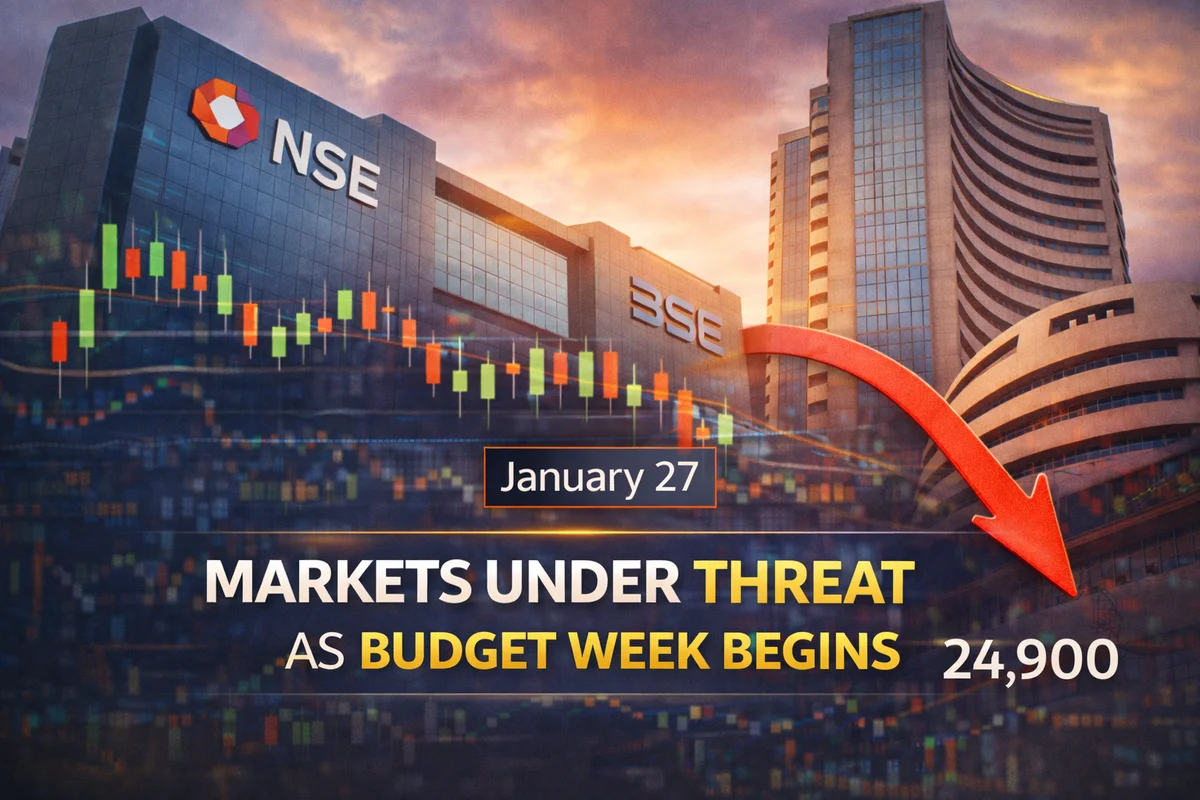
Trade Setup for January 27: NSE index's recent reduceds of 24,900 remain under threat as budget week begins
10 hours ago

Reviewed and Rewrite by
Shanaya Singh



Introduction: A Critical Moment for Crypto Markets in Early 2026
As we approach January 26, 2026, the global cryptocurrency market is navigating a period of mixed sentiment, growing institutional interest, and persistent volatility. After a roller-coaster run in 2025 — with prices surging, correcting, and stabilizing — digital assets have entered a phase where macro economics, regulatory clarity, and investor positioning are likely to determine price direction in the short term.
Several market observers and analysts have issued forecasts and structural outlooks for the broader crypto market throughout 2026, offering clues about what the landscape could look like as we hit late January. These predictions span bearish risk scenarios, bullish long-term growth, and realistic base cases rooted in market behavior and institutional flows.
This article breaks down the most credible projections, the main drivers shaping the market around January 26, and what traders and investors should monitor for smarter decision-making.
Bitcoin Prediction: Consolidation, Resistance Zones, and Potential Upside
Bitcoin remains the most important bellwether for the entire crypto market, influencing sentiment and capital flows across assets.
Current Trend (Late January 2026):
Bitcoin has stabilized around the $90,000 level in recent weeks, with cautious investors awaiting clearer macro signals before committing significant capital.
Short-Term Prediction (Near Jan 26):
• Bitcoin may test its key resistance range of $96,000–$100,000 in late January if liquidity conditions remain supportive and macro data surprises on the positive side. • A break above this area could accelerate momentum into early Q1 2026, attracting renewed speculative interest. • Conversely, failure to hold above current support near $85,000–$88,000 might signal a deeper correction phase before markets regain confidence.
Longer-Term 2026 Forecasts:
• Institutional reports suggest Bitcoin could surpass its prior all-time highs sometime in 2026 if the broader bull case plays out — possibly challenging the $110,000–$250,000 range according to sentiment surveys, though probabilities vary widely.
However, retail sentiment remains cautious — some trader platforms assign only modest odds to extreme bullish outcomes — reflecting ongoing macro and risk considerations.
Ethereum and Altcoins: Infrastructure Plays and Divergent Trajectories
Ethereum (ETH), as the second-largest crypto by market cap, plays a key role in the broader ecosystem due to its functionality for decentralized finance (DeFi), staking, and smart contracts.
Price Expectations for ETH in 2026:
• Conservative projections place ETH in the range of approximately $6,500 to $15,000 over the course of 2026, with actual movement heavily dependent on adoption of Ethereum-based infrastructure and staking yields. • The wide range reflects uncertainty around regulatory clarity, competition from alternative Layer-1 blockchains, and ecosystem growth.
Altcoins and Emerging Sectors: Beyond Bitcoin and Ethereum, other tokens like Solana, XRP, and leading DeFi projects may experience price movements tied to ecosystem activity, token utility, and institutional interest. Although explicit short-term price targets around January 26 are not widely published, market analysts emphasize that decentralized finance growth and tokenized assets could drive selective upside.
Institutional Trends: ETFs, Hedge Funds, and Macro Money Flow
Institutional engagement remains one of the most important market dynamics influencing crypto in 2026. Multiple developments support a cautiously optimistic backdrop:
Crypto Hedge Fund Launches:
Major firms are deploying new capital structures to take advantage of volatility and market inefficiency, with funds allocating up to 30% of assets to cryptocurrencies alongside traditional stocks.
ETFs and Regulatory Tailwinds:
Regulated ETF products are expanding, and issuers are preparing for a crowded year of crypto ETF launches. This could enhance institutional demand and channel new capital into digital markets.
As these financial flows mature, Bitcoin and major token prices may begin to reflect deeper institutional confidence, potentially smoothing out volatility and supporting higher price floors.
Macro Factors That Could Influence January 26, 2026
Several macroeconomic and policy variables will play key roles in near-term crypto pricing:
Central Bank Policy:
Announcements from major central banks — particularly the Federal Reserve — in early 2026 could impact liquidity and risk assets, including Bitcoin and other digital currencies.
Regulatory Developments:
Legal clarity around stablecoins, exchange operations, and security regulations will shape institutional participation and trader confidence. Markets may react quickly to any regulatory shift that affects trading infrastructure or institutional capital access.
Risk Appetite and Volatility:
Crypto markets historically exhibit heightened volatility during geopolitical tension or macro uncertainty. Analysts observe that investor positioning remains cautious, with many adopting a “wait-and-see” approach in early 2026.
Technical Levels to Watch Ahead of January 26
Bitcoin Key Levels: • Support: ~$85,000–$88,000 • Immediate Resistance: ~$96,000–$100,000 • Bullish Breakout Target Series: $110,000–$125,000+
Ethereum Key Levels: • Support: ~$4,500–$5,000 • Resistance: ~$8,000–$9,000 • Extended Upside: Potential moves above $10,000 in strong bullish cycles
These levels are derived from recent trading ranges and consensus technical patterns seen across major crypto prediction reports.
Market Sentiment: Divergence Between Retail and Institutions
One of the most interesting features of the 2026 crypto market is the divergence in sentiment between retail and institutional players:
• Retail traders appear risk-averse, assigning lower probabilities to extreme bullish moves. ([AInvest][4]) • Institutions continue to allocate cautiously but meaningfully to cryptocurrencies, suggesting conviction in long-term value accumulation and potential regulatory normalization.
This divergence may result in choppy price action around short-term events like January 26, but could also stabilize as ETF flows and hedge funds establish deeper positions.
Frequently Asked Questions (FAQs)
Will Bitcoin hit $100K by January 26, 2026?
Analysts suggest Bitcoin could test resistance near $96K–$100K around late January if macro conditions remain supportive, though sustained breakout is not guaranteed.
Is Ethereum expected to outperform Bitcoin in 2026?
Ethereum has a wider potential range and could outperform Bitcoin on a percentage basis if DeFi and staking demand grows strongly.
What should traders watch for before January 26?
Key indicators include macro policy signals, ETF flow announcements, and trading volume across major exchanges.
Are altcoins likely to rally in early 2026?
Selective altcoins tied to real utility and adoption may outperform, but overall market health will depend on Bitcoin and Ethereum trends.
Is it a good time to invest in crypto?
Investment decisions should be based on risk tolerance, market understanding, and long-term goals. Always consider professional advice given crypto’s volatility.
Conclusion: A Cautiously Optimistic Crypto Outlook for January 26, 2026
As we near January 26, 2026, the cryptocurrency market remains at a pivotal moment. Short-term price action may hinge on macroeconomic cues and technical breakout levels, while institutional participation and regulatory developments continue to shape broader medium-term trends.
Bitcoin may consolidate around its key resistance levels, with Ethereum and select altcoins showing differentiated performance depending on adoption and use-case expansion. Institutional capital and ETF growth could provide support, but volatility is likely to persist.
For investors, January 26 represents not a climax but a checkpoint in a dynamic market cycle — one defined by institutional integration, liquidity shifts, and evolving regulatory frameworks.
Disclaimer: The information provided in this article is for educational and informational purposes only and should not be construed as investment advice, financial advice, or a recommendation to buy or sell any securities, cryptocurrencies, or financial instruments. Market investments are subject to risk, and past performance is not indicative of future results. Readers are advised to conduct their own research and consult with a qualified financial advisor before making any investment decisions. The author and publisher shall not be held responsible for any financial losses arising from the use of this information.