Loading market data...
Captain Fresh secures €27M sustainability-linked funding from Blue Earth Capital to expand global seafood distribution and build traceable supply chains.
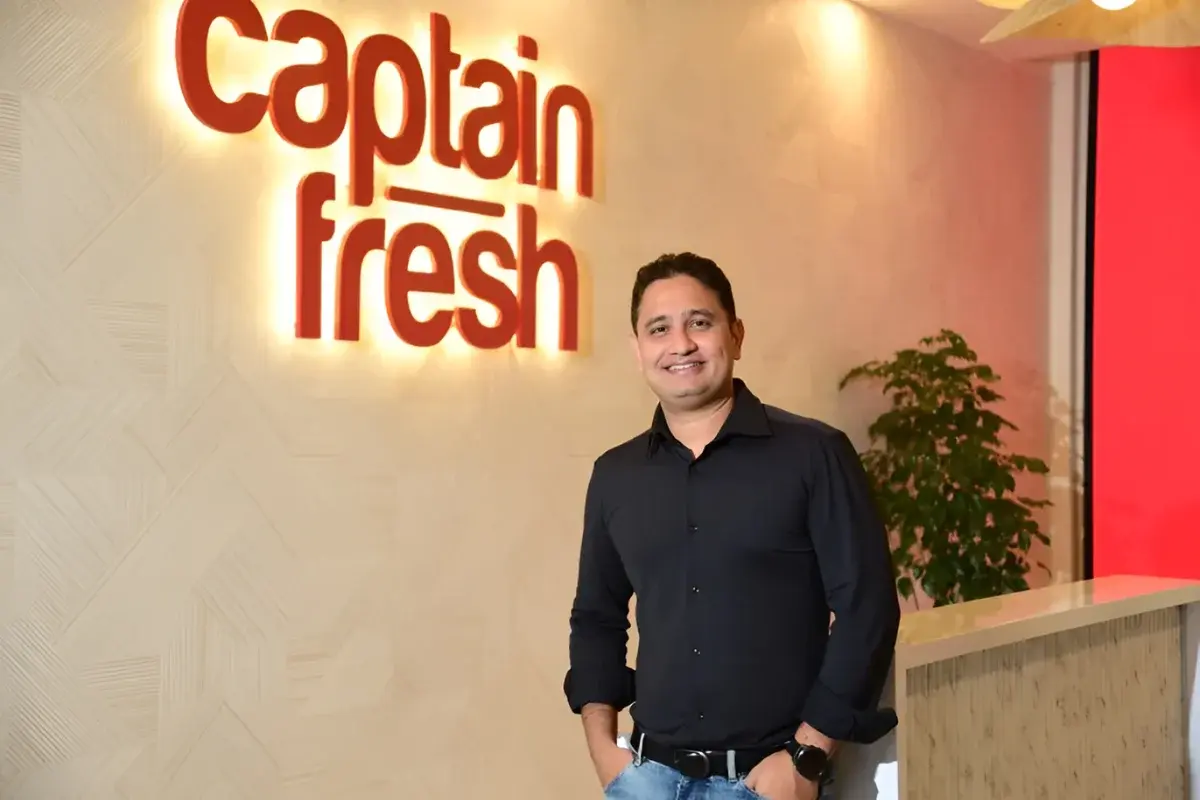
Bengaluru-based seafood supply chain startup Captain Fresh has secured €27 million (about ₹286 crore) in sustainability-linked financing from Switzerland-based impact investor Blue Earth Capital AG. The funding will help expand the company’s global distribution capabilities and strengthen digitally traceable seafood supply chains. The development reflects growing investor interest in technology-driven platforms focused on sustainable food systems.
Bengaluru-headquartered seafood technology company Captain Fresh has raised €27 million (approximately ₹286 crore) in sustainability-linked debt financing from Swiss impact investor Blue Earth Capital AG. The funding marks a significant milestone for the fast-growing startup as it accelerates its expansion in global seafood distribution and strengthens sustainability-focused supply chain infrastructure.
Founded in 2020 by entrepreneur Utham Gowda, Captain Fresh operates a business-to-business (B2B) seafood sourcing and distribution platform that connects fisheries, processors, distributors, and food service businesses across global markets. The company’s technology-driven model aims to streamline procurement, logistics, and traceability in an industry traditionally characterized by fragmented supply chains and operational inefficiencies.
The newly secured financing will primarily support the company’s efforts to scale its international distribution networks while continuing to build digitally traceable seafood supply chains designed to improve efficiency and reduce waste.
The global seafood industry represents one of the largest food sectors in the world, supplying a significant share of global protein consumption. However, the industry has historically struggled with structural challenges such as fragmented supply chains, inconsistent logistics infrastructure, and limited transparency across sourcing networks.
Seafood distribution often involves multiple intermediaries—from fishermen and aquaculture farms to exporters, processors, wholesalers, and retailers. This complex structure can lead to inefficiencies, price volatility, and high levels of product loss during transportation and storage.
At the same time, consumers, regulators, and retailers across major markets have increasingly demanded greater transparency in seafood sourcing. Concerns around sustainability, overfishing, and traceability have pushed companies to adopt technology-driven supply chain solutions that can track products from harvest to final delivery.
Platforms like Captain Fresh aim to address these challenges by digitizing procurement, integrating supply networks, and building end-to-end traceability systems that allow buyers to track seafood origins and supply chain processes more effectively.
The €27 million financing from Blue Earth Capital AG is structured as sustainability-linked debt, meaning that financing terms are tied to environmental and operational performance indicators. This structure aligns financial incentives with measurable sustainability outcomes such as improved traceability, reduced supply chain waste, and responsible sourcing practices.
Since its launch in 2020, Captain Fresh has rapidly expanded its global footprint. The company currently serves more than 1,300 customers across over 30 countries, including markets in North America, Europe, the Middle East, and Asia.
Its supply ecosystem includes more than 650 seafood suppliers across 35 countries, covering over 90 seafood species ranging from shrimp and tuna to salmon and lobster. By integrating these networks through a centralized digital platform, the company enables faster procurement, better inventory management, and optimized distribution across international markets.
Unlike traditional exporters, the company positions itself as a technology-enabled supply chain integrator, managing sourcing, processing, logistics, and distribution through its proprietary software infrastructure.
The startup has also expanded its reach through acquisitions and brand development strategies. Through its growing portfolio of seafood brands and distribution channels, the company aims to build a globally integrated seafood supply network capable of serving both retail and food service industries.
The investment in Captain Fresh highlights a broader shift in global capital markets toward sustainable food infrastructure and digital supply chains.
Investors are increasingly targeting companies that combine technology with sustainability objectives, particularly in sectors such as agriculture, aquaculture, and food distribution. As the global population grows and demand for protein rises, seafood is expected to play a crucial role in meeting global nutritional needs.
However, scaling seafood supply sustainably requires improved transparency, better logistics systems, and reduced product waste. Platforms that integrate digital infrastructure into seafood sourcing and distribution could significantly improve efficiency and reduce environmental impact.
For global investors such as Blue Earth Capital AG, funding technology-enabled supply chain companies offers an opportunity to support both financial returns and environmental outcomes. Sustainability-linked financing structures further reinforce this alignment by tying investment performance to measurable sustainability metrics.
The funding also signals continued investor confidence in Indian startups operating in global supply chain and food technology sectors.
| Metric | Value |
|---|---|
| Financing Amount | €27 million (~₹286 crore) |
| Customers Served | 1,300+ |
| Countries Served | 30+ |
| Seafood Species Traded | 90+ |
| Supplier Network | 650+ suppliers |
| Supplier Countries | 35 |
Industry analysts note that technology-driven platforms have the potential to significantly modernize the global seafood supply chain.
Digitization can help improve price transparency, enable real-time inventory management, and allow buyers to verify product origins—an increasingly important factor in international seafood trade. Enhanced traceability systems can also help address regulatory requirements in major importing markets such as the United States and the European Union.
Sustainability-linked financing is also becoming a key instrument in the impact investment ecosystem. By linking financing terms to sustainability metrics, investors encourage companies to adopt responsible practices while maintaining commercial scalability.
The participation of Blue Earth Capital AG, which focuses on impact-driven investments in sectors such as sustainable agriculture and food systems, underscores the growing importance of climate-conscious capital in reshaping global food supply chains.
Looking ahead, Captain Fresh appears poised for continued international expansion as it strengthens its supply chain infrastructure and distribution networks across major seafood markets.
The company is expected to continue investing in digital traceability technologies, logistics optimization, and supplier network expansion to support its long-term growth strategy. These initiatives could position the company as a leading technology-driven platform in the global seafood trade.
As sustainability regulations tighten and consumer demand for responsibly sourced seafood increases, companies that offer transparent and efficient supply chain solutions are likely to gain a competitive advantage.
Industry observers also expect consolidation within the seafood supply chain sector, with technology platforms acquiring regional distributors and processing companies to build vertically integrated networks.
The €27 million sustainability-linked financing secured by Captain Fresh marks another step in the company’s rapid expansion into global seafood markets. By combining digital infrastructure with international distribution capabilities, the startup aims to modernize a traditionally fragmented industry while improving traceability and reducing supply chain inefficiencies.
The investment from Blue Earth Capital AG highlights the growing role of impact-focused capital in supporting sustainable food systems. As global demand for seafood continues to rise, companies that integrate technology, sustainability, and global logistics may play a crucial role in shaping the future of the industry.

Financial journalist specializing in market analysis, stock research, and investment trends. Dedicated to providing accurate, timely insights for informed decision-making.
Credentials: Experienced financial journalist with expertise in equity markets and economic analysis
The information provided in this article is for educational and informational purposes only and should not be construed as financial, investment, or legal advice. Finscann does not provide personalized investment recommendations.
For detailed terms and conditions, please read our Disclaimer and Terms of Service.

Logistics SaaS startup WheelsEye posts ₹243 crore revenue in FY25 with strong growth in software subscriptions and GPS solutions while losses remain...
Spacetech startup GalaxEye raises ₹44 Cr in Series A funding to develop multi-sensor Earth observation satellites as India’s private space industry...

Drone logistics startup Skye Air Mobility raises $9M Series B to expand its AI-powered autonomous delivery network across major Indian cities.

Deep-tech startup Constems-AI Systems raises $2M pre-Series A to expand its AI-powered retail shelf monitoring and supply-chain analytics platform...

AI startup Memvid offers $800 for testers to stress-test chatbot memory and context retention, highlighting a new approach to improving...